
Toyota’s New Patent Hints The Next Lexus LFA Could Ditch Its Transmission Playbook Entirely For A Race-Derived Sequential Gearbox
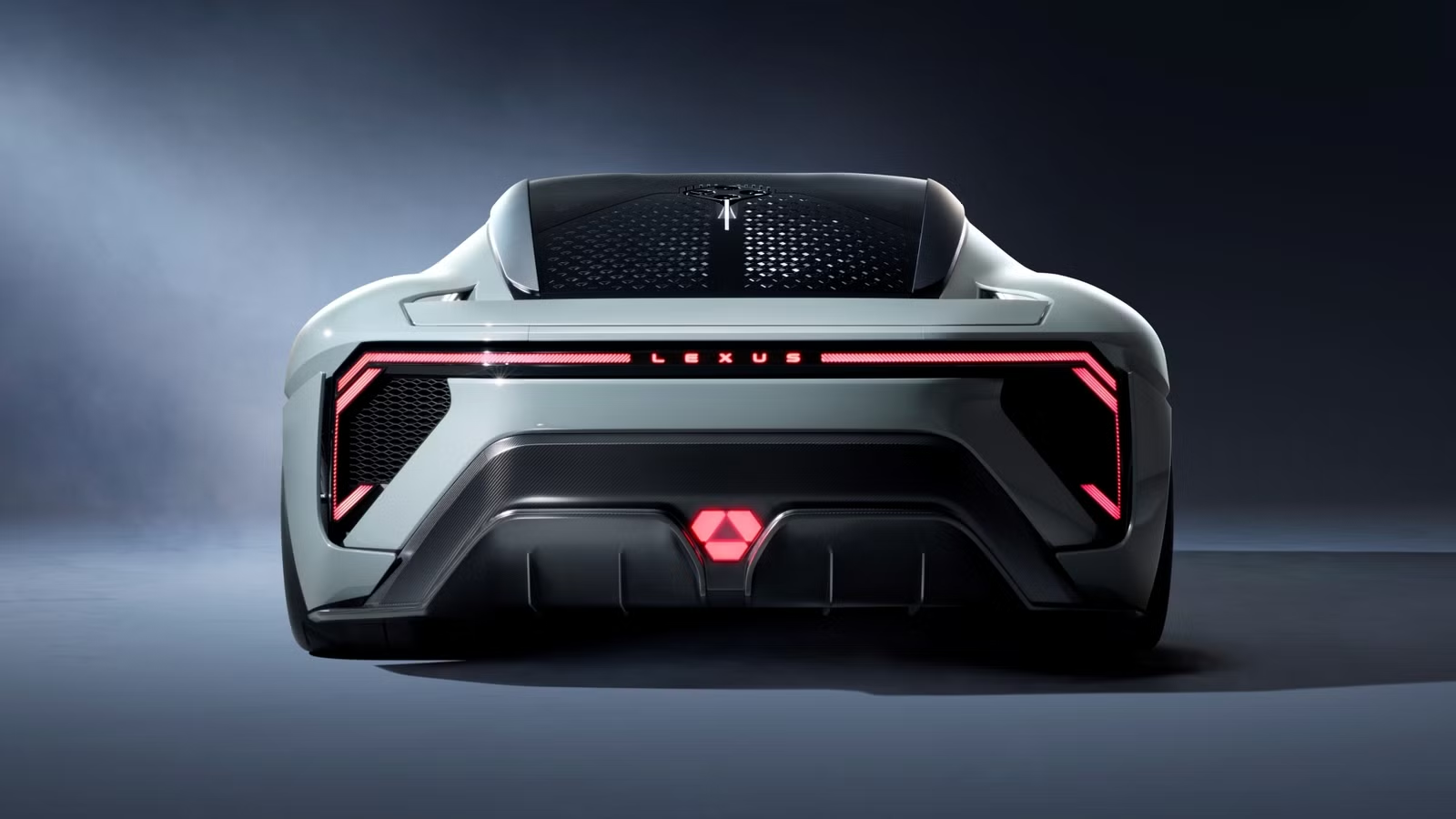
Toyota has filed a patent application that reveals how the next Lexus LFA plans to fake a gearshift without a clutch pedal in sight. Discovered this week by CarBuzz, the filing describes a system that uses torque shaping and brief power cuts to recreate the feel of a sequential-manual transmission, the kind used in actual race cars, all controlled through paddle shifters or a shift lever rather than three pedals.

The timing matters. The reborn LFA is confirmed for a 2027 launch as a full EV, and the concept shown in late 2025 already wore paddles marked with plus and minus symbols behind the wheel. This patent is the clearest sign yet of what those paddles will actually do.
Why Toyota Walked Away From A Real Clutch Pedal
Toyota’s Gazoo Racing skunkworks previously built a simulated manual for EVs that included an actual clutch pedal, convincing enough that the car could roll back on a hill or stall completely. That project never made it to market, and the new patent spells out why.

According to the filing, most EV buyers have little or no experience driving a manual, which makes clutch operation more confusing than engaging for the average customer. There’s also a safety angle: a production EV that can genuinely stall puts an unfamiliar failure mode into the hands of drivers who’ve never had to manage one. Toyota’s answer is to keep the sensation and drop the mechanism that caused the headaches.
How The Sequential-Shift Feel Actually Works

Instead of a physical clutch, the patented system manipulates the electric motor’s torque output over a set window to mimic a gear change. During a simulated shift, torque briefly drops to zero, recreating the momentary power interruption of a clutch disengaging, then comes back, overshooting slightly to replicate the snap of re-engagement. The controller applies this sequence on both upshifts and downshifts, and the timing and intensity can be tuned, meaning a race or sport mode would deliver a sharper, more aggressive shift profile than a comfort setting.
It’s a more elaborate version of what Hyundai already does with N e-shift in the Ioniq 5 N, but Toyota‘s torque-shaping approach is aimed specifically at nailing the feel of a sequential gearbox rather than a traditional manual.
What This Means For The LFA’s Halo-Car Credibility

The original LFA earned its reputation partly through its screaming V10 and partly through how deliberately Toyota tuned every mechanical sensation in the car. Losing the engine note was always going to be the hardest sell for an electric successor, and a generic one-speed EV power delivery wouldn’t have helped the case.
By chasing a race-car sequential feel instead of a street-manual simulation, Toyota seems to be betting that purists care more about rhythm and engagement than literal authenticity. A stallable clutch pedal would have been a neat party trick, but a tunable, paddle-controlled sequential system is arguably closer to what a modern race car actually uses. Whether that’s enough to satisfy LFA diehards won’t be clear until the 2027 car is in dealers, but the paddles on that late-2025 concept now look like more than a styling choice.

Related posts




Latest Post


No Comments