
AMC’s Forgotten 315-HP Compact Started a Muscle War Nobody Expected
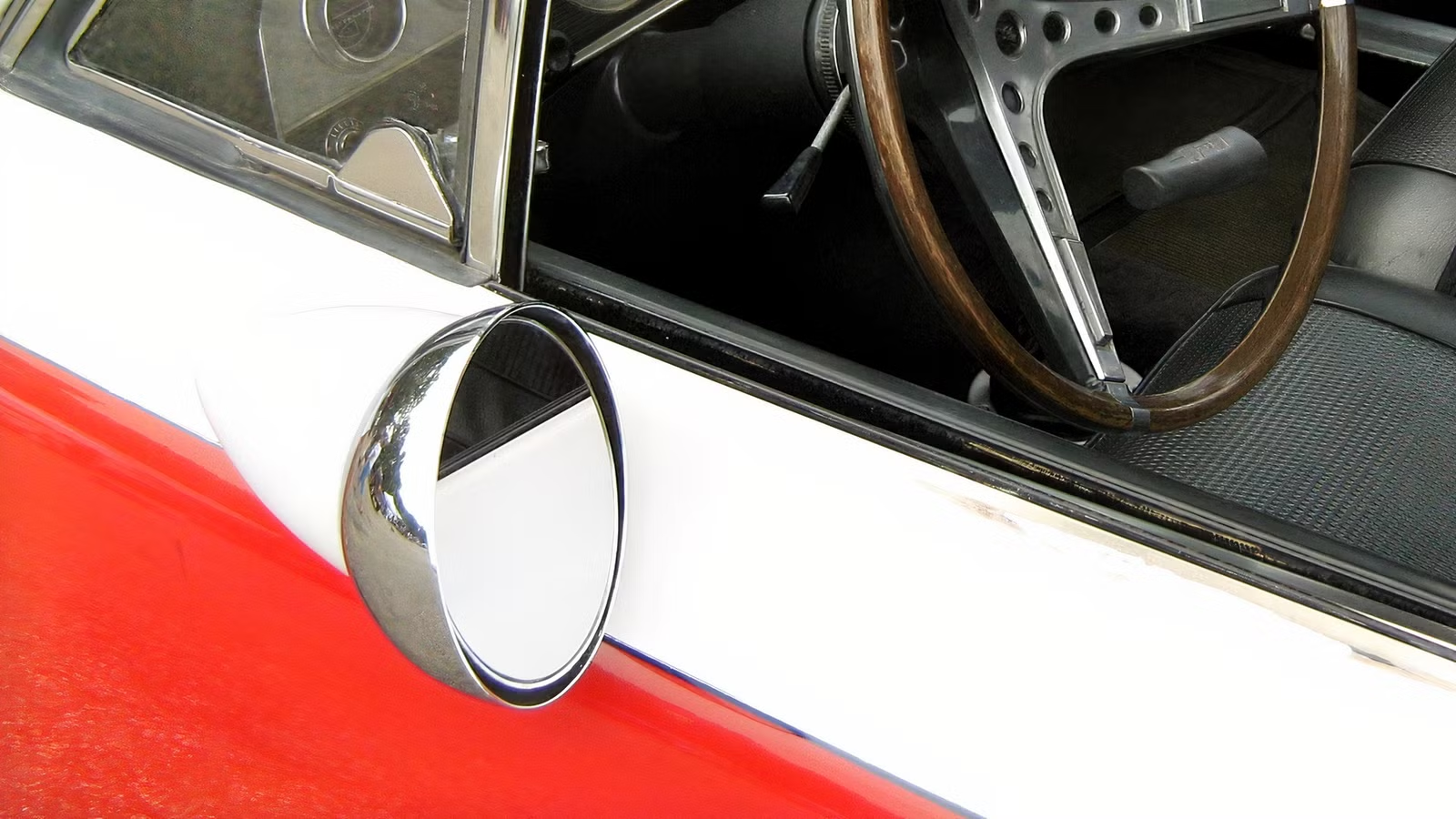
AMC planned 500 cars. Buyers and dealers had other ideas; they wanted enough to push production to 1,512. That mattered for a company trying to ditch its sensible-shoes image, because this forgotten compact Rambler proved people would pay for performance from Kenosha. Among American muscle cars, the recipe was beautifully simple: big 390 V8, small body, Hurst shifter. Go have fun.
AMC’s two-seat AMX had already shown the underdog could build performance cars. This Rambler was cheekier: familiar economy-car bones turned into a drag-strip special with more left in reserve. Its stock quarter-mile number was only the warm-up. Dealer performance parts made it much quicker, while the same mix of big V8 power, patriotic paint, and Hurst hardware appeared in a larger AMC. This little Rambler wasn’t just fast for an economy-car badge; it helped sketch out a muscle formula AMC would use again.
The 500-Car Plan Became A 1,512-Car Success
The 500-car publicity plan targeted NHRA’s F/Stock drag-racing class, giving AMC a recognizable drag-strip competitor without requiring a huge production commitment. Barbara Hillick’s AACA history records dealers buying the original allocation, with demand pushing production to 1,512 cars—more than three times the plan. AMC listed a $2,998 suggested retail price, keeping the package just under $3,000. For Kenosha, the result was evidence that an economy-car badge could sell muscle.

Like rare AMC specials such as the California 500 AMX, the car left collectors with a small pool to chase. How small is less clear. Old Cars Weekly estimated about 200 survivors, while RK Motors cited 379 known to the registry. Treat that 200–379 range as disputed historical estimates, not a current census. Hagerty’s September 18, 2025 snapshot put an excellent, #2-condition example at $63,900, but that isn’t a current appraisal.

Actual sales show why condition matters. An April 19, 2025 auction ended at a $37,700 winning bid; an October 5, 2025 auction brought $55,000. The cheaper car disclosed rust bubbles and peeling decals; the higher-priced car had extensive refurbishment and a modified intake. Condition and documented engine originality matter when shopping, but those two results don’t isolate an originality premium. Both listings described rebuilt 390s, so verify the engine’s identity rather than assuming “rebuilt” means original.
A 315-HP 390 Gave The Compact Real Muscle

The 390 hit hard: 315 hp and 425 lb-ft of torque, fed by a Carter AFB four-barrel carburetor. That 315-hp figure is the period gross rating, so it shouldn’t be compared directly with modern net output. One Old Cars Weekly account prints 325 hp, but AMC’s factory material supports 315. Even with the factory number, this was serious power for a compact.
AMC already offered the 390-powered AMX, so the V8 wasn’t exotic. Putting that proven engine in the smaller Rambler was the fun part. A close-ratio Borg-Warner T-10 four-speed, Hurst T-handle shifter, and 3.54:1 Twin-Grip limited-slip differential completed the driveline. Twin-Grip helped both rear tires use the torque, while rear torque links reduced wheel hop. Heavy-duty suspension and front disc brakes backed up the performance.

“Roughly 3,000 pounds” is shorthand, but the advertised 10.03 pounds per horsepower comes from a 3,160-pound shipping weight divided by 315. Shipping weight isn’t a loaded test-car figure. AMC advertised a 14.3-second quarter-mile. Old Cars Weekly attributes 14.4 seconds at 100.44 mph, while Hillick gives 14.14 at the same speed. Those retellings disagree, so the hundredths aren’t settled. Either way, the compact ran in the 14s with standard equipment. Reaching the 12s required the parts catalog.
The Hurst SC/Rambler Could Reach The 12s

That car was the 1969 Hurst SC/Rambler, or “Scrambler,” a one-year AMC–Hurst collaboration built around the Rambler American Rogue hardtop. Type A wore broad red sides with a blue hood arrow, roof, and deck graphics over white; the rarer Type B used narrow red and blue stripes low on its white body. Subtle it wasn’t.
Group 19 was AMC’s high-performance parts program, named for its parts-book section, and it is where the Scrambler’s story gets much faster. Owners could order equipment through dealers for installation after purchase; these weren’t factory-order options or one universal boxed kit. Hillick’s Group 19 history identifies the 1967–69 Edelbrock R4B intake as part 4485729 and the matching manual-transmission cam kit as 4486719. The intake improved breathing, while the cam changed valve timing to support higher-rpm performance.
The Hardware Behind The 12.67-Second Run

Hillick’s account of Super Stock and Drag Illustrated’s test records a modified Scrambler running 12.67 seconds at 109.99 mph. That changes the story. It used a 302-degree cam, Edelbrock aluminum high-rise intake, 780-cfm Holley, distributor with vacuum advance removed, Doug Thorley headers, and Goodyear slicks. The same test’s stock comparison car ran 14.31 at 98.86; Road Test separately reported 14.4.
Hurst’s Super Stock AMX provides context for AMC’s drag-racing effort, but this compact’s attraction was the route from showroom to quicker strip machine. The test demonstrates Group 19-type preparation, not proof that every component came from one identical dealer package. It shows factory-supported, 12-second potential from a roadgoing muscle car, but the slick-equipped test car’s road legality and an industry-first claim remain unproven.
Its Formula Lived On In The Rebel Machine

The Rambler American’s final U.S. model year was 1969, so the Scrambler became a noisy farewell to the nameplate. Roy Chapin Jr.’s broader performance push had already brought the Javelin and AMX for 1968; this wasn’t AMC discovering performance. The Scrambler was compact proof that this muscle formula could sell.
Then came the 1970 Rebel Machine. AMC moved the idea into a midsize body, keeping 390-cubic-inch power and Hurst shifting hardware; the Machine’s 390 was rated at 340 hp. Revised breathing and exhaust meant it wasn’t simply the 390 dropped into a bigger car. The body grew, but the message survived: V8 power, a manual shifter, and patriotic graphics.
Group 19 Connected The Two Cars

Summit Racing’s Machine feature describes a dealer V Code Service Package drawing on Group 19 performance equipment, continuing the factory-supported upgrade route. The details show the limits. The 1970-up Edelbrock R4B carried number 4488409, while AMC’s factory performance guide documents engine changes affecting intake and pushrod fitment. A shared catalog didn’t make every component interchangeable.
That technical bridge is strong enough without turning chronology into causation. No cited corporate record proves that selling 1,512 Scramblers caused AMC to authorize the Machine. The evidence shows lineage: sales success, shared hardware, and the same performance playbook moving forward. The Machine may get the spotlight, but the compact Rambler had already sold the idea.
Sources: Western Pennsylvania Region AACA, Old Cars Weekly, Group 19 History, AMC

Related posts

Latest Post


No Comments