The Volvo Wagon That Outlasts German Rivals At Half The Price
13 minutes reading
Friday, 26 Jun 2026 16:00 0 49 autotech
Luxury station wagons are making some real waves in a market obsessed with SUVs. We may not get a huge variety of them here in the U.S., but the ones we do have are something special. The station wagons of the past were the family road-tripping ferry and commuter bus; today, they are still that, but a lot more powerful and capable of things that were likely never thought possible in the segment.
Audi, BMW, Mercedes-Benz, and Volvo are still turning out wagons that blend usability, luxury, and performance guts. However, they are not the cheapest to buy new. There is an older model made by Volvo, though, that is available at low prices and can just keep going.
Front 3/4 shot of 2025 BMW M5 Touring driving on roadBMW
While SUVs are no doubt winning in sales, the luxury wagon market is very alive and kicking. In 2026, we can get models like the Volvo V60, the Audi A6 Allroad, the Mercedes-Benz E450 All-Terrain Wagon, the Porsche Taycan 4 Cross Turismo, the BMW M5 Touring, the Audi RS6 Avant Performance, and the Mercedes-AMG E53 Wagon. They are all spacious; they can sprint like sports cars; they are fitted with powerful engines; and they can ferry you and your family around with ease.
In short, the new wagon market is very stiff competition for the luxury SUV market. The seven wagons we can buy in the U.S. in 2026 have the following starting prices.
2026 Volvo V60 Cross Country
Audi A6 AllRoad
Mercedes-Benz E450 All-Terrain Wagon
2026 Mercedes-AMG E53 Wagon
2026 Porsche Taycan 4 Cross Turismo
2026 BMW M5 Touring
2026 Audi RS6 Avant Performance
$53,595
$73,100
$78,300
$93,350
$118,100
$125,300
$130,700
Practicality And Performance Are A Rare Combination
Rear 3/4 shot of 2025 Audi A6 Allroad parked on gravelAudi
As we find in the SUV market, especially the sports SUV market, the luxury wagon market blends practicality, power, and speed. You are effectively getting a sports car with a very useful amount of space. Models like the AMG E53 are equipped with a 3.0-liter turbocharged inline-six mated to a 120-kW motor good for 577 horsepower and 553 pound-feet of torque. You can hit 60 mph in as little as 3.4 seconds, and you can still carry up to 64.6 cubic feet of stuff around.
Front 3/4 shot of Mercedes-AMG E 53 Hybrid Wagon parked on roadLyndon Conrad Bell | Top Speed
The same goes for the BMW M5 Touring. It is equipped with a 717-horsepower/738-pound-foot twin-turbocharged V8 that gets you to 60 mph in 3.5 seconds; M xDrive AWD is standard fare, and you can carry up to 57.6 cubic feet of cargo around.
Even the less powerful models, like the V60, get a 247-horsepower turbo-four and 60.5 cubic feet of storage space. They are utility and fun in one package, but offer something a little different from the burgeoning SUV market.
The Best Ones Can Outlast More Expensive Rivals
Front 3/4 shot of 2025 Volvo V60 Cross Country parkedWilliam Clavey | TopSpeed
While the performance and usability of posh German wagons gets a lot of attention, they are very expensive and have demanding maintenance schedules. Most models get complicated electronics, air suspension systems, and performance-focused components, all of which can be very expensive to repair when they go wrong.
Models like the W124 Mercedes-Benz wagons and the Acura TSX do things a little differently. They are refined, but they benefit from engineering that was built to withstand decades of abuse. These models were designed and built before technology started taking center stage, and their simpler construction has helped some become real high-mileage legends.
Front 3/4 action shot of 2014 Acura TSX Sport Wagon driving on roadAcura
The W124 Mercedes wagon is equipped with a variety of inline-fours and inline-sixes that aren’t hugely powerful, but very reliable, with a lot of owners reporting putting over 300,000 miles on them. The TSX gets an uber reliable K Series four-cylinder. What makes these models even better is that you can pick them up for between $4,000 and $10,000.
The Japanese Luxury Wagon So Overbuilt It’s Still Running Strong At 200,000 Miles
Luxury meets legendary reliability in the Acura TSX Sport Wagon, the overbuilt Japanese wagon still going strong past 200,000 miles.
The Volvo V70 XC Is A High-Mileage Hero
Front 3/4 shot of 2001 Volvo V70 parkedBring A Trailer
It is easy to assume that Volvo’s reputation for longevity and reliability is just a leftover from yesteryear. According to the 2026 U.S. Vehicle Dependability Study, though, Volvo is ranked second-to-last with 296 problems per 100 vehicles (PP100), placing it behind all German brands except Volkswagen.
Owners of modern Volvo models have reported problems with everything from infotainment glitches and software bugs to issues with increasingly finicky plug-in hardware. Today, that hardly inspires confidence in reliability or “forever car” status. That’s why models like the 2001–2007 Volvo V70 XC wagon deserve more airtime.
Base Trim Engine
3.2L Inline-6 Gas
Base Trim Transmission
6-Speed Automatic
Base Trim Drivetrain
Front-Wheel Drive
Base Trim Horsepower
235 hp
Base Trim Torque
236 lb-ft @ 3200 rpm
Fuel Economy
16/24 MPG
Make
Volvo
Model
V70
Segment
Compact Luxury Wagon
Outside the retro looks and brick nostalgia that are making them cool again, the V70 XC was built in a period that established Volvo’s durability credentials in the first place. Long before OTA updates and touchscreens, Volvo was building models that were practical and built for decades of family service. There were two main engine options originally available for the 2001–2007 V70 XC (second-gen) in the U.S.A.; they have the following specifications.
2001–2003 V70 XC
2003–2007 V70 XC
Engine
2.4-Liter Turbocharged Inline-Five
2.5-Liter Turbocharged Inline-Five
Transmission
Four-Speed Automatic
Five-Speed Automatic
Horsepower
193 hp – 200 hp
208 hp
Torque
236 lb-ft
236 lb-ft
Old-School Engineering Earns It A Loyal Following
Close-up shot of 2001 Volvo V70 engine bayBring A Trailer
The 2001–2007 V70 XC’s engineering is a product of restraint rather than ambition. Volvo wasn’t trying to reinvent the wheel; it refined what it was already working with and didn’t overdo it, even when certain German luxury wagons of the era were getting more powerful and faster.
The core is built around a longitudinal layout that keeps the drivetrain mechanically straightforward and easier to service (relatively), with systems designed in isolation rather than being deeply integrated with software. That means problems tend to remain localized rather than spread across multiple modules.
Front 3/4 shot of 2005 Volvo V70 parkedBring A Trailer
You get an AWD system that is mechanically robust without relying on digital intervention; there are fewer layers of sensors, and components aren’t buried under layers of ancillary electronics. However, what stands out most is how unmodern the entire build feels, but not in a bad way.
There is no reliance on integrated software to manage basic drivetrain logic, and the car doesn’t “learn” how you drive or constantly readjust itself to remain usable. 0–60 mph times and top speed aren’t exciting, at between 7.3 and 9 seconds and 130 mph, respectively, but that isn’t what matters; it is the solidity that does.
Owner-Reported Models Show Just How Far They Can Go
Profile shot of 2001 Volvo V70 parkedBring A Trailer
High-mileage examples of the V70 XC tend to follow a pattern: maintenance discipline matters more than luck and the assumption that, just because it is an older Volvo, it will last forever. A second-gen V70 XC with 150,000 miles on the clock and still being used as a daily driver does fit neatly with what is expected of them, but with a caveat: you have to keep up with key service intervals and not ignore the small stuff.
From model year 2003 onwards, the V70 is fitted with the Haldex AWD system, which replaced the viscous coupling AWD rig, and while it is mechanically good, without servicing it at roughly 40,000-mile intervals, it is prone to oil pressure pump failures and clogged filters. That might mean no more all-wheel drive.
Profile action shot of 2005 Volvo V70 driving on roadVolvo
RepairPal says that the PCV breather system needs to be replaced around the 60,000–80,000-mile mark to avoid crankcase pressure issues and seal damage, while, also according to RepairPal, timing belt servicing is vital for keeping the two inline-five engines running and must be done at the same time.
At 150,000 miles, the required service is estimated to cost between $1,023 and $1,316, not counting the servicing costs leading up to it. According to mileage claims by owners on the Volvo Owner’s Club, the highest-mileage 2001 V70 has 453,833 miles on the clock. With proper maintenance, they can do it. Wear does show up, but it is in predictable mechanical areas, which helps them earn respect as maintainable high-milers rather than disposable luxury models.
BMW Is Eyeing More Wagon Models For America — Here’s What Could Actually Make It
BMW North America is exploring bringing more wagon models to the U.S. market after the M5 Touring’s success validated American demand.
Why Certain Volvos Go The Distance
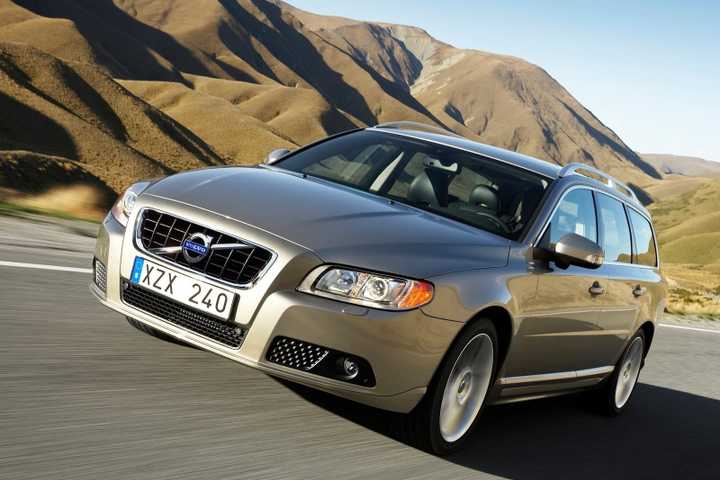
The second-gen V70 XC proves that Volvo is capable of building a vehicle that comfortably survives into six figures with proper care. However, while Volvo does have a relatively bulletproof safety reputation, there are some models that can become a trap for those who trust the badge on the front.
Once Volvo started using newer platforms, some of that consistency began to fade, and the difference between a 200,000-mile survivor and a costly ownership experience became far more dependent on model year than brand identity. This is where something like the XC60 SUV is an important model.
The XC60 Straddles Volvo-Grade Reliability And Not
Front 3/4 shot of 2011 Volvo XC60 parkedVolvo
Produced between 2008 and 2017, the first-generation Volvo XC60 sits in an awkward position. Volvo’s history of old-school durability hadn’t completely disappeared, but the Geely-era direction had started showing through and made reliability a very model-year-specific story. The later years, particularly around 2017, often represent the best model years of the generation.
CarGurus rates the 2017 model 4.5 out of 5 for reliability, while 2016 XC60 models fitted with the 2.0-liter turbocharged inline-four have become associated with high oil consumption and piston-ring wear. It gets even more mixed toward the later end of the cycle.
Front 3/4 shot of a gray 2017 Volvo XC60 parked on roadVolvo
Also according to CarGurus, the 2019 XC60 is one of the most problematic models, owing to numerous owner complaints and engine issues. On the other hand, even though there was skepticism about the China-built 2019 XC60, a 40,000-mile test done by Car & Driver found no mechanical failures at all, just a sluggish infotainment system. It is a very mixed bag.
Owner reviews on Kelley Blue Book have rated the 2019 XC60 3.6 out of 5 for reliability, while its reliability rating on J.D. Power is down at 68 out of 100. On the other hand, the 2017 model year is rated 81 out of 100 for reliability. It is this kind of inconsistency that makes modern Volvo models difficult to assess; mechanical durability can be strong in some cases, but overall reliability is increasingly shaped by electronics and software failures rather than engine failure.
Smart Maintenance Is The Difference Between A Survivor And A Money Pit
Front 3/4 action shot of 2011 Volvo XC60 driving through snowVolvo
If you are looking at buying a high-mileage model, choosing the right model year of either the XC60 or the V70 XC can be the difference between buying something that will keep going and something that won’t. Because longevity in both relies on maintenance actually being carried out rather than hoping the car will survive on its own, finding a model with an up-to-date service history is worth more.
Models that have survived beyond 100,000 miles are generally not neglected; high mileage is far more likely the result of dedicated maintenance than of deferred service tasks. RepairPal says that the average annual maintenance cost of a V70 is just under $650, but if it is not properly maintained, you could face significant bills for issues that could have been avoided, such as the following.
Control arm replacement: $2,314–$2,592
Transmission valve body replacement: $2,300–$2,700
Turbocharger replacement: $1,700–$1,911
Timing belt replacement: $867–$1,076
Heater core replacement: $632–$1,200
The Volvo V70 XC Is Still One Of The Best Used Luxury Wagon Bargains
Front shot of 2001 Volvo V70 parkedBring A Trailer
While Audi wagons have a huge amount of appeal, BMW wagons blend usability and speed, and AMG wagons like the 2023 E63 S can hit 60 mph in as little as 3.3 seconds. However, new and used prices range from $75,000 to over $200,000, and Classic.com says that the B7 Audi RS4 wagon has an average auction price of $37,891.
If you are looking for a potentially rock-solid 2001–2007 Volvo V70 XC, prices range from $1,625 to $3,875, with the following used price breakdown.
2001 V70
2002 V70
2003 V70
2004 V70
2005 V70
2006 V70
2007 V70
Used Price Range
$1,625 –$1,950
$1,825 – $2,525
$1,900 – $2,275
$2,075 – $2,875
$2,450 – $3,200
$2,800 – $3,500
$3,175 – $3,875
In short, it is a bargain. The new Audi A6 Allroad has estimated five-year costs of $3,853; the M5 Touring has estimated five-year costs of $5,141; and the E-Class wagon has estimated five-year costs of $3,820. If you find a V70 that has been looked after and maintained, maintenance costs are just $644 a year.
Rear shot of 2001 Volvo V70 cargo areaBring A Trailer
On top of that, the second-gen V70 has a maximum cargo capacity of 71.4 cubic feet, a maximum passenger volume of 98 cubic feet, and ample space over both rows. The V70 XC has the following interior dimensions.
Headroom
Shoulder Room
Legroom
Front
39.3 Inches
56.2 Inches
42.6 Inches
Rear
38.9 Inches
55.9 Inches
35.2 Inches
Then you get the quiet luxury that Volvo is so good at. While it may seem a little dated to some today, it still does the job very well. Volvo never chased the flashy image that Audi, BMW, and Mercedes-Benz are known for. The cabin is packed with high-quality materials that have aged gracefully, from the thick leather upholstery to real wood trim, which was originally available.
The front seats get long cushions that support your thighs, generous side bolstering, and a shape designed to reduce fatigue on long slogs. Higher-specification models also get power seats, memory settings, and heated seats. As for technology, the V70 XC is well-equipped for an early-2000s luxury wagon. You can find models with dual-zone climate control, rain-sensing wipers, auto-dimming mirrors, cruise control, parking sensors, and Volvo’s Dolby Pro Logic sound system.
You also get Dynamic Stability and Traction Control (DSTC), side-impact protection, whiplash-protection seats, and inflatable curtain airbags, making it a safe luxury wagon even by today’s standards. If you are looking beyond having the fastest wagon in the lot, a used V70 XC remains a very smart choice. You get real-world comfort, practicality, durability, and a retro style that still looks good.
While newer German wagons may be flashier, quicker, sharper, and packed with technology, few can match Volvo’s combination of usable space, all-weather capability, and proven longevity. When you think about the exceptionally low used price, the V70 XC looks a lot less like an old used wagon and more like one of the best value-for-money luxury vehicles on the market today.
Sources: Volvo, RepairPal, CarEdge, CarGurus, J.D. Power, Classic.com, Volvo Owner’s Club, and Kelley Blue Book.












No Comments