
The 196-MPH Superbike Built With Panigale-Level Aero And Without The Bologna Markup
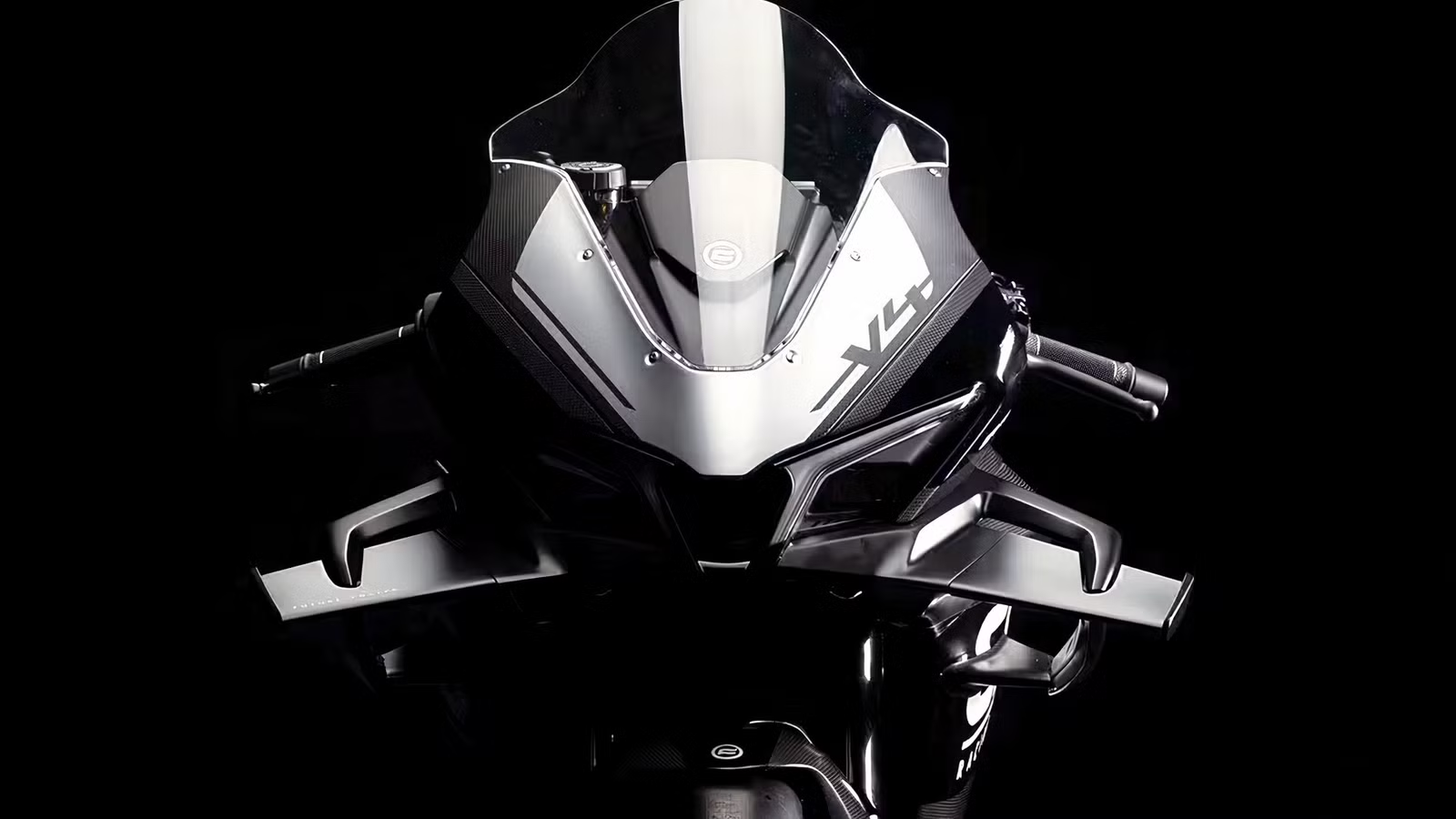
Every few years, a top-speed run lands in the headlines and gives speed junkies and enthusiasts another reason to argue about gearing, wind direction, and whether a GPS reading counts as a personality trait. But outright speed isn’t the most interesting part of this particular superbike. The bigger story unfolded inside an Italian wind tunnel, where a rising manufacturer effectively purchased access to expertise that European brands spent decades accumulating — and in doing so, quietly rewrote the rules of how a challenger can enter the liter-class superbike segment.
The Modern Superbike Is Built On More Than Horsepower

Building a powerful motorcycle engine is difficult, but horsepower alone no longer creates a class-leading superbike. Modern flagships combine electronics, brakes, materials, and aerodynamics engineered for speeds most owners will never legally reach. Every improvement demands engineers, prototypes, software, and testing — a development burden that helps explain why the upper end of the segment now commands premium pricing well into the five-figure range. Buyers are also paying for wind tunnels, racing programs, simulation tools, specialist teams, and the accumulated data required to turn raw knowledge into a motorcycle that behaves predictably at speed. Ducati, BMW, and Aprilia use that depth as both a performance advantage and part of the justification for premium pricing. Their flagships benefit from technical infrastructure that newer manufacturers can’t easily reproduce. The question is whether a challenger must recreate the entire European superbike ecosystem before it can compete.
The R&D Advantage Has Always Favored Europe

Aerodynamics illustrates that advantage better than almost anything else. Producing a fairing that looks fast is easy. Developing one that reduces drag, keeps the engine cool, controls airflow, stabilizes the front end, and remains effective while leaning is far harder. Computer simulations help, but physical testing still matters once rider and motorcycle become one shifting shape. European brands also benefit from lessons collected through MotoGP and WorldSBK. That knowledge filters into road bikes and creates a barrier that copying wings or brake ducts simply can’t cross.
Outsourcing Elite Expertise Changes The Cost Equation


A newer manufacturer like CFMoto therefore faces two options. It could spend years building its own facilities, or launch a more affordable motorcycle without the same engineering depth. The first erodes its price advantage; the second reinforces doubts about its engineering substance. Outsourcing specialist development, however, offers a third route. Instead of maintaining every capability in-house, a company can buy access to elite facilities when a project demands them. For example, Pininfarina’s full-scale wind tunnel near Turin allowed engineers to test the complete motorcycle with a fully geared rider mannequin rather than an isolated machine or a scaled model. That enabled realistic study of drag, stability, cooling, rider turbulence, and the movable winglets. The active system is claimed to reduce drag by 12 percent during acceleration and increase front-end downforce by 45 percent at high speed. These are claims, but they indicate the work targeted measurable performance outcomes. They also demonstrate how a younger brand can secure world-class aerodynamic validation without spending decades building its own program.
The CFMoto V4 SR-RR Is The Next-Gen Superbike That Could Change The Game
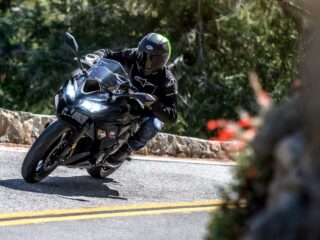
The CFMoto V4 SR-RR is arguably the clearest example of this approach. It is a prototype previewing CFMoto’s planned liter-class supersport program — not a confirmed showroom model with finalized equipment, pricing, or specifications. It remains a development machine rather than something customers can order. Its latest testing, however, suggests the project has moved well beyond a static design exercise.

The SR-RR recorded a GPS-verified 315.82 kph at the Shangrao Automotive Proving Grounds in China, which converts to 196.2 miles per hour and makes it the fastest Chinese internal-combustion motorcycle reported to date. At its center is an in-house 997cc, 90-degree V4 with a reverse-rotating crankshaft. CFMoto claims more than 210 horsepower, while some reports place output at approximately 212 horsepower near 14,500 rpm. The engine is said to rev to around 15,000 rpm, placing it firmly in the operating range expected of a flagship superbike.
Active Aero Does More Than Add Downforce

The bike’s most unusual feature is its electrically adjustable front winglets. Rather than holding a fixed angle, the wings reposition themselves according to the motorcycle’s needs. Shallow angles from zero to 10 degrees prioritize lower drag during acceleration, while positions from roughly 10 to 20 degrees add stability and front-end load at higher speeds. Under braking, the winglets can reportedly rotate between 45 and 90 degrees to function as aerodynamic brakes. The goal is harder acceleration, fewer wheelies, greater high-speed stability, and added braking support — without maximum drag at all times.

The system also creates real production challenges. Movable aero adds motors, sensors, software, wiring, weight, and potential failure points. CFMoto hasn’t confirmed whether it will reach production unchanged, nor has it detailed how the system responds to lean angle and uneven surfaces. Until a road model appears, active aero remains the SR-RR’s most compelling feature and its most significant open question.
That’s Not To Say CFMoto Is Solely Relying On Outsourcing

CFMoto’s development of the active aero shows that access to elite facilities can be the smarter approach — but that doesn’t mean CFMoto is solely relying on outsourcing. Much of its engine knowledge has been developed internally. The company says the 90-degree V4, while drawing inspiration from MotoGP racing, carries more than 40 patents, reflecting genuine in-house R&D. The V4 SR-RR also benefits from a significant expansion of CFMoto’s overall R&D investment. CFMoto says it invested 1.22 billion yuan (approximately US$168 million at current exchange rates) in research and development, representing 6.18 percent of its total operating revenue. By the end of that period, CFMoto held 2,119 active and authorized patents, 242 of which were invention patents.

The V4 SR-RR also draws on CFMoto’s competition experience — specifically the data and lessons gathered from Moto2 victories and world championship success. The company has also acquired an equity stake in Kalex Engineering, a dominant Moto2 chassis fabricator. Moves like these have allowed CFMoto to fast-track the SR-RR’s development. Where European manufacturers spent decades refining their flagship machines, CFMoto appears to have found a more efficient path that now puts genuine pressure on the established giants.
The Specs Land Directly In Panigale V4 And RSV4 Territory

The claimed figures place the V4 SR-RR squarely alongside established European benchmarks. Its 210-plus horsepower output enters the same conversation as the Ducati Panigale V4 and Aprilia RSV4, while its reverse-rotating crankshaft and 15,000-rpm ceiling reflect similar performance priorities. CFMoto also claims a curb weight below 440 pounds, though some reports cite roughly 397 pounds dry in race trim. Brembo brakes, electronically controlled suspension, and an Akrapovič exhaust have been displayed on the prototype but have not been confirmed for the production specification.

The meaningful comparison, though, isn’t whether the prototype is faster in a straight line. A well-rounded superbike must deliver predictable electronics, repeatable braking, chassis feedback, thermal management, parts availability, and dealer support. CFMoto has hit the headline numbers — now it must prove the complete motorcycle can operate at that level consistently.
The Biggest Threat To Europe May Be From China

CFMoto hasn’t announced a production price, but the V4 SR-RR will almost certainly undercut established European superbikes by a meaningful margin. The finished bike could still become CFMoto’s most expensive motorcycle, particularly if it retains active aero and premium hardware. Even so, the development strategy may prove more disruptive than the motorcycle itself. Hiring Pininfarina isn’t cheap, but it is likely more efficient than constructing and permanently staffing a comparable facility. CFMoto can pay for elite expertise where it matters most while using its manufacturing scale, engineering workforce, and supply chain to control costs everywhere else. The upcoming CFMoto V4 SR-RR doesn’t need to beat Ducati at every circuit or outgun Aprilia on every spec sheet. It only needs to get close enough, work reliably, and cost meaningfully less. If CFMoto manages that, its most important achievement won’t be reaching 196.2 mph. It’ll be proving that one of Europe’s most closely guarded engineering advantages can now be hired by the hour.
Source: CFMoto

Related posts


Latest Post


No Comments