
Volkswagen’s New ID. Tiguan Brings Premium Design And A 600 Km Range To 2027
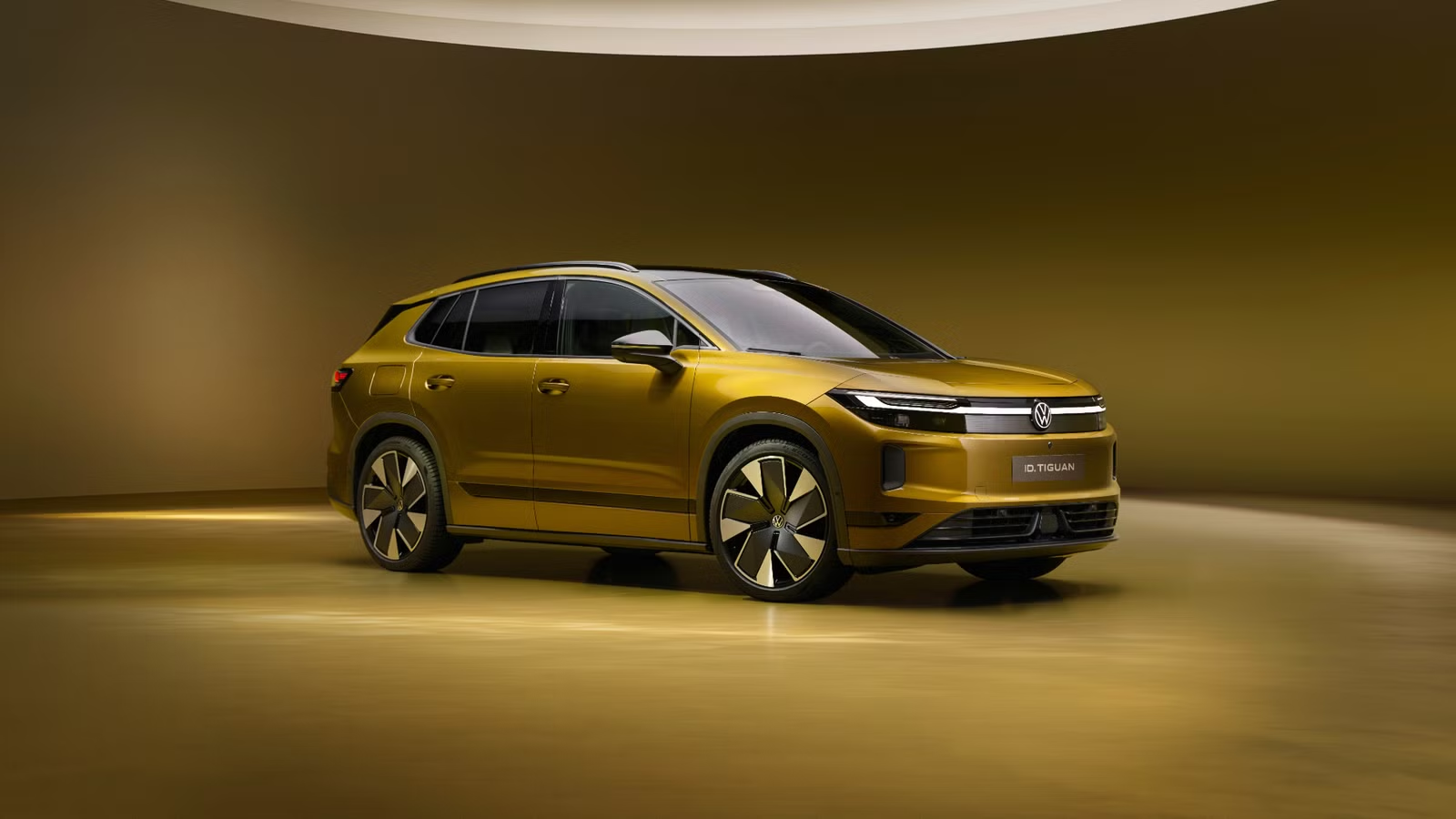
Volkswagen unveiled the ID. Tiguan on October 9, 2026, a single electric SUV built to replace both the ID.4 and ID.5 when it launches in early 2027. The two models it succeeds have sold more than 950,000 units combined, and Volkswagen is folding that success into one nameplate with a redesigned exterior, a significantly upgraded interior, and a WLTP range of up to 600 km.

The headline news isn’t just the consolidation. Volkswagen is pitching the ID. Tiguan as a step up in perceived class, with cabin materials, a new display layout, and a return to physical buttons that the brand says customers had been asking for. Pre-sales open October 13 in Germany and other European markets, starting at €42,695.
A Redesigned Exterior That Aims For The Next Class Up
Volkswagen says the ID. Tiguan drops the softer, crossover-like styling of the ID.4 and ID.5 for a tighter, more upright SUV silhouette built on the brand’s Pure Positive design language. Precise lines and tightly sculpted surfaces are meant to give the car more visual weight, and Volkswagen is bringing back classic pull-style door handles instead of the flush or touch-sensitive setups common on recent ID models.

CEO Thomas Schäfer framed the car as a merger of two of VW’s strongest nameplates: “The Tiguan is our best-selling model worldwide, and the ID.4 and ID.5 are among our most successful electric cars. The ID. Tiguan brings these two success stories together.” Built on the MEB+ platform at Volkswagen’s Emden plant, the ID. Tiguan is positioned as a companion to the gas, diesel, and hybrid Tiguan built in Wolfsburg, giving Volkswagen a two-pronged SUV lineup that spans both powertrain camps.
A Co-Driver Display Marks A European VW First
Inside, the biggest change is the new display landscape. The ID. Tiguan pairs a 10-inch driver display and a 15-inch central infotainment screen with a 12-inch co-driver display, the first time a European-market Volkswagen has offered a screen dedicated to the front passenger. The display isn’t visible to the driver, similar to a laptop privacy filter, so the passenger can run their own infotainment, media, or games without becoming a distraction. In privacy mode, that same passenger can route audio to paired Bluetooth headphones.
Volkswagen also built in a lighter touch: hitting the ‘View’ button on the steering wheel switches the cockpit into a ‘Retro’ display, bringing back the blue-and-red Golf IV instrument graphics, with the rev counter repurposed to show power flow instead of engine speed. The infotainment version of Retro mode goes further, letting owners choose from six classic VW models, including the Golf I, Golf II Country, and the Race Touareg, in a virtual garage. It’s a nice touch, but Volkswagen is clearly leading with usability rather than nostalgia.
Physical Buttons Return, And So Does Real Towing Capacity
After years of touchscreen-only controls across the ID lineup, Volkswagen is walking some of that back. Climate functions get a physical button bar in the center console, the power window controls in the driver’s door have been redesigned, and the steering wheel uses physical buttons instead of touch-sensitive pads. Volume and track changes go through a dedicated rotary controller rather than a touch slider.
Practical equipment follows the same logic. There’s a 32-liter frunk on top of up to 534 liters of cargo space, and towing capacity scales with battery size: up to 1,800 kg with the 58 kWh pack and 2,000 kg with the larger 77 kWh unit. Three powertrains will be offered at launch: a 140 kW (190 PS) rear-drive version with the 58 kWh battery, a 210 kW (286 PS) rear-drive version with the 77 kWh battery, and a 220 kW (299 PS) 4MOTION all-wheel-drive variant that shares the larger pack. Volkswagen’s preliminary figures put WLTP range as high as 600 km depending on configuration.
Pricing, Trims, And What Comes Next
The ID. Tiguan will come in four trims: Trend, Life, Style, and R-Line. Optional extras include massaging and ventilated front seats, a 480-watt Harman Kardon sound system, a panoramic sunroof, and a Vehicle-to-Load adapter that lets the car power external devices like e-bikes or electric grills. A shareable Digital Key feature lets owners lock, unlock, and start the car from a smartphone, and pass that access to other people through the Volkswagen app.
Pre-sales begin October 13 in Germany and other European markets, with a starting price of €42,695. Volkswagen hasn’t detailed a U.S. launch plan or timeline in this announcement, but the ID. Tiguan’s role as the direct successor to the ID.4 and ID.5 makes it one of the brand’s most important electric models heading into 2027.

Related posts


Latest Post


No Comments