The Hatchback That Delivers Sports-Car Handling Without Sports-Car Costs
9 minutes reading
Thursday, 8 Oct 2026 10:00 0 10 autotech
Sports cars promise the kind of steering response and cornering balance that can turn an ordinary road into something memorable. Unfortunately, that experience often arrives with an uncomfortable collection of compromises. The purchase price is only the beginning once expensive tires, elevated insurance rates, limited cargo space, and premium-fuel requirements enter the picture. An affordable compact hatchback solves most of those problems, but it can also remove much of the personality that made you want a sports car in the first place. One hatchback hiding in plain sight offers a compelling middle ground. It delivers natural steering, controlled handling, and an engaging driving position without saddling you with sports-car costs.
Horsepower dominates spec sheets, but it does not determine whether a car feels rewarding on a winding road. Responsive steering, disciplined body control, predictable grip, and well-tuned pedals matter every time you enter a corner. Those characteristics can make a moderately powered car feel more engaging than a much faster one.
That distinction matters because modern performance cars have become almost too capable for public roads. Their limits are so high that exploring them responsibly can be difficult. A less powerful car with communicative controls allows you to enjoy more of its performance without immediately reaching dangerous speeds.
The hatchback at the center of this discussion demonstrates that approach well. Car and Driver praised its natural-feeling steering, taut body control, and firm but refined ride. Its tested 0.88-g skidpad result also shows that the driving experience is supported by measurable grip rather than subjective praise alone.
Sports-Car Ownership Costs Extend Beyond The Purchase Price
Shot of 2026 Mazda3 interior showing front cabinMazda
An affordable sports coupe might not look dramatically more expensive than a well-equipped compact car, but the financial separation can grow after you leave the dealership. Performance-oriented tires generally cost more to replace, while higher insurance premiums can quietly add hundreds of dollars to the annual ownership bill. Some performance engines also require premium fuel or return poor mileage during everyday driving.
Practicality creates another compromise. A small trunk, cramped rear seats, or a difficult entry point might be acceptable on a weekend drive, but those limitations become more frustrating when the car must handle commuting, shopping, and family duties.
That creates an opening for a hatchback that concentrates on the parts of a sports car you can enjoy every day. It does not need enormous horsepower or track-focused hardware. It needs to feel responsive, balanced, and intentional while remaining affordable to buy and operate.
The 2026 Mazda3 Hatchback Is The Driver’s Car Hiding In Plain Sight
Mazda Tuned The Chassis To Feel Composed Instead Of Aggressive
A 2026 Mazda 3 hatchback being driven on a hilly roadMazda
The 2026 Mazda3 Hatchback fills that role better than its restrained specifications might suggest. Mazda has spent decades building cars around the connection between the driver and the controls, and that philosophy remains evident even though the Mazda3 is technically an ordinary compact car.
Its steering has natural weight and responds progressively instead of feeling artificially quick. The suspension keeps the body controlled through direction changes without making the ride unnecessarily harsh. At 175.6 inches long with a 107.3-inch wheelbase, the Mazda3 is also compact enough to feel manageable on narrow roads and in crowded cities.
The rear suspension uses a torsion-beam design, which may sound less sophisticated than the independent setups found on some competitors. That specification has attracted criticism, but judging the car by a single component overlooks how effectively the complete chassis works. The Mazda3 makes its capabilities accessible without requiring you to drive at extreme speeds.
Its Naturally Aspirated Engine Rewards Momentum Instead Of Brute Force
Shot of 2026 Mazda3 front seatsMazda
The standard Mazda3 Hatchback uses a naturally aspirated 2.5-liter four-cylinder producing 186 horsepower and 186 pound-feet of torque. Power reaches the front wheels through a conventional six-speed automatic transmission.
Those numbers will not threaten a dedicated sports car. The manual model completed the sprint to 60 mph in seven seconds and the quarter-mile in 15.6 seconds at 91 mph. The automatic base model should deliver similarly ordinary straight-line performance.
Close-up shot of 2026 Mazda3 Hatchback rear light and badgeMazda
That modest acceleration is part of the conflict surrounding the Mazda3. Its steering and body control encourage you to seek out interesting roads, but its engine does not provide the explosive acceleration expected from a modern hot hatch. You must preserve momentum, choose a clean line, and use the available power intelligently.
For some drivers, that involvement is precisely the appeal. The engine responds predictably, the six-speed automatic avoids the elastic behavior of many CVTs, and the car does not need triple-digit speeds to become entertaining.
The Base Mazda3 Creates The Strongest Value Case
A $25,650 Starting Price Keeps It In Economy-Car Territory
A side profile view of a 2026 Mazda 3 hatchback in motionMazda
The 2026 Mazda3 2.5 S Hatchback starts at an MSRP of $25,650. That figure matters because it places the Mazda3 within the same general price range as mainstream compact cars rather than dedicated performance models. You do not have to purchase an expensive trim to receive the core chassis tuning responsible for its engaging road manners.
The base model includes 16-inch alloy wheels, LED exterior lighting, an 8.8-inch center display, Apple CarPlay, Android Auto, and an eight-speaker audio system. Its standard safety equipment includes automated emergency braking, blind-spot monitoring, rear cross-traffic alert, lane-departure warning, and adaptive cruise control on automatic-transmission models.
Choosing the base trim also means using smaller wheels with tires that should be less expensive to replace than the 18-inch alternatives fitted to higher trims. The taller sidewalls can provide better ride comfort and more protection from pothole damage, even if the larger wheels look sportier.
Climbing The Trim Ladder Weakens The Affordability Argument
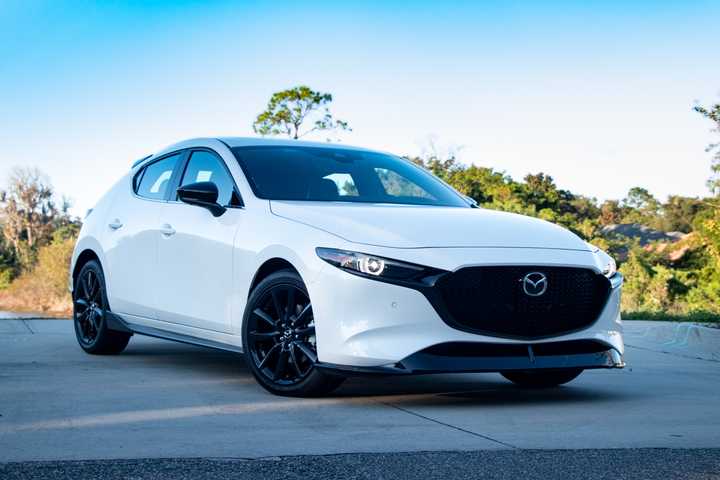
Rear 3/4 shot of Mazda Mazda3 hatchback driving on roadMazda
The Mazda3 lineup gives you several ways to add power, traction, and equipment, but every upgrade moves the car further from the headline’s central promise. The 2.5 S Select Sport Hatchback costs $26,840, while the Preferred rises to $28,640. The Carbon Edition adds AWD and starts at $30,965. Mazda reserves the six-speed manual for the 2.5 S Premium Hatchback, which costs $31,650 before destination. That represents a $6,000 increase over the base hatchback simply to reach the only manual-equipped trim.
At the top, the Turbo Premium Plus combines AWD with a turbocharged engine producing up to 250 horsepower and 320 pound-feet when using premium fuel. It can provide genuinely rapid acceleration, but its $38,090 starting price is $12,205 above the base car.
The turbocharged version is the faster Mazda3, but the naturally aspirated 2.5 S is the better answer to this particular value question. It preserves the responsive chassis and useful hatchback body while keeping the purchase price firmly below $30,000.
Everyday Running Costs Keep The Fun Manageable
Thirty Combined MPG Makes It A Sensible Commuter
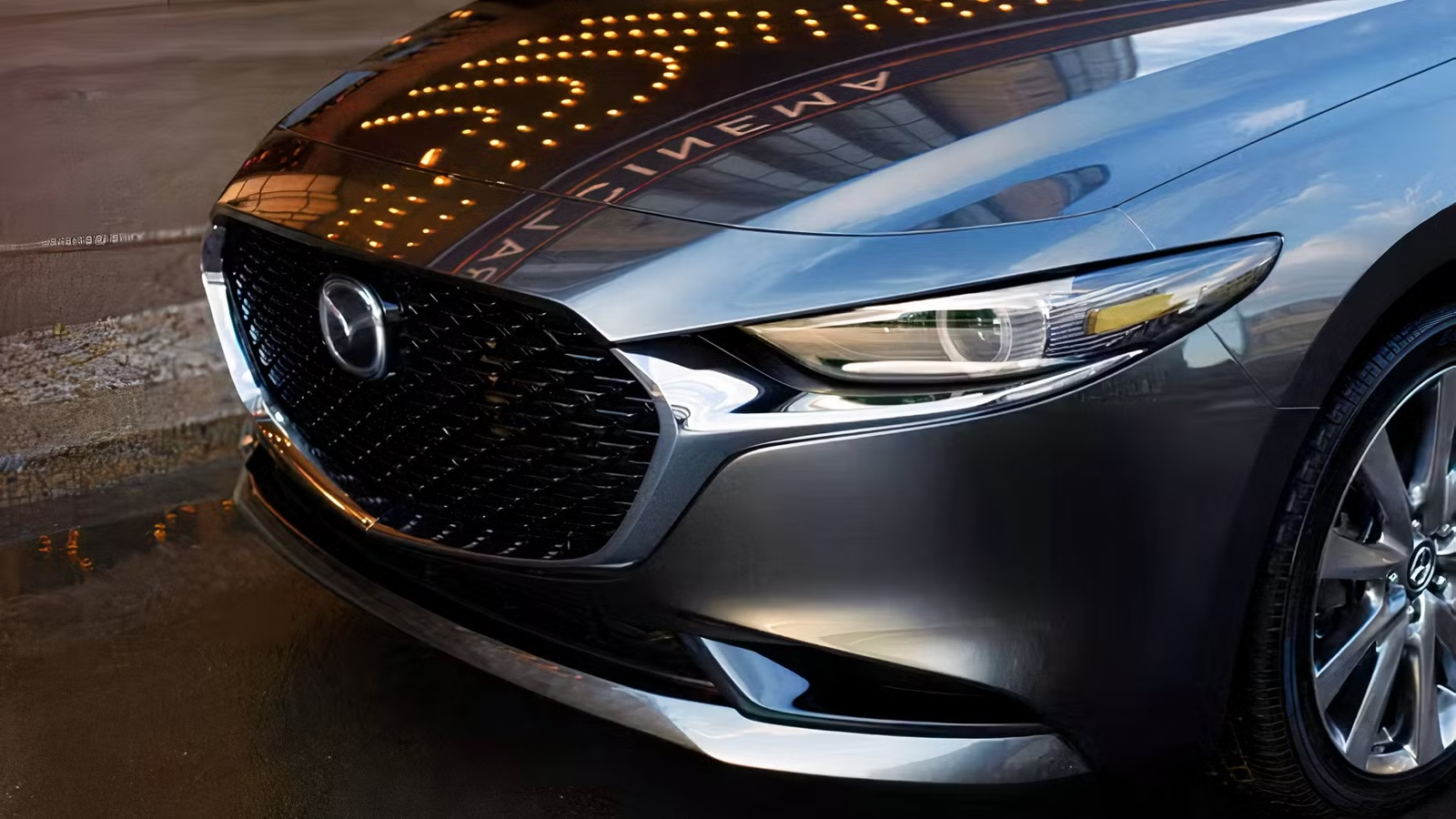
A look at the front and side profile of the 2026 Mazda 3 hatchback.Mazda
The naturally aspirated 2026 Mazda3 Hatchback with FWD is rated at 26 city/34 highway mpg, and 29 mpg combined. That combined figure is the most defensible number for mixed everyday use, while the 34-mpg highway rating better represents extended road trips.
The turbocharged AWD model falls to 23 city/31 highway mpg, and 26 mpg combined. It also produces its maximum output on premium fuel, further increasing the operating-cost difference. The standard engine, therefore, makes considerably more sense if affordability matters more than acceleration.
No Turbo, No Dual-Clutch: Why The Mazda3’s Simplicity Is A Long-Term Advantage
Front action shot of 2026 Mazda3 Hatchback driving on canyon roadMazda
A naturally aspirated four-cylinder engine and a conventional six-speed automatic may not sound exotic, but that simplicity suits a car intended to combine driver enjoyment with everyday ownership.
There is no turbocharger on the base engine, and the automatic is not a dual-clutch transmission that requires specialized service. That does not guarantee perfect reliability, but it removes some of the costly hardware commonly associated with high-performance cars.
2026 Mazda 3 Turbo interior shot showing dashTopSpeed | Michael Frank
Mazda covers the car with a three-year/36,000-mile limited warranty and a five-year/60,000-mile powertrain warranty, but complimentary scheduled maintenance is not included, so oil changes, tire rotations, and other routine services remain the owner’s responsibility.
You should still check the VIN through NHTSA’s recall tool before purchasing any individual vehicle. New recalls can appear after a car enters production, and a VIN lookup is more useful than assuming every example has the same history.
The Mazda3’s Weaknesses Keep The Argument Honest
Rear Visibility And Passenger Space Pay For The Styling
The Mazda3 Hatchback’s dramatic shape imposes measurable compromises. Its thick rear pillars restrict outward visibility. Rear passengers receive 34.4 inches of legroom and approximately 37.2 inches of headroom. Cargo capacity behind the rear seats measures 20.1 cubic feet. Those numbers make the Mazda3 useful, but not exceptionally spacious. If you routinely carry adults in the second row or need maximum cargo capacity, a roomier hatchback may serve you better.
It Is The Right Hatchback For Handling Buyers, Not Horsepower Shoppers
Rear 3/4 action shot of 2026 Mazda3 Hatchback driving on canyon roadMazda
The base Mazda3 Hatchback does not replace a true sports car. It is slower, heavier, and less specialized. It also lacks the manual transmission, limited-slip differential, and track-ready equipment that a serious performance buyer might expect.
What it provides is the portion of the sports-car experience that matters most during ordinary driving. Its steering feels natural, its body remains composed, and its chassis encourages you to enjoy a winding road. At the same time, it offers four doors, usable cargo space, 30 mpg combined, and a starting price below $26,000.
If your priority is maximum acceleration, the Mazda3 Turbo or a genuine hot hatch will make more sense. If you want engaging handling without turning every tire replacement, fuel stop, or insurance payment into a performance-car expense, the naturally aspirated Mazda3 Hatchback delivers the smarter balance.










No Comments