
Hyundai’s Next Tucson PHEV Ditches The DCT For A 6-Speed Automatic, And That’s The Real Story
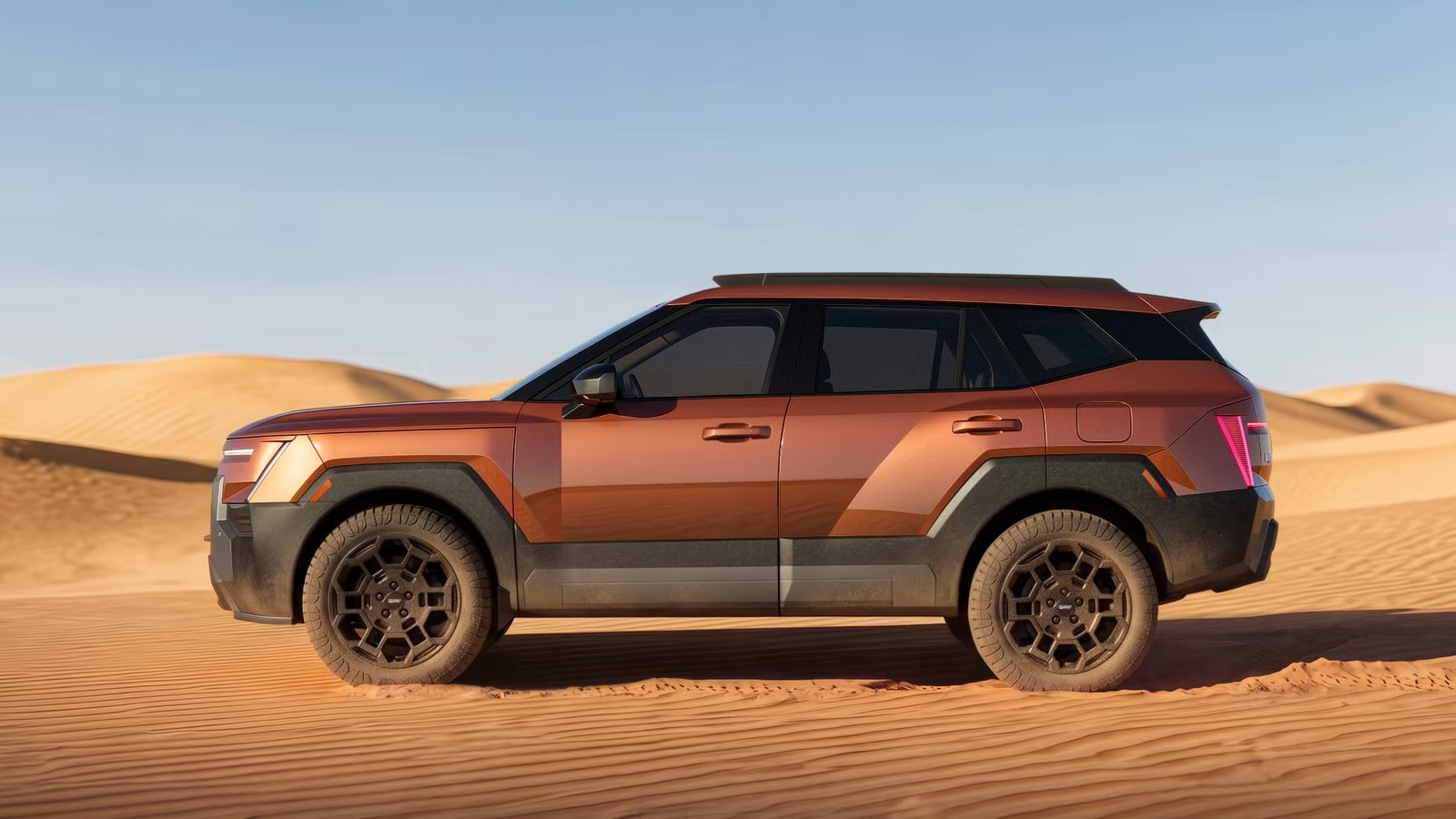
Hyundai confirmed the full spec sheet for the 2027 Tucson plug-in hybrid this week, and the number that matters most isn’t the 292 PS output or the 81 km electric-only range. It’s the transmission. The outgoing Tucson PHEV paired its hybrid system with a seven-speed dual-clutch transmission that current owners have complained about for years, citing low-speed shudder and jerky shifts in stop-and-go traffic. The 2027 model swaps that unit for a conventional six-speed automatic.

That’s a quiet change on a spec sheet dominated by a new 17.1 kWh battery and a 7.9-second 0-100 km/h time. But for anyone who’s actually lived with a dual-clutch Tucson PHEV, it’s the headline.
Why The Dual-Clutch Transmission Was The Tucson PHEV’s Weak Spot
Dual-clutch transmissions are built for quick, crisp shifts at speed, which is exactly why automakers like them for efficiency and response. The tradeoff shows up at low speed, where DCTs have to slip two clutch packs to mimic the smooth creep of a torque converter. In stop-and-go driving, parking lots, and low-speed crawling, that translates to hesitation, jerkiness, and the shudder that Tucson PHEV owners have flagged repeatedly since the current generation launched. It’s a known characteristic of dry and wet dual-clutch setups across the industry, not just a Hyundai quirk, but it’s been a persistent sticking point for a plug-in hybrid that’s supposed to glide around town on electric power.

That’s the part that stings. A PHEV’s whole pitch is silky low-speed EV driving for the daily commute, and a transmission that hunts and shudders right at the moment you’re easing into traffic undercuts that pitch directly.
The 6-Speed Automatic Fix, And What It Signals

The new Tucson PHEV drops the DCT entirely in favor of a six-speed torque-converter automatic, the same basic architecture Hyundai already uses in the Tucson Hybrid. Torque-converter automatics handle low-speed modulation inherently better than dual-clutch units because the fluid coupling smooths out exactly the kind of start-stop transitions that gave the old PHEV its reputation. It’s a more conventional, more proven layout, and Hyundai didn’t need to reinvent anything to deploy it here.
The fact that Hyundai built an all-new generation of Tucson, rewrote the design language, overhauled the infotainment stack, and still used the opportunity to replace a transmission that wasn’t failing on paper but was clearly failing owners in daily use says something. It’s not a flashy update. It doesn’t show up in a spec comparison chart next to horsepower and EV range. But it’s the kind of fix that only comes from a company that’s actually reading complaint threads and service records, not just chasing bigger numbers for the brochure.
The Rest Of The Powertrain, For Context

The new six-speed automatic backs up a reworked plug-in hybrid system built around the familiar 1.6-liter turbocharged four-cylinder, now paired with two electric motors, including a notably punchier 107 PS traction motor that lifts total output to 292 PS and 380 Nm of torque. A larger 17.1 kWh battery pushes the electric-only range to 81 km, around 20 km more than the outgoing car, with AC charging now capable of 7.2 kW. Hyundai quotes a 7.9-second 0-100 km/h sprint, and the PHEV is only offered with all-wheel drive this time around.
Those are solid gains on their own. But for anyone cross-shopping the next Tucson PHEV against a current model that’s still shuddering through parking lots, the transmission swap is the line item that should move the needle. It’s the difference between a spec sheet upgrade and an ownership upgrade, and only one of those actually shows up every time you pull out of your driveway.
Hyundai hasn’t confirmed every market that’ll get the new Tucson PHEV, but it’s expected to land in North America and Europe in 2027 following a Korean launch later this year. Current owners weighing whether to wait for the next generation now have a concrete answer on the one complaint that mattered most.

Related posts

Latest Post


No Comments