
12 Fastest Production Motorcycles Currently On Sale
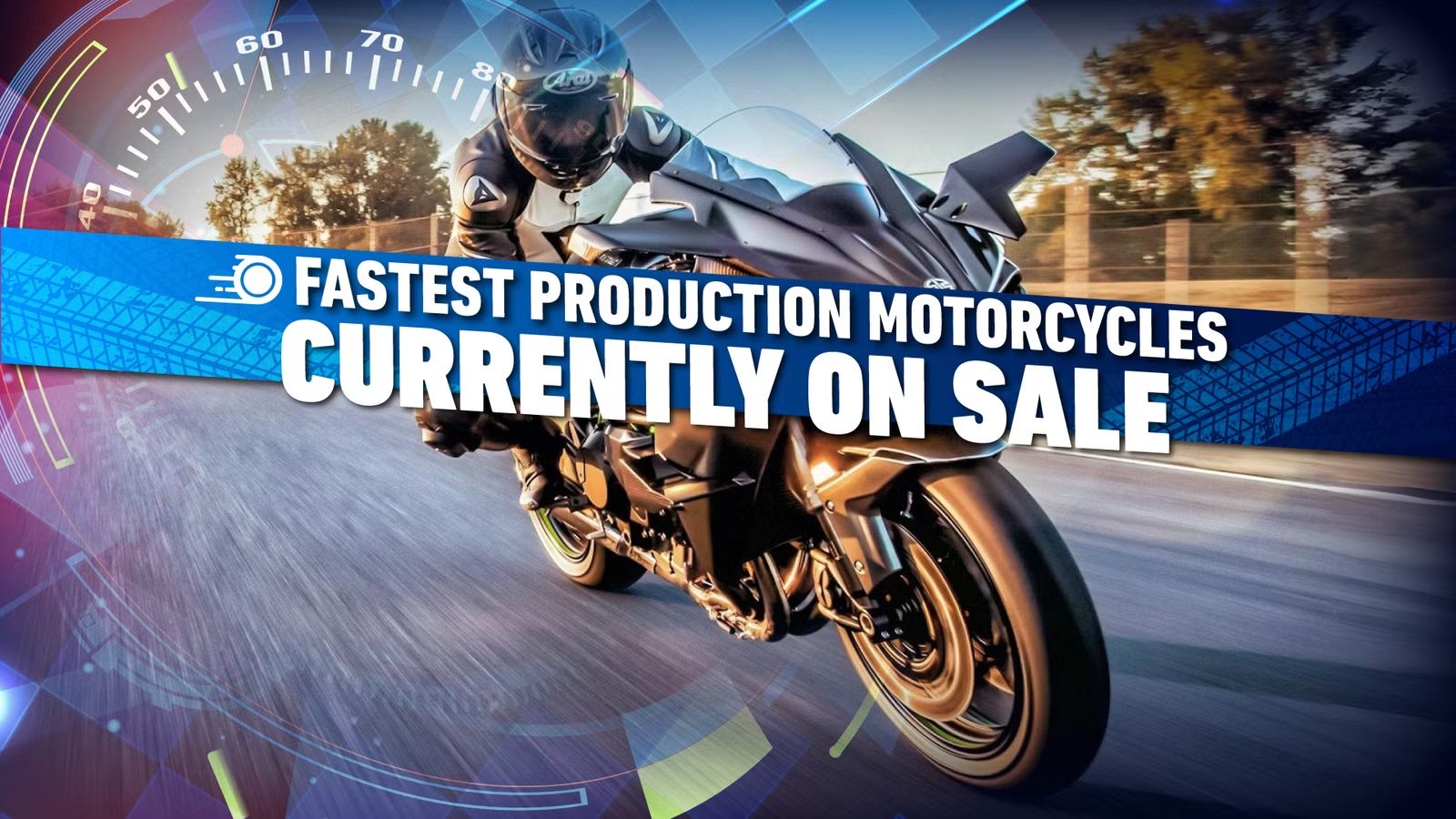
Sensibility might argue that top speed isn’t everything, that a motorcycle’s power delivery, handling, and acceleration matter more in the real world. Fair enough. But you can’t ignore that since the inception of motorcycles, top speed has been the go-to way to measure how far motorcycle engineering has come. A century ago, the Brough Superior SS100, with a top speed of 100 miles per hour, was the fastest bike in the world. Today, even some sub-400cc bikes can do the ton without breaking a sweat.

The motorcycling industry has come a long way since then. Modern top-tier sports bikes are nothing short of engineering marvels, and even the slowest liter-class superbikes are electronically capped at 186 miles per hour. Meanwhile, the fastest production motorcycle in the world can outrun an F-16 fighter jet during takeoff. To show just how wild bikes have gotten, here are 12 of the fastest bikes in the world. These bikes prove that the need for speed is still alive, and, thanks to one electric bike, not going anywhere anytime soon.
The list is ranked based on the top speed, from lowest to highest. When engines are shared, the fastest variant is listed, and for electronically limited models, horsepower is prioritized in the ranking.
2026 Suzuki Hayabusa
Top Speed: 186 MPH (Limited)

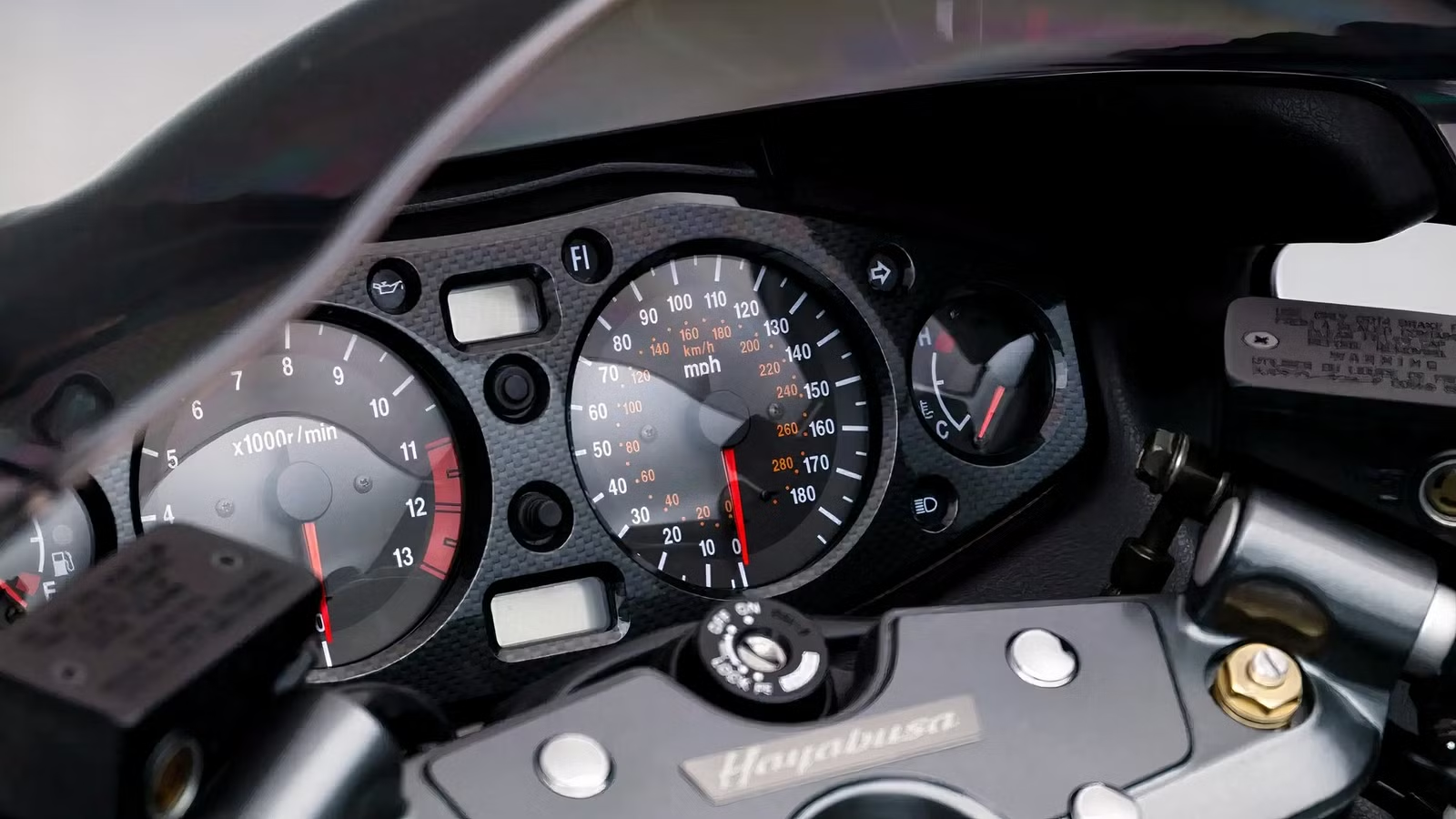
The legendary Suzuki Hayabusa will always appear on lists of the fastest motorcycles. The hyperbike debuted in 1999, becoming the world’s fastest production motorcycle. It not only breached 190 miles per hour, but put an end to speed wars and birthed the Gentlemen’s Agreement that restricted sports bikes to 186 miles per hour. In its third-generation avatar, the Hayabusa still remains restricted.

It’s still a beast of a motorcycle, though, employing a 1,340cc inline-four engine that produces 187 horsepower and 110 pound-feet of torque, a 12-horsepower increase since its first iteration. However, the power figures only tell part of the story, as Suzuki altered torque delivery for the latest-gen model. So, the ‘Busa is said to pull harder than before, managing a 0 to 60 miles per hour time of under three seconds.
Top 3 Rivals
- 2025 Kawasaki Ninja ZX-14R
- 2026 Kawasaki Ninja H2
- 2026 Kawasaki Ninja H2 SX
2026 Kawasaki Ninja ZX-10R
Top Speed: 186 MPH (Limited)

The Kawi superbike sits below the other Big Four rivals purely because it makes the least power. However, you still shouldn’t take this Ninja for granted. It’s still as serious as ever, and in its latest iteration, the ZX-10R is also at its most advanced state. It gets a 190-horsepower inline-four engine that’s electronically limited to 186 miles per hour.

Compared to its rivals, the Ninja ZX-10R is known for its top-end surge and unparalleled front-end stability, which make it an absolute track weapon. It also boasts high-end features such as Showa fully adjustable suspension, Brembo M50 monobloc calipers, Ohlins steering damper, and much more. If this list weren’t ranked purely on speed and horsepower, this Ninja would rank much higher for track performance.
Top 3 Rivals
- 2026 Honda CBR1000RR-R Fireblade SP
- 2026 Yamaha YZF-R1M
- 2027 Suzuki GSX-R1000
2027 Suzuki GSX-R1000
Top Speed: 186 MPH (Limited)

Suzuki’s flagship sportbike, the GSX-R1000, has always been about balancing performance with reliability, and the latest generation only builds on the formula. The liter-class Gixxer gets an updated 999.8cc inline-four engine that is said to retain the same level of drivability and reliability as its predecessor while pumping out 192.3 horsepower, making it the most powerful and hardest-accelerating model in GSX-R history.

The engine hangs in the legendary compact chassis renowned for its nimble handling, which is complemented by Showa suspension, monobloc calipers, modern rider aids, and a bidirectional quickshifter. And considering this bike starts at well under $20,000, it’s one of the best-bang-for-the-buck models in the fastest motorcycle in the world lineup. Suzuki also offers the GSX-R1000R and GSX-R1000RS versions, which feature more premium hardware.
Top 3 Rivals
- 2026 Honda CBR1000RR-R Fireblade SP
- 2026 Yamaha YZF-R1M
- 2026 Kawasaki Ninja ZX-10RR
2026 Yamaha YZF-R1M
Top Speed: 186 MPH (Limited)

The YZF-R1M is Yamaha’s flagship, MotoGP-derived superbike. It’s powered by a 998cc engine with a crossplane crank, which promises performance right from the moment you drop the clutch, along with a mental exhaust note. This engine produces 197.26 horsepower to keep you entertained and is enough to take the bike to 186 miles per hour, of course, electronically limited. Even at number 9 on this list, the YZF-R1M is among the fastest motorcycles in the world you can buy today.

The crossplane crank, with a 1-3-2-4 firing order, is claimed to deliver strong, linear torque and better acceleration. As a result, the bike can go from 0 to 60 miles per hour in just 2.6 seconds. Helping the bike’s performance are plenty of carbon fiber components to keep the weight low and MotoGP-inspired winglets that promise to keep the bike glued to the road. While this may not be the fastest street-legal motorcycle, it’s good enough to keep up with most of them on a circuit.
Top 3 Rivals
- 2025 Honda CBR1000RR-R Fireblade SP
- 2027 Suzuki GSX-R1000
- 2026 Kawasaki Ninja ZX-10R
2025 Kawasaki ZX-14R
Top Speed: 186 MPH (Limited)

The Kawasaki Ninja ZX-14R was designed to take on the legendary Hayabusa. To get there, Kawasaki employed a similar formula as the Suzuki, giving the bike a long wheelbase for straight-line stability, a bulky fairing for aerodynamic efficiency, and a big-bore inline-four engine, with 197 horsepower on tap. That’s also the world’s largest displacement inline-four engine, by the way. But thanks to the aforementioned agreement, this Ninja has never gotten a chance to unsheath its sword.

The Kawasaki Ninja ZX-14R comes electronically restricted to 186 miles per hour from the factory, though some owners claim an unrestricted ZX-14R can breach 200 miles per hour. Kawasaki calls the ZX-14R a Quarter-Mile King, and that’s where it can beat the Busa. With a quarter-mile time of 9.7 seconds at 147+ miles per hour, the ZX-14R is one of the quickest motorcycles in the world. While it may have gotten incremental upgrades along the way, the ZX-14R still remains a worthy contender to the Hayabusa.
Top 3 Rivals
- 2026 Kawasaki Ninja H2 SX
- 2026 Kawasaki Ninja H2
- 2026 Suzuki Hayabusa
2026 Honda CBR1000RR-R Fireblade SP
Top Speed: 186 MPH (Limited)

When the Fireblade hit the market 30 years ago, it rocked everyone’s world. It’s also something Honda intended with the latest CBR1000RR-R Fireblade SP. The superbike has a high-strung 999cc inline-four engine for maximum performance, ripe with dual-stage injection and an Akrapovic exhaust as standard. The engineers also tuned the bike in accordance with HSTC calibration data, straight from the company’s WSBK race bikes.

Thanks to all the race-derived data and tuning, the triple-R Fireblade produces 215 horsepower while weighing in at just 445 pounds, giving the bike a power-to-weight ratio of 0.48 horsepower per pound. This power-to-weight ratio gives the Fireblade SP an edge over its Japanese liter-class rivals, which are a few pounds heavier. To no one’s surprise, the motorcycle is still locked at 186 miles per hour, although it reaches this speed in just fourth gear, making it one of the fastest production motorcycles in the liter-class segment.
Top 3 Rivals
- 2026 Ducati Panigale V4 S
- 2026 Aprilia RSV4 Factory
- 2027 BMW M 1000 RR
2026 MV Agusta Superveloce 1000
Top Speed: 186.4+ MPH

The Superveloce 1000 is a one-of-a-kind performance-first neo-retro sports bike that’s a sight to behold. And it combines its stunning design with track-dominating performance. The 998cc inline-four engine produces 208 horsepower, which is good for a claimed top speed of 186 miles per hour and a 3.1-second 0-to-60-mph sprint, making it the fastest motorcycle with retro appeal.

The gorgeous bodywork also hides plenty of high-end bits, including extensive use of carbon fiber, Ohlins electronic suspension, and advanced rider aids. Interestingly, the Superveloce shares its engine with the Rush 1000 and Brutale 1000, making them the fastest naked motorcycles in the world, with a claimed top speed of 186 miles per hour.
Top 3 Rivals
- 2026 Ducati Panigale V4 R
- 2026 Triumph Speed Twin 1200 Cafe Racer Edition
- 2026 Aprilia RSV4 Factory
2027 BMW M 1000 RR
Top Speed: 189 MPH (U.S. Spec)

BMW was one of the first manufacturers to ditch the Gentlemen’s Agreement in the late ‘90s. Today, however, the Bavarian giant is home to one of the fastest motorcycles in the world, the M 1000 RR. The M is a spruced-up version of the normal S 1000 RR, armed to the teeth with more of everything. At heart is an inline-four engine that churns out 205 horsepower and 83 pound-feet of torque, identical to the S RR.

Where the M 1000 RR takes the cake is what it adds to the package, with a complete M treatment. Upgrades include M Carbon wheels, M titanium exhaust system, M Brakes, and M Winglets 3.0 (with +33 percent downforce), shaving 9 pounds off the bike. This improved power-to-weight ratio gives the motorcycle a claimed top speed of 189 miles per hour (in the U.S.), a smidge more than the standard S RR, but this is enough to make it one of the fastest street-legal motorcycles in the world.
Top 3 Rivals
- 2026 Ducati Panigale V4 R
- 2026 Aprilia RSV4 Factory
- 2026 Yamaha YZF-R1M
2026 Aprilia RSV4 Factory
Top Speed: 190 MPH

If you’re into MotoGP, you’d know Aprilia has made massive strides in the past couple of years. And all of it shows on its flagship offering, the RSV4 1100 Factory. Its engine capacity has grown from 1,077cc to 1,099cc, which helps it produce a baffling 220 horsepower and 94 pound-feet of torque. This makes it THE most powerful liter-class motorcycle in America (Ducati and BMW are restricted here), with the best power-to-weight ratio.

What does it all mean in the real world? Well, you’re looking at a speedo-indicated top speed of 190 miles per hour and a 0 to 60 miles per hour stint of under three seconds. Unlike most of its rivals, the RSV4 isn’t restricted to 186 miles per hour, either. In its latest iteration, the 2026 RSV4 also features a charming MotoGP-inspired design, with an aerodynamic package that reduces wheelie tendency by 8 percent and drag coefficient by 6 percent.
Top 3 Rivals
- 2027 BMW S 1000 RR
- 2026 Ducati Panigale V4
- 2026 Honda CBR1000RR-R Fireblade SP
2026 Ducati Panigale V4 R
Top Speed: 205 MPH (With Racing Exhaust)

The list of fastest motorcycles without a Ducati is incomplete. The Italian manufacturer’s flagship superbike is a deserving candidate here, and in its latest avatar, it is better (and prettier) than ever. We’re talking about the Panigale V4 R, a sports bike derived from MotoGP and WSBK know-how. While plenty of special bits are in the bike, the Desmosedici Stradale 90-degree V4 takes the center stage.

The motorcycle produces 208.4 horsepower in stock trim, rising to an insane 239 horsepower with a racing exhaust and Shell Performance Oil. In stock trim, the V4 R can reach a top speed of 197 miles per hour, which is raised to 205 miles per hour with the racing exhaust. The new 2026 model also introduces MotoGP Corner Sidepods and the Ducati Racing Gearbox, with neutal below first gear.
Top 3 Rivals
- 2026 Aprilia RSV4 Factory
- 2027 BMW M 1000 RR
- 2026 Honda CBR1000RR-R Fireblade SP

Related posts

Latest Post


No Comments