
5 Cars in Jay Leno’s Garage That Nobody Remembers
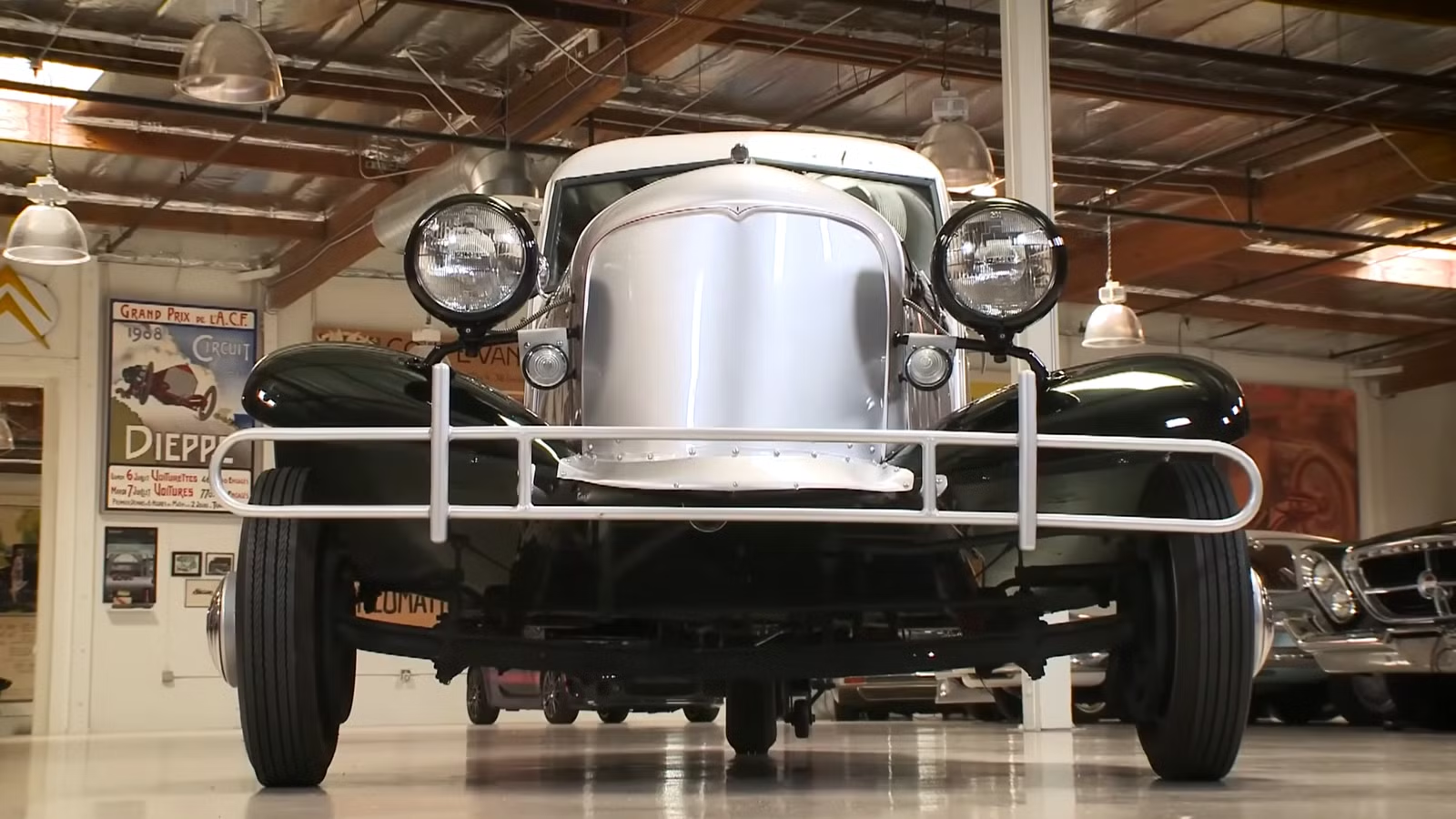
Jay Leno‘s garage has the cars everyone expects: fast McLarens, old muscle, priceless classics, and machines that look expensive enough to make a valet sweat. But the real fun hides in the odd corners. That is where the strange little cars live: the cars from dead brands, the cars with forgotten engines, and the cars built by people who looked at the rulebook and said, “Neat. Anyway.”

These five vehicles show why Leno’s collection matters beyond money. They are rolling “what if?” stories. One helped launch the rotary engine before Mazda made it famous. One runs on steam and sounds like a tea kettle with a racing license. One came from a teenager with junkyard parts and nerve.
 32 autotech
The Rarest Car In Jay Leno’s Collection
Jay Leno has a plethora of cars in his garage, but which is the rarest?
1966 NSU Spider

The NSU Spider deserves a better memory than it gets. Most enthusiasts hear “rotary” and think Mazda RX-7, maybe the 787B at Le Mans, then start making apex seal jokes because tradition demands it. But before Mazda made the rotary cool, NSU put Felix Wankel’s odd little engine into a real production car. The Spider launched in 1964, three years before Mazda’s Cosmo 110S, and one of these early rotary cars now sits in Leno’s collection.
|
Production Years |
Engine |
Power |
Torque |
Top Speed |
|
1964-1967 |
498cc single-rotor Wankel |
50 hp |
52 lb-ft |
100 mph |
The engine makes the Spider fascinating, but the whole package feels like a science fair project in Italian clothes. Bertone shaped the body, NSU mounted the tiny single-rotor engine in the rear, and the car ended up with luggage space at both ends because the engine barely took up room. It made about 54 hp, so nobody confused it with a Cobra. Still, there’s a lot of appeal sitting in the weirdness.
1906 Stanley Steamer Vanderbilt Cup Racer

The 1906 Stanley Steamer Vanderbilt Cup Racer looks like it escaped from a museum, found a boiler, and chose violence. It also points to a time when gasoline had not yet won the argument. Early carmakers tried everything – gas, electric, steam, hope, and probably one guy with a slingshot. Stanley built steam cars that could run with serious speed, and the Vanderbilt Cup link gives this one a proper racing backstory. The original Stanley Vanderbilt racers did not make the 1906 race in time, and later histories note that the original cars apparently did not survive. Leno owns one of the known replicas.
|
Production Years |
Engine |
Power |
Torque |
Top Speed |
|
One-off replica |
Two-cylinder steam engine |
20 hp |
n/a |
About 65 mph |
That “replica” label does not make it tame. Leno’s car uses a bigger 30-inch boiler, a larger burner, electric pumps, and upgraded braking hardware, which turns it into a rolling pressure cooker with ambition. The whole thing feels backward to modern drivers – there is no instant start, no lazy push-button commute, and no quiet hybrid hum. The driver must manage fire, water, pressure, and patience.
1931 Shotwell

The 1931 Shotwell might be the most Jay Leno car in Jay Leno’s garage, even though Jay did not build it. Bob Shotwell did. He was a teenager in Minnesota when his father gave him the oldest dad challenge in the book – if he wanted a car, he should build one. Most kids would complain, but Shotwell apparently heard, “Please invent a vehicle.” So he built a three-wheeler in 1931 and powered it with a 77-cubic-inch Indian motorcycle engine.
|
Production Years |
Engine |
Power |
Torque |
Top Speed |
|
One-off, built in 1931 |
77ci Indian motorcycle engine |
About 30 hp |
n/a |
60-65 mph |
The story gets better because Shotwell actually drove the thing. A lot. According to various sources, he put more than 150,000 miles on it and even made a 6,000-mile round trip to the Northwestern U.S. Later, he wrote to Leno and asked him to take the car, with one clear condition: do not destroy it. That makes the Shotwell more than a curiosity. It is a one-car brand, a teenage engineering bet, and proof that car culture does not always start in a factory. Sometimes it starts with a kid, a motorcycle engine, a pile of parts, and a father who probably regretted saying anything.
1965 Jensen C-V8

The 1965 Jensen C-V8 hides its best joke under the hood. From the outside, it looks like a strange British grand tourer that cannot decide whether it wants to be elegant or scare small dogs. Under the fiberglass body sits a Chrysler 383-cubic-inch V8 with 330 horsepower and about 460 lb-ft of torque, backed by a Chrysler TorqueFlite automatic. Leno’s car is a right-hand-drive Series III, and he had looked for a C-V8 for years before finding one in California.
|
Production Years |
Engine |
Power |
Torque |
Top Speed |
|
1962-1966 |
6.3-liter Chrysler V8 |
325 hp |
425 lb-ft |
136-150 mph |
That mix makes the C-V8 wonderful. Britain supplied the leather, wood, charm, and complicated styling. America supplied the big, lazy V8 that barely had to work. The result was a fast four-seat GT with real long-distance muscle. It also had a fiberglass body, steel doors, a 160-mph speedometer, and SelectARide shocks that sound like space-age magic but did not always act like it. Only about 500 C-V8s were built from 1962 to 1966, which helps explain why the later Jensen Interceptor gets all the attention while the C-V8 sits in the background making better noises.
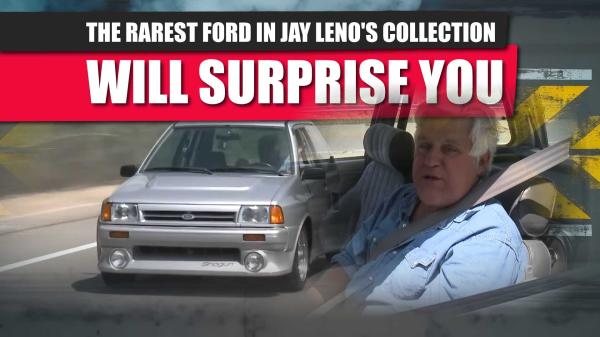
The Rarest Ford In Jay Leno’s Collection Will Surprise You
The rarest Ford in Jay Leno’s collection might shock you. It’s small, powerful, and unlike anything else in his garage.
1922 Wills Sainte Claire

The 1922 Wills Sainte Claire came from a man who already helped change the car business before he put his own name on a radiator badge. C. Harold Wills worked closely with Henry Ford, helped develop key Model T features, and later left Ford with enough money to start his own company in Marysville, Michigan. His car was never aimed at achieving mass sales like the Model T, though. It had a different mission.
|
Production Years |
Engine |
Power |
Torque |
Top Speed |
|
1921-1925 |
265ci V8 |
65 hp |
n/a |
Over 70 mph |
Leno’s Wills Sainte Claire shows why the brand still fascinates serious car people. Its 265-cubic-inch overhead-cam V8 made roughly 65 to 70 horsepower, used thermosiphon cooling instead of a water pump, and featured a gear-driven fan. The design drew from Hispano-Suiza aircraft thinking, and the car used high-grade materials at a time when many buyers only wanted reliable transportation. That excellence made it expensive, and expensive small luxury cars had a rough road in the 1920s. Wills Sainte Claire built around 12,000 to 14,000 cars, with roughly 80 believed to survive. Leno’s restored example keeps a brilliant failure alive.
Source: Jay Leno’s Garage, The Drive, Motor Authority

Related posts



Latest Post


No Comments