
Why Ford’s 302 Windsor Outlasted Every Small-Block Of Its Era
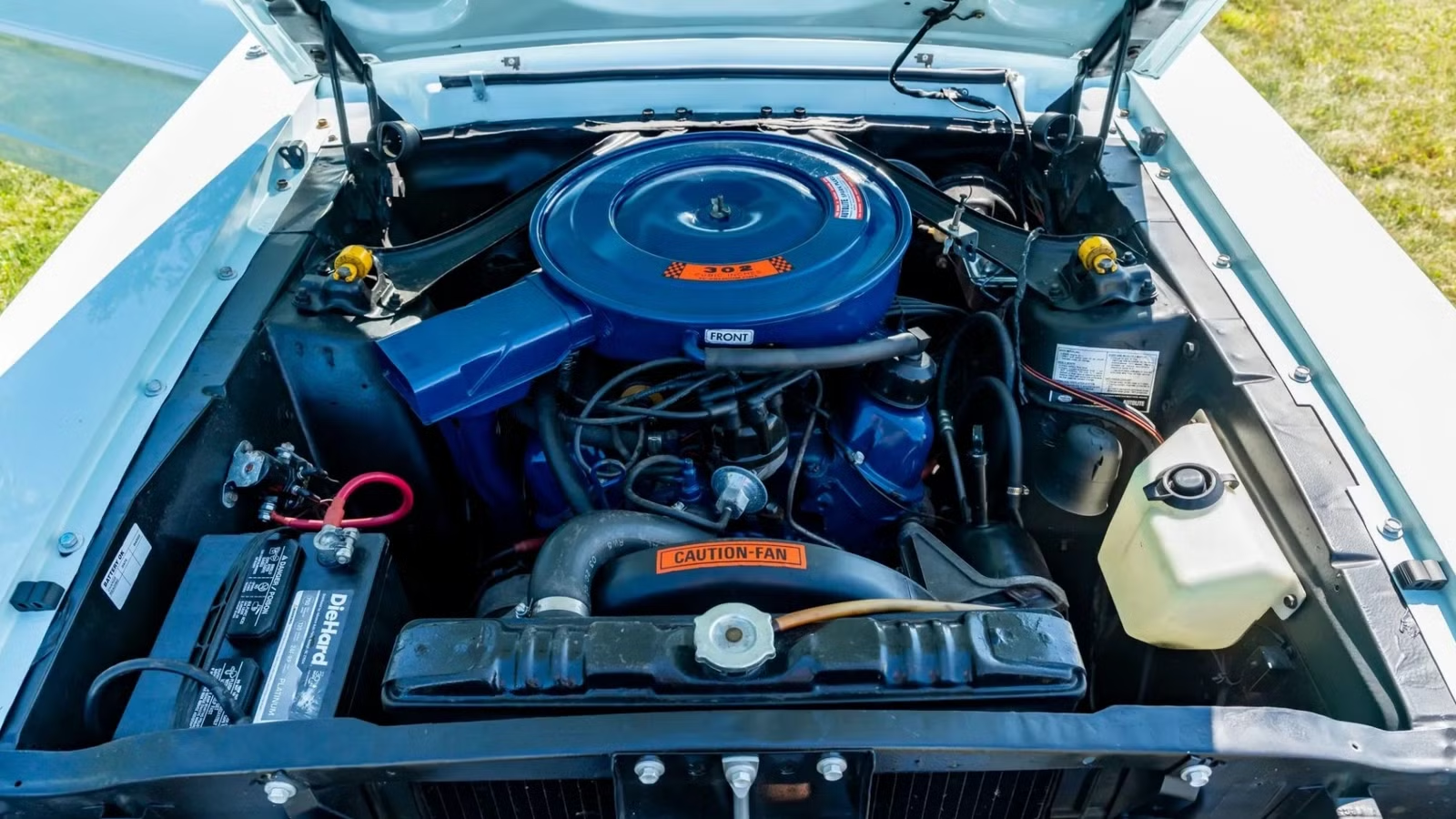
Ford’s 302 Windsor was never the largest, most powerful, or most exotic small-block V8 of its time. That became its advantage. While specialized engines disappeared as emissions rules, fuel prices, and changing performance priorities reshaped Detroit, Ford kept finding new jobs for the compact 302. The Windsor family began with the 221 ci (cubic inch) engine in 1961 and the 260 ci version in 1962, but the 302 ci displacement did not debut until 1968. It remained available through the 2001 model year, evolving from a carbureted V8 into a roller-cam, fuel-injected powerplant. Its longevity came from adaptability rather than outright dominance.
The Small-Block Wars Eliminated Engines That Could Not Adapt
The Windsor Family Existed Before The 302 Arrived

Ford’s Windsor small-block story began several years before the 302 entered production. The original 221 ci engine appeared for the 1962 model year after production began in 1961, followed by the 260 and then the 289 in 1963. These compact engines established the architecture that powered early Mustangs and Shelby Cobras. The 302 arrived in 1968 by combining the Windsor’s familiar 4.00-inch bore with a longer 3.00-inch stroke. Ford increased displacement without abandoning the engine’s compact dimensions or existing manufacturing foundation.
The standard Windsor 302 should not be confused with the 1969–1970 Boss 302. The Boss combined a Windsor-based block with canted-valve cylinder heads derived from the Cleveland design. It was a specialized performance engine. The ordinary 302 became the adaptable workhorse installed in Mustangs, family cars, pickups, vans, Broncos, and Explorers.
The 1970s Punished Specialized Performance Engines

The conditions that created the muscle-car era did not last. Insurance costs increased, emissions regulations tightened, fuel became more expensive, and high-compression engines designed for premium leaded gasoline became difficult to justify. Specialized Ford V8s were particularly vulnerable. The American-market 351 Cleveland offered tremendous performance potential but disappeared after a relatively short run. The 351M and 400 served larger cars and trucks without developing the 302’s broad performance identity.

Chevrolet’s original small-block architecture remained in selected applications slightly longer, so the 302 did not literally outlast every competing design. The 302 survived because Ford could detune it, clean up its emissions, add fuel injection, or assign it to another vehicle. But adaptability doesn’t come from luck — it comes from decisions made in the engineering room before a single engine was ever assembled. The 302’s architecture contained something its rivals didn’t
Compact Engineering Gave The 302 Room To Change
A Short Deck Helped It Fit Almost Anywhere


The production 302 used an approximately 8.2-inch deck height. Deck height is the distance between the crankshaft centerline and the block’s cylinder-head mounting surface. A shorter deck generally produces a narrower, more compact engine. By comparison, the 351W used an approximately 9.5-inch deck to accommodate its longer 3.50-inch stroke. That produced more displacement and torque potential, but it also required a wider intake manifold and created additional fitment concerns.
The 302’s 4.00-inch bore and 3.00-inch stroke made it oversquare, meaning the cylinder bore was larger than the crankshaft stroke. That helped the engine remain compact while giving it a willingness to rev. Those dimensions still matter. A 302 fits into an early Mustang, compact Ford pickup, Cobra replica, or street rod without the clearance problems associated with a tall-deck Windsor or physically wide Coyote.
Roller Cams And Fuel Injection Extended Its Life

Ford preserved the 302 by modernizing it. The 5.0 HO adopted a hydraulic roller camshaft for the 1985 Mustang. Roller lifters reduced friction while allowing more aggressive cam profiles without sacrificing reasonable street manners. Later blocks included the taller lifter bores and mounting provisions needed for the factory roller system, making them particularly attractive for modern builds. Chevrolet eventually introduced roller-equipped versions of its Gen I small-block as well, but Ford’s early use of the technology helped make the later 5.0 a convenient performance platform.
Fuel delivery also progressed from carburetors to electronic fuel injection and eventually to mass airflow management. The fundamental pushrod architecture remained familiar, but the systems surrounding it adapted to stricter emissions standards and changing drivability expectations.
The Fox-Body 5.0 HO Made The 302 A Tuner Icon
The Mustang GT Made V8 Performance Affordable Again

The 1982 Mustang GT returned with a 157-horsepower 5.0 HO. That sounds modest today, but it signaled the return of attainable V8 performance after years of declining output. Ford continued to improve the engine with four-barrel carburetion, a roller cam, electronic fuel injection, and improved cylinder heads. By 1987, the Mustang’s 5.0 HO produced a factory-rated 225 horsepower and 300 pound-feet of torque. More importantly, it powered a relatively light and affordable RWD car. The combination delivered a strong low-end response and performance accessible to ordinary buyers.
The engine was also easy to understand. Owners did not have to work around turbochargers, variable cam timing, or multiple overhead camshafts. They could identify a restriction, replace the offending part, and usually feel the improvement. That accessibility turned the Fox-body Mustang into an entry point for drag racing, autocross, street performance, and home engine building.
Why Shops Still Stocked 5.0 Parts Long After Ford Stopped Making Them

The 5.0 HO responded predictably to familiar upgrades. Builders could add an intake manifold, a larger throttle body, camshaft, headers, exhaust, rear gears, and improved cylinder heads without redesigning the entire car. Factory cylinder heads were often the primary restriction. Once aftermarket aluminum heads became widely available, the Windsor gained the airflow needed to exploit its compact bottom end. A heads-cam-intake combination became the standard recipe for naturally aspirated Fox-body power.
The Chevrolet 350 offered more displacement and an even larger traditional aftermarket. The Ford’s advantage was the platform surrounding it. Fox-body Mustangs were plentiful, relatively light, and receptive to modifications. Owners could add performance in stages rather than replacing the engine and every supporting system. That repeatable upgrade path explains why performance shops stocked 5.0 parts long after Ford stopped offering the engine in the Mustang.
The 302 Balanced Size And Performance Better Than Its Ford Rivals
The 351W Offered More Torque At The Cost Of Size

The 351W shared the 302’s 4.00-inch bore but increased stroke to 3.50 inches. Its taller block supported greater displacement and made it a stronger starting point for large stroker combinations. If maximum Windsor-based power is the goal, the 351W often makes more sense. Builders can reach 408, 427, or more cubic inches without placing the same demands on a short-deck 302 block. The added displacement also produces torque more easily.
The trade-off is packaging. A 351W is taller and wider across its intake, and installing one can require different headers, accessory arrangements, oil pans, or hood-clearance solutions. Those problems are manageable, but they weaken the bolt-in simplicity that made the 302 appealing. In a lightweight street car that does not require enormous torque, the smaller Windsor can deliver enough performance with fewer complications.
The 351 Cleveland Had Better Heads But Less Staying Power

The 351 Cleveland pursued performance differently. Its canted-valve cylinder heads offered far more factory airflow than conventional Windsor heads. The enormous ports found on certain 4V versions supported high-RPM power that a standard 302 could not match. That capability came with compromises. Large ports could weaken low-speed response when paired with the wrong combination, while the Cleveland’s dimensions and specialized parts made it less universal. Builders also learned to address its oiling system in demanding high-RPM applications.
The Cleveland was the more dramatic factory performance design. The 302 was easier to install, cheaper to support, and adaptable enough for changing market conditions. Once aftermarket cylinder heads solved its airflow problem, the Windsor gained substantial performance without losing its packaging advantage.
The Coyote Replaced The 302 Without Making It Obsolete
Ford’s Modern 5.0-Liter V8 Wins On Power And Technology

Ford’s Modular V8 family replaced the pushrod Windsor in production vehicles, and the Coyote eventually reclaimed the 5.0 badge. With dual overhead camshafts, four valves per cylinder, variable cam timing, advanced fuel management, and high-flow aluminum heads, the Coyote operates on a different performance level.
A modern Coyote can produce more than twice the output of a stock Fox-body 5.0 while retaining factory drivability and emissions compliance. If maximum naturally aspirated power and modern behavior are the priorities, the newer engine is difficult to challenge. The swap is not equally sensible for every project. A Coyote is physically wide and requires compatible wiring, engine controls, fuel delivery, cooling, exhaust, and transmission hardware. The completed conversion can cost considerably more than the engine’s advertised price suggests.
The 302 Still Works Where A Coyote Does Not

An early Mustang does not automatically become better just because its owner installs the latest available engine. A roller-cam 302 can improve performance while retaining familiar mounts, accessory arrangements, and a period-appropriate appearance.
The same logic applies to a Fox-body restoration. Keeping the original engine family preserves the car’s character while leaving considerable room for improvement. In a Cobra replica, an aluminum-headed 302 offers compact dimensions and relatively little weight over the front axle. A vintage pickup can gain dependable V8 power without becoming an electronics-conversion project.
The Coyote is the better engine when modern output, emissions performance, and sophisticated fuel control matter most. The 302 makes more sense when space, budget, repairability, and historical character carry greater weight.
Aftermarket Support Keeps The 302 Relevant
Builders Can Still Buy Complete Engines And Components

Factory production ended years ago, but the 302’s supply chain remains active. Summit Racing lists complete 302-based crate engines from companies such as BluePrint Engines and ATK. Available combinations range from replacement long blocks to performance assemblies with aluminum heads, hydraulic roller camshafts, and electronic fuel injection.
Holley supports the Windsor family with Sniper EFI systems, ignition packages, intake manifolds, and fuel-system components designed for the 260, 289, 302, and 5.0-liter engines. Ford Performance also lists Boss 302-based blocks and related components, although that is different from offering a complete production-spec 302 crate engine. No reliable public figures show how many crate 302s ship annually. Current retailer and manufacturer catalogs provide defensible evidence that builders can still purchase complete engines and nearly every component required to assemble one.
The 302 Is Worth Hunting For When The Project Fits
A used 302 should be inspected instead of purchased on reputation alone. Buyers need to verify the casting and roller-cam provisions while checking the cylinders, main-bearing areas, and previous machine work. Cracks, overheating damage, or excessive overboring can turn an inexpensive block into a poor foundation. Later roller blocks are desirable for street builds, but the original production blocks had practical power limits. High-output supercharged, turbocharged, or large-displacement combinations may justify a stronger aftermarket block.
The 302’s lasting value comes from understanding what it does well. It cannot match a Coyote’s factory power, and it does not offer a 351W’s displacement potential. It remains compact, familiar, rebuildable, and remarkably well-supported. That is how the 302 endured. It rarely won by posting the largest number. It survived because Ford, and later the aftermarket, could keep adapting it to whatever builders needed next.
Sources: Ford, Summit Racing, Holley, MotorTrend, DrivingLine

Related posts




Latest Post


No Comments