
BMW Is Spending €2 Billion In Germany To Bring The New 3 Series To Life
3 Series
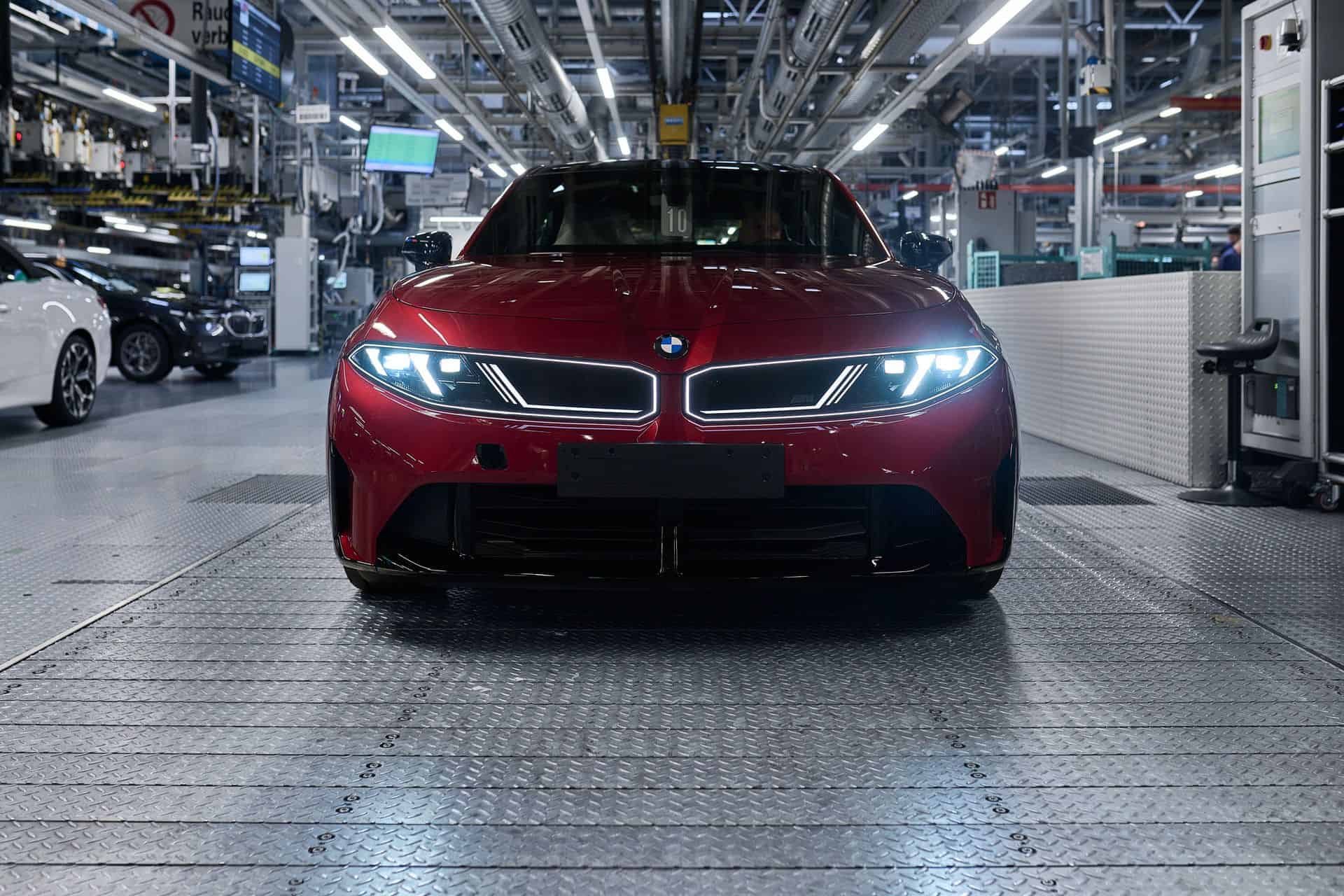
BMW is reshaping two Bavarian factories for a new era of combustion engines, plug-in hybrids, and EVs, while staying true to two traditional body styles: sedan and wagon.
Article Summary
- The gas-powered G50 3 Series will be built in Dingolfing from November, while the electric i3 is already rolling off the lines in Munich.
- BMW has already confirmed the i3 Touring will be made in Munich, and we’re expecting Dingolfing to handle production of the next 3 Series wagon.
- Half of the investment in Germany goes toward a new Irlbach‑Straßkirchen battery plant in Lower Bavaria.
BMW is putting its money where its mouth is when it comes to keeping production in Germany. The world’s largest luxury automaker is spending a whopping €2 billion on the next-generation 3 Series, with roughly half going toward vehicle production in Munich and Dingolfing and the other half toward its new battery plant in Irlbach-Straßkirchen.
The investment underlines just how important the 3 Series remains to BMW. After all, the nameplate has been around for more than 50 years, with roughly 18 million cars built since 1975. About 15 million of those were produced in Germany, so the 3er is about as “Made in Germany” as it gets. But there’s a major change coming with the eighth-generation model: BMW is splitting production between the two Bavarian plants depending on the powertrain.

The fully electric i3 is already rolling off the assembly lines in Munich, where series production kicked off in early August. The historic factory has undergone a massive transformation for the Neue Klasse era and will switch to producing only EVs at some point in 2027. Munich also currently builds the 4 Series and i4.
3 Series Production Is Moving To Dingolfing
Meanwhile, the conventionally powered 3 Series is relocating to Dingolfing. BMW says it will build the gasoline-powered versions there starting in November. This time around, there’s no diesel, and the plug-in hybrid won’t arrive until later next year. Eventually, there will be another gas-fueled M3, with the G84 rumored to arrive in 2028.

This also gives us a good idea of where the next 3 Series Touring (G51) is likely to be built. BMW has yet to officially announce production details for the combustion-engined wagon, but if the G51 arrives as expected, Dingolfing makes considerably more sense than Munich. The plant is already preparing to build the combustion-powered G50 sedan, while Munich is on track to become an EV-only facility.
In other words, don’t expect to see a gas-powered 3 Series wagon being squeezed into Munich’s increasingly electric-only production strategy. The G51 should logically join the G50 at Dingolfing, although BMW has not officially confirmed the Touring’s production location yet. Our sources have previously pointed in that direction as well.

The BMW i3 Touring Will Be Made In Munich
The electric wagon will take a very different route. BMW has already confirmed that the i3 Touring, codenamed NA1, will be built in Munich alongside the i3 Sedan. Production of the electric wagon is expected to begin in the second half of 2027 at the earliest. We’ve already seen spy photos of lightly camouflaged prototypes, so its world premiere can’t be too far away. Nevertheless, it’s highly unlikely to debut this year.
That creates an interesting split for BMW’s next-generation 3 Series family. The combustion-powered sedan and likely Touring will come out of Dingolfing, while their fully electric counterparts will be produced in Munich. From a distance, the cars will look closely related. Still, underneath, they’re based on two fundamentally different architectures: the G50/G51 stick with CLAR, while the i3/i3 Touring use the dedicated Neue Klasse EV platform.
A New Battery Plant Powers The i3
There’s also a battery angle to all this. The new Irlbach-Straßkirchen plant in Lower Bavaria will begin producing sixth-generation high-voltage batteries next month. Once operations get going, the facility will supply the Munich plant with battery systems for the i3. BMW is investing around another €1 billion in that facility, creating a local supply chain for its next-generation EVs.
So while BMW is technically sending the 3 Series away from its historic home for the first time in decades, it’s not abandoning Germany. Quite the opposite. The company is effectively splitting the family between two factories. Going forward, Dingolfing gets the engines, while Munich gets the batteries and electric motors. The i3 is officially labeled as a 3 Series, so the 3er technically isn’t leaving the company’s oldest plant.

Related posts




Latest Post


No Comments