
1970 AMC Rebel Machine: The Rarest Muscle Car
Classic muscle car culture is defined by the Big Three brands out of Detroit, which means a few select cars from the era get all the glory from enthusiasts: cars like the Chevelle, Hemi Cudas, Mustangs, and Chargers. As a result, the price of these classics, along with others from the era, has been heavily inflated. And young Gen Z enthusiasts are left out, with price tags far higher than the average Joe can afford.

This has created another problem for younger enthusiasts: a massive cultural blind spot for cars with genuine performance that get overlooked. A Wisconsin manufacturer created a 340 hp monster in 1970 for a single year that could outrun any muscle car of its era, yet only 600 examples survive today.
The Wild Landscape Of The 1970s
By the 1970s, domestic muscle cars had reached the peak of the classic golden era: unfiltered power, virtually nonexistent federal emissions controls, and safety regulations that hadn’t yet kicked in to bulk up cars, with engines not yet choked. The Big Three, General Motors, Ford, and Chrysler, were in a head-to-head battle for all-out supremacy to win over the American enthusiast.

As the Big Three held absolute command of buyers, they flooded the automotive landscape with their own branding, which made them seem like the best, and consumers did not consider other brands true rivals. Manufacturers were constantly overlooked despite their engineering prowess. One example is a manufacturer that made smaller cars that were lighter, faster, and rarer than what you saw on the streets back then.
A Wisconsin Manufacturer That Took The Charge

The American Motors Corporation (AMC) was at a crossroads in 1969. It was respected for producing practical, fuel-efficient commuter sedans and station wagons. The Kenosha-based manufacturer had a conservative reputation among the younger performance audience at the time. They felt they should acknowledge this and create a halo car to revive their image with young buyers.
But a major hurdle remained: AMC lacked the Big Three’s development budget. So they had to get creative with what they had. AMC engineers chose a lightweight mid-size two-door hardtop coupe as the base platform, then stripped out unnecessary weight to make the car even lighter. AMC used the highest-compression engine it had on hand: the 390-cubic-inch V8 that made 340 hp. To make sure the chassis could handle all that power, AMC fitted heavy-duty rear coil springs from their station wagon to eliminate wheel hop. Finally, they added a cold-air ram-air intake hood scoop for extra cooling.
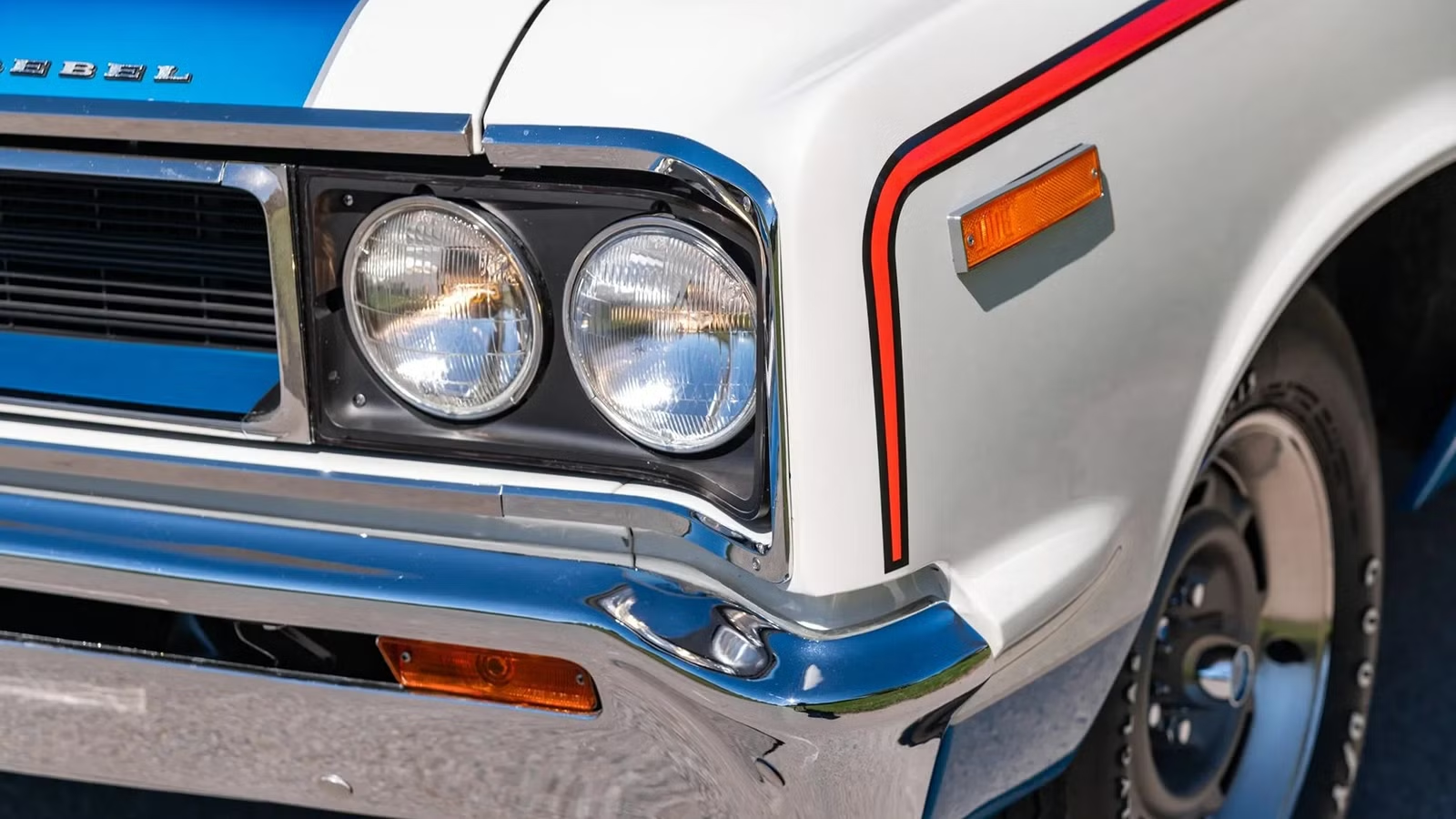
To stand out from the Big Three competition, AMC gave the car an unmistakable exterior design. The initial run of 1,000 units shipped directly in Frost White, with an Electric Blue accent on the hood and lower side panels, finished with red beltline strips. After the initial run sold out, AMC offered single-tone factory finishes like Matador Red and Bittersweet Orange (paint code 79A), which became enthusiast favorites. Regardless of the exterior paint choice, the goal was simple: to build a muscle car that would shatter AMC’s conservative image among the youth and take on the established Detroit players head-on.
The 1970 AMC Rebel Machine

In 1970, AMC introduced the Rebel Machine; by its looks, it was completely radical compared to anything it had produced before. It looked the part: AMC designed the Rebel Machine to take on rivals like the Chevelle SS 396, Dodge Super Bee, and Plymouth Road Runner. Under the hood sat a high-compression 390-cubic-inch V8, the biggest engine AMC offered. The engine featured heavy-duty forged internals, high-flow cylinder heads, a high-rise intake manifold, and a four-barrel Autolite carburetor.
These exotic components produced 340 horsepower at 5,100 rpm and a massive 430 lb-ft of torque at 3,600 rpm. This power went to the wheels through a standard Borg-Warner T-10 4-speed manual transmission or an optional Shift-Command automatic. The Rebel Machine also came standard with front disc brakes for quick stopping power. AMC intentionally kept the performance numbers a bit underrated to keep insurance premiums manageable for the younger demographic they were targeting, a common trick in the muscle car era.
Automotive journalists of the era ran quarter-mile tests on the dragstrip. The Rebel Machine managed to sprint from 0 to 60 mph in a quick 6.4 seconds and cleared the quarter mile in 14.4 seconds at 99 mph. Out of the box, the Rebel Machine had the power-to-weight ratio to outrun standard big-block offerings from the Big Three.
What Made The Rebel Machine Special To Drive

The muscle cars in the 1970s had poor handling dynamics, with excessive body roll and lots of wheel spin at launch. AMC engineered the Rebel Machine to launch cleanly without wheelspin. The Rebel Machine used heavy-duty coil springs borrowed from its station wagon cousin, giving the coupe better traction and stability off the line and eliminating potential wheel hop.
Combined with standard factory equipment, which included a massive front sway bar, firm shocks, and power-assisted front disc brakes, the Rebel Machine was one of the most balanced mid-size drag coupes of its era. All the hardware upgrades, plus a large hood scoop for better cooling and a 4-speed manual, allowed the car to rev freely to its redline.
The Best-Kept Secret in Classic Car Collecting

When you compare the AMC Rebel Machine with its competition from its era, you can understand its true historical significance. In 1970 alone, Chevrolet produced over 50,000 Chevelle SS 396s, and Dodge produced more than 20,000 Super Bees, making them more common on the streets. By contrast, the Rebel Machine had an extremely limited run of 2,326 total units, according to automotive references, but AMC’s internal factory records point to an even tighter number: just 1,936 units. Today, even fewer than 600 documented examples are said to have survived worldwide. This gives the Rebel Machine more of a mystique than its peers.
By that calculation alone, the 1970 AMC Rebel Machine is considerably rarer than almost any mainstream muscle car produced in Detroit that headlines today’s car shows and culture. Yet with its extreme rarity, the Rebel Machine remains affordable as a real performance machine of its era. In September 2024, Bring a Trailer sold a documented Rebel Machine for $55,000. For a one-year-only model, it can be had for less than a Chevelle SS or a Mustang Mach 1.
As for the younger generation, the Kenosha-built car was hidden from cultural relevance for a while, but it can be an affordable gateway into the world of classic muscle cars, and it’s rarer than almost anything that would turn up at the local car meet. AMC built the Rebel Machine for the younger generation decades ago, and today history has a chance to repeat itself, as savvy collectors quietly acquire any remaining example before the market catches on to the rarest muscle car of the classic era.
Source: Hemmings, Bring a Trailer, amcsheetmetal.

Related posts

Latest Post


No Comments