
D2 Audi S8: V8 Sleeper Under $20,000
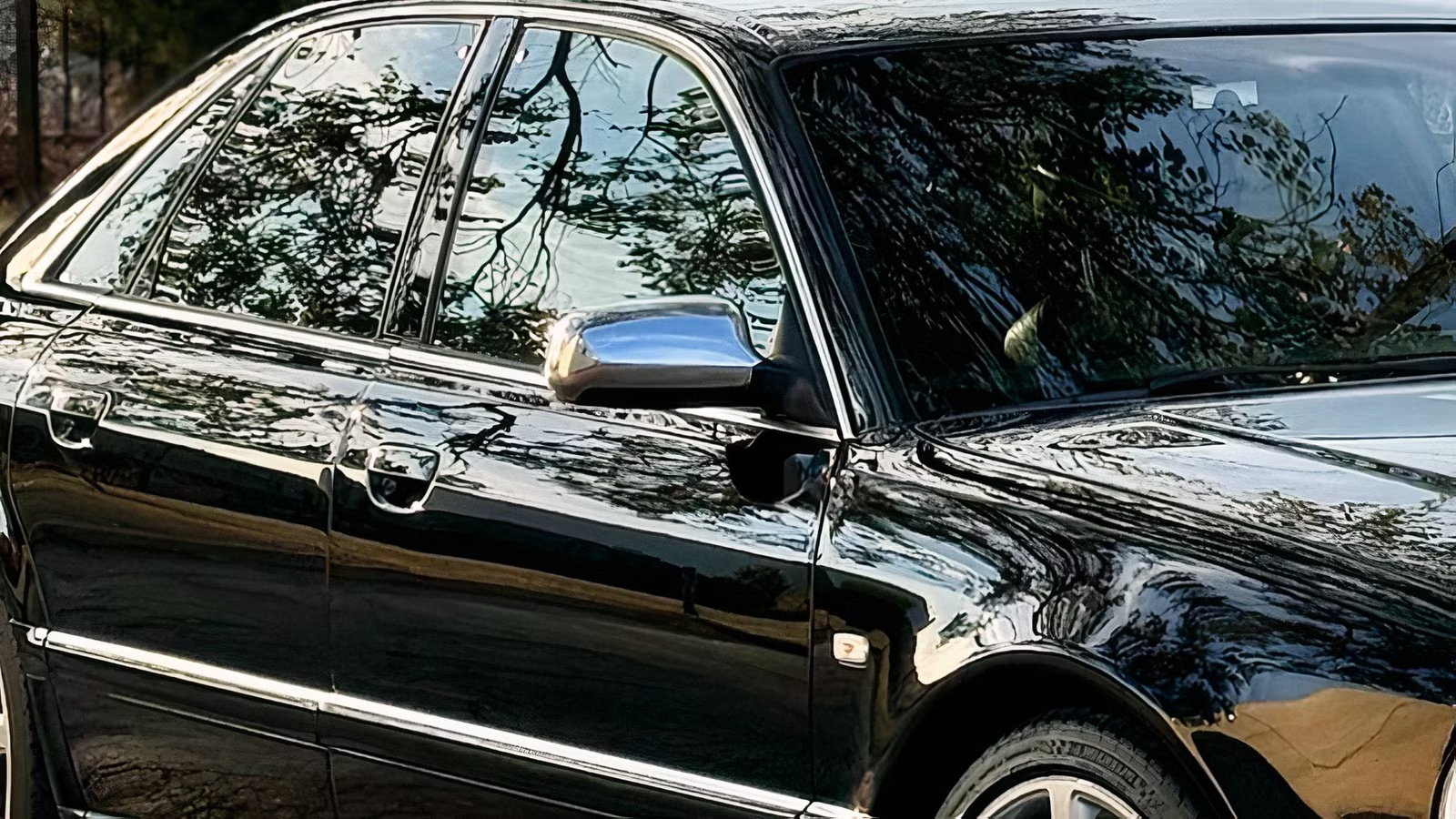
Twenty grand usually buys a sensible used sedan, an aging hot hatch, or a crossover with plenty of miles. It can also put you into the same territory as some seriously interesting V8 luxury bargains. One of them hides an aluminum body, a naturally aspirated V8, all-wheel drive, and a factory-limited 155-mph top speed beneath the shape of an executive sedan. The trick is knowing why this old sleeper is cheap — and why the wrong one can make the purchase price look like just the entry fee.
This Aluminum V8 Sleeper Still Looks Like A Bargain

Park this thing beside the performance cars of its era and you might wonder if somebody brought the airport shuttle by mistake. There are no towering wings, deep scoops, or cartoonish fenders advertising what sits underneath. It is long, clean, conservative, and almost aggressively unwilling to show off. That was part of the appeal. This was a big luxury sedan built to cross Germany very quickly without telling everyone in the parking lot about it.
The aluminum construction kept all that size from turning into complete porkiness. In later European Tiptronic form, the car weighed about 3,858 pounds, yet still carried five people, permanent all-wheel drive, a naturally aspirated 4.2-liter V8, and the equipment expected of a flagship sedan. Its top speed was electronically capped at 155 mph. Those numbers aren’t shocking today, but they were a different proposition in a full-size four-door more than two decades ago.
The “embarrasses supercars” part needs some restraint. Porsche lists an automatic 1997 911 Carrera at 6.3 seconds to 60 mph, so our mystery sedan really could give an air-cooled 911 Carrera an awkward time in a stoplight sprint. But a proper 993-generation 911 Turbo was already doing 0–100 km/h in 4.5 seconds. This was never a secret exotic-car killer. The fun is that a big four-door luxury car could hassle serious sports machinery of the period while looking like it should be carrying somebody to a board meeting.

The D2 Audi S8 Is The Sleeper

The car is the D2 Audi S8, sold from 1996 through 2003 and built from the first-generation A8. The ordinary A8 was already unusual because the German automaker built its body around the Audi Space Frame, using lightweight aluminum construction at a time when steel still dominated large luxury sedans. The S8 then turned that expensive foundation into something much more interesting. Early European versions made 340 PS (335 hp) from their 4.2-liter V8, while later 40-valve cars stepped up to 360 PS (355 hp). U.S.-market cars were rated at 360 horsepower and 317 lb-ft of torque, with a five-speed Tiptronic and quattro all-wheel drive. There is plenty more in Audi’s wider performance history, but the D2 remains one of its quieter achievements.
The two acceleration figures tell slightly different stories. A 2001 U.S. road test recorded 0–60 mph in 5.8 seconds, while European factory figures put the later Tiptronic at 6.6 seconds from 0–100 km/h, or 62 mph. Different test methods, conditions, specifications, and even the extra 2 mph all matter. Either way, this was a seriously quick luxury sedan for its time.
And then there is Ronin. The S8’s role in the 1998 film is confirmed in Audi’s own film-history list, and the casting made almost too much sense. The D2 looked expensive without screaming for attention, yet had the power and all-wheel-drive traction to play the part of a serious getaway car. The movie helped turn it into an enthusiast cult car, but the hardware was already good enough without Hollywood’s help.
Why The S8 Still Offers So Much For The Money

Now the price makes the whole thing harder to ignore. The D2 S8’s current market benchmark sits at $13,494, comfortably beneath the $20,000 line in the headline. Recent sales also show how wide the spread can be. In July 2026, a roughly 100,000-mile 2001 example sold for $9,700, while a 30,000-mile car brought $28,800. Same basic model, very different money. Mileage, originality, maintenance, transmission, and overall condition matter a lot more here than simply finding the cheapest classified ad.
The depreciation gets stranger when you remember what this was. A U.S.-market S8 carried a $72,500 MSRP in 2001. That bought an aluminum flagship sedan with a 360-hp V8, all-wheel drive, a sportier suspension and brakes than the regular A8, and performance that could bother an automatic 911 Carrera. Today, plenty of V8 muscle cars under $20,000 exist, but few started life with this much expensive engineering hiding underneath such plain bodywork.
That’s also why shopping solely by price is a bad idea. You’re not maintaining a $13,000 economy car just because that’s what you paid for it. You’re maintaining an old German flagship packed with aluminum components, a complicated driveline, and parts designed for a car that cost more than $70,000 new. A cheaper S8 might save you $5,000 on purchase day and ask for most of it back before you’ve stopped congratulating yourself on the deal.
The Wrong S8 Can Get Expensive Fast

Start with the post-1998 cars if you want the later 40-valve version of the 4.2-liter V8 and its extra power. But for the Alusil question, don’t use model year as a shortcut. The aluminum-engine technical guide confirms Audi’s 4.2-liter V8 as an Alusil/Silumal application, so verify the exact engine code before you buy. From there, engine health and maintenance history decide whether the car is worth buying or walking away from.
Then start reading receipts. The factory-derived 2001 maintenance schedule calls for timing-belt replacement on the 4.2-liter V8 at 105,000 miles, which makes documented belt history a lot more useful than a seller saying it was “probably done.” Ask what else was replaced while the front of the engine was apart, including the tensioning hardware and cooling-system parts. The five-speed Tiptronic deserves just as much attention: drive the car cold and fully warmed up, check how it engages and shifts, and look for leaks or evidence of previous valve-body or transmission work. The multi-link front suspension can also turn a cheap car into a rolling parts order once control arms, bushings, links, and axles start stacking up.
A recent sale shows what a properly documented history can look like. A 98,000-mile 2003 example sold for $15,500 in April 2026 after receiving a timing-belt service, transaxle valve-body work, front axles, suspension components, and a 14-piece front control-arm kit under its previous ownership. Somebody eventually pays for this work, and you want as much of it as possible to have been the previous owner. The D2 S8 is still a bargain, but the one to buy is the car with the boring folder full of receipts. The cheap one with no history? Let somebody else discover why it was cheap.

Related posts






Latest Post


No Comments