Why Toyota’s Biggest Hybrid SUV Now Costs Lexus RX Money to Own
9 minutes reading
Thursday, 25 Jun 2026 14:00 0 52 autotech
The landscape of the American luxury SUV market has undergone a dramatic transformation. So far in 2026, automakers have seen a shift away from demand for leather upholstery and chrome accents, fundamentally redefining what premium personal mobility means for modern families. Today’s affluent drivers are more eager to consider models produced outside the historic European and domestic legacy marques that once dominated corporate parking lots.
Instead, the modern luxury utility vehicle segment is defined by a sophisticated intersection of advanced powertrain electrification and expansive digital architecture. Versatile multi-row cabins that seamlessly pivot from executive transport to family duty are also becoming more popular at an increasing rate. These consumers are increasingly willing to pay premium prices for elevated ride heights, commanding road presence, and cutting-edge acoustic isolation.
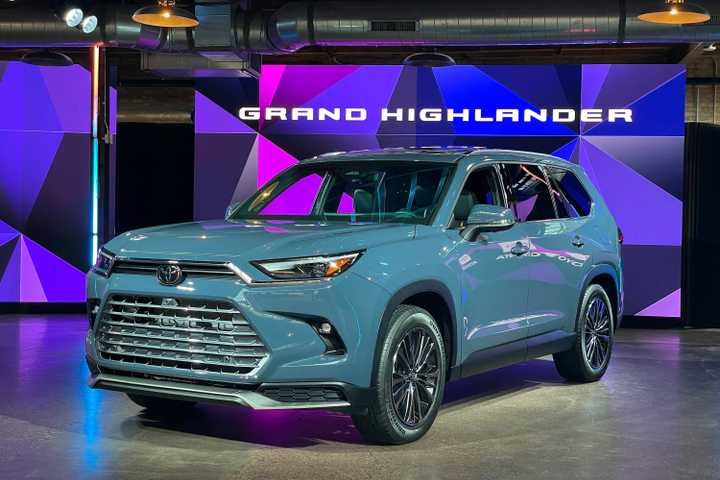
Front 3/4 shot of 2026 Toyota Grand Highlander Hybrid parkedToyota
Mainstream automotive manufacturers like Toyota are now aggressively pushing their top-tier trims into price brackets once reserved exclusively for dedicated high-end badges. This results in the lines between premium passenger models and prestige flagships becoming more blurred. This strategy sparks a rivalry where comfort, performance, and long-term operating costs dictate market dominance.
For decades, Toyota has been the undisputed architect of this evolving ecosystem, cementing its reputation as the brand that brought heavy-duty utility and ecological efficiency to the American mainstream. Through iconic nameplates, the Japanese automaker has shown U.S. buyers that an SUV can be dependable, while offering the rugged capability required for cross-country adventures.
Toyota pioneered the mass-market hybridization movement 30 years ago, conquering widespread consumer skepticism to prove that dual-power gas-electric systems are a definitive bridge to the automotive future. Marrying these two core competencies has led to a loyal consumer base that associates the badge with a bulletproof financial decision, ensuring high resale values, minimal maintenance headaches, and class-leading fuel savings.
10 Reasons To Choose The Toyota Grand Highlander Hybrid As Your Next Family SUV
Explore 10 reasons the new Toyota Grand Highlander Hybrid is the ultimate family SUV with comfort, tech, and potential fuel savings.
The Grand Highlander Is A Modern Paradox
Front 3/4 action shot of 2026 Toyota Grand Highlander Hybrid driving on roadToyota
The 2026 Toyota Grand Highlander has revealed an unexpected point of friction within this longstanding narrative of sensible economics. The three-row SUV addresses a glaring gap in the market by offering a spacious, adult-friendly third row over the standard Highlander. However, its premium execution has resulted in it holding a significant financial premium.
Conventionally, the implicit contract between Toyota and its customer base was that choosing the mainstream badge meant avoiding luxury-tax inflation. Buyers willingly traded away the top-tier prestige of a premium brand in exchange for a predictable and cost-effective ownership lifecycle. The 2026 Toyota Grand Highlander, particularly when optioned with its most advanced i-Force Max configurations, challenges the very core of that relationship, forcing a re-evaluation of what it means to purchase a family vehicle from a volume manufacturer.
Ownership Costs Are Its Biggest Weakness
Rear 3/4 action shot of 2026 Toyota Grand Highlander Hybrid driving on roadToyota
According to the latest comprehensive 2026 five-year Cost to Own data compiled by Kelley Blue Book, long-term operating realities for the Toyota Grand Highlander Hybrid are catching many prospective buyers completely off guard. The trusted automotive valuation authority pegs the total five-year cost of ownership for this electrified family hauler at an astonishing $66,065.
For a demographic accustomed to the predictable, budget-friendly running costs traditionally associated with the brand, a multi-year financial commitment of this magnitude creates a sharp sense of cognitive dissonance. This total figure is driven by a combination of substantial out-of-pocket operational expenses, which total approximately $45,737 over the first sixty months on the road. You also have to consider an equally aggressive hidden financial drain that directly erodes the vehicle’s long-term asset value.
The Family SUV With The Highest MPG And The Fewest Compromises
This three-row SUV combines exceptional fuel efficiency with powerful performance in a way that leaves its rivals struggling to compete.
Modern Tech Hurts Its Value Retention Performance
2026 Toyota Grand Highlander frontToyota
The single largest contributor to this massive five-year total is depreciation. This is a metric where the brand has historically beaten nearly every competitor in the industry. Kelley Blue Book’s projections indicate that the 2026 model will suffer a hefty $20,328 depreciation hit over its first five years of ownership. All new vehicles inevitably lose value the moment they leave the dealership floor.
However, a depreciation loss that crosses the twenty-thousand-dollar threshold on an electrified SUV undermines one of the primary pillars that traditionally justified buying a Toyota. The Japanese brand has always benefited from a guarantee of unmatched residual value retention. When a vehicle bleeds value at this rate, the initial upfront financial calculus changes dramatically, converting what many assumed would be a highly stable equity repository into an expensive, depreciating asset.
Maintenance Costs Are Also Higher Than Expected
2026 Toyota Grand Highlander engineToyota
Compounding this financial reality are the ongoing fixed and variable out-of-pocket costs required to operate and maintain the Grand Highlander i-Force Max models. Kelley Blue Book estimates that insurance premiums for the flagship variants will accumulate to $16,490 over the course of the first five years. This high insurance cost reflects the vehicle’s large footprint, advanced sensor arrays embedded in the bodywork for driver assistance systems, and the underlying value of its sophisticated hybrid components.
All of these drive up real-world repair and replacement costs for insurance companies. Additionally, routine maintenance over that same five-year window is projected to demand another $6,799 out of pocket. While the manufacturer’s legendary build quality ensures that catastrophic mechanical breakdowns remain exceedingly rare, the complexity of modern multi-row crossovers means that basic, scheduled shop visits add up to a significant financial sum over time. Maintenance can include specialized regenerative-brake servicing, work on multi-zone climate systems, and replacement of large premium tires.
The Toyota Hybrid That Makes The Kia Telluride Look Like The Wrong Choice
One of the most popular mid-size three row SUVs has a competition in a hybrid Toyota.
Toyota’s Questionable Pricing Strategy
Shot of 2026 Toyota Grand Highlander interior showing front cabinToyota
The economic tension peaks when examining the top-tier Hybrid Max Platinum trim. This specific model aggressively pushes the initial purchase price deep into luxury vehicle territory with a starting MSRP of $59,775. This trim includes Toyota’s performance-oriented powertrain that pairs a turbocharged 2.4-liter four-cylinder engine with electric motors to produce 362 horsepower and 400 pound-feet of torque.
Toyota’s advanced drivetrain transforms a heavy, three-row family SUV into an authoritative cruiser capable of good acceleration and towing abilities. Despite prioritizing outright performance over ultimate eco-efficiency, this hybrid configuration sacrifices the fuel economy numbers that historically justified paying a premium for a hybrid badge in the first place.
Substandard Efficiency Figures For A Hybrid
Front 3/4 action shot of 2026 Toyota Grand Highlander Hybrid towing jet skiToyota
The Hybrid Max Platinum achieves an EPA-estimated fuel economy of just 27 MPG on the combined cycle. Buyers are paying significant hybrid surcharges upfront and facing elevated long-term insurance and maintenance baselines, yet they are walking away with real-world fuel efficiency that barely outperforms traditional, non-hybrid V-6 engines.
Base Trim Engine
2.4L I-4 ICE
Base Trim Transmission
8-speed automatic
Base Trim Drivetrain
Front-Wheel Drive
Base Trim Horsepower
265 HP @6000 RPM
Base Trim Torque
310 lb.-ft. @ 1700 RPM
Base Trim Fuel Economy (city/highway/combined)
21/28/24 MPG
Base Trim Battery Type
Lead acid battery
Make
Toyota
Model
Grand Highlander
The traditional value proposition of an electrified vehicle relies on a simple premise: pay more at the dealership today so that you can pay drastically less at the fuel pump for the next ten years. When a high-performance trim caps its efficiency at 27 MPG, that investment recovery timeline stretches out indefinitely, shifting the hybrid system from a practical tool for financial savings into an expensive luxury performance option.
Why The Lexus RX May Be A Better Option
Front 3/4 shot of 2026 Lexus RX parked on roadLexus
What makes this financial equation truly fascinating is the transparent per-mile math, which reveals an internal pricing mismatch between corporate brands. If an owner follows standard industry and Kelley Blue Book calculation baselines by driving an average of 15,000 miles per year, they will log a total of 75,000 miles over a five-year ownership cycle. Dividing the verified five-year total cost to own of $66,065 by those 75,000 miles reveals an operational cost of roughly $0.88 per mile.
When stacked directly against premium luxury benchmarks, this figure creates an incredible paradox. A top-tier 2026 Lexus RX Hybrid features a five-year cost to own of approximately $64,010 according to similar KBB metrics. This model shares a showroom floor under the same corporate umbrella and carries a prestigious luxury badge. Driven across the exact same distance, the premium Lexus RX operates at roughly $0.85 per mile. Longtime brand loyalists are discovering that a volume-branded family hauler actually costs more per mile to run over five years than an explicitly designated luxury vehicle from a premium marque.
Interior Packaging Remains A Convincing Factor
The rear seating area of a 2026 Toyota Grand Highlander Limited.Toyota
On a pure capability basis, the Grand Highlander is a packaging expert. The cabin boasts 97.5 cubic feet of maximum cargo capacity behind the front row, providing the type of storage volume that can carry a week’s worth of camping gear, massive flat-screen televisions, or bulky sports equipment. Furthermore, its carefully designed three-row architecture provides good seating comfort for up to eight passengers. This ensures that adults sitting in the rearmost row are not subjected to the cramped, knees-to-chest seating positions that smaller midsize crossovers struggle with. Toyota’s unimpeachable historic reputation for engineering components that survive decades of use makes the Grand Highlander a masterclass in functional family transportation design.
Ultimately, however, automotive journalism outlets that reflexively defend this high-end hybrid strictly on the merits of its legacy reliability are missing the broader, systemic shift in consumer economics. The top-tier Hybrid Max Platinum has priced itself out of the value-oriented volume segment. It slots squarely into a direct cross-shop with legitimate luxury models and well-equipped Korean alternatives where its victory is no longer a foregone conclusion.


















No Comments