
Audi’s 831-Mile Record Run Used the Same A6 e-tron Battery You Can Buy Today, Not a Prototype
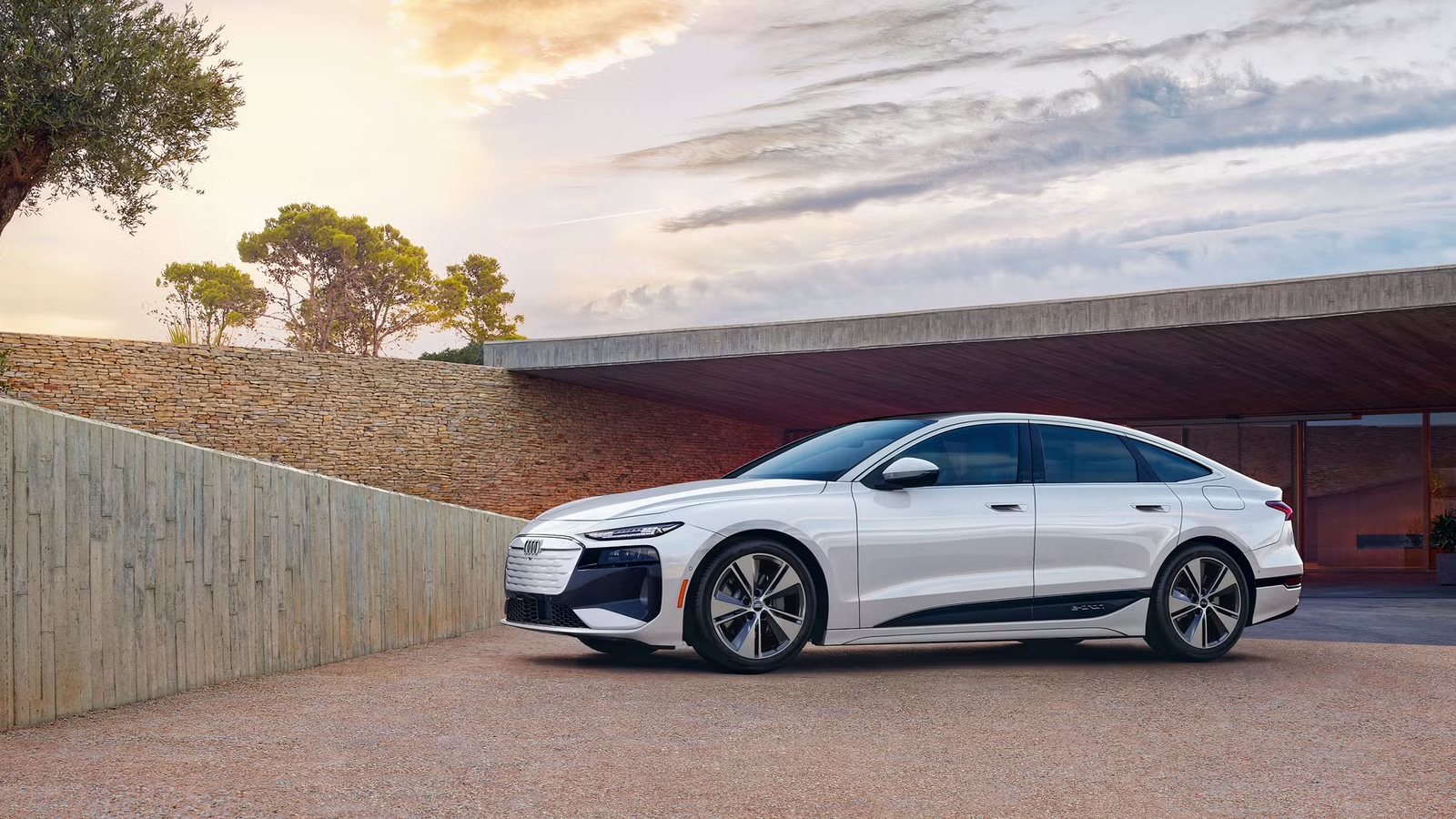
Audi confirmed on September 24 that a standard-production A6 Sportback e-tron Performance drove 1,338 km, or 831 miles, on a single charge, setting a Guinness World Record for the longest distance covered by a production EV without recharging. Rally driver Miko Marczyk did it in a car with the same 94.9 kWh battery and 367-hp powertrain sitting on dealer lots right now, not a stripped test mule with extra battery packs bolted in.

That distinction matters for anyone cross-shopping the A6 e-tron against the Mercedes EQE, BMW i5, or Genesis Electrified G80. The run averaged 7.09 kWh per 100 km, or 8.76 miles per kWh, which is nearly double the car’s official WLTP efficiency rating. It’s not a number regular owners will replicate on a Monday commute, but it does set a real ceiling for what this platform can squeeze out of a charge when every variable lines up.
How Marczyk Pulled 831 Miles Out of a Car Rated for 483
Marczyk, the 2025 FIA European Rally Champion, started the attempt at 1:55 a.m. on September 11 in Poland, tracing the Vistula River through Kraków, Sandomierz, Warsaw, Toruń, and Grudziądz before reaching Hel on the Baltic coast and turning back. The car finally ran dry between Toruń and Ciechocinek, 45 hours and 1,338 km after leaving. Audi says the drive happened in regular traffic, including rush hour, at an average ambient temperature around 15°C, dipping to 7°C overnight.

The A6 Sportback e-tron Performance carries an official WLTP range of up to 777 km (483 miles). Marczyk’s run beat that by 561 km, or roughly 72%. He got there the old-fashioned way: steady speeds, anticipatory driving, careful tire pressure, and heavy use of regenerative braking, which the car can run up to 220 kW and which Audi says covers about 95% of everyday braking events without touching the mechanical brakes.
The Real Story Is the Shape, Not the Battery

Audi points to the A6 Sportback e-tron’s 0.21 drag coefficient, the lowest of any Audi ever built, as the biggest factor behind the result. The company says aerodynamic drag accounts for roughly 40% of the car’s energy consumption in the WLTP cycle, which means a slippery shape pays off more as speeds climb. Underneath, the car uses Audi’s Premium Platform Electric architecture with an 800-volt system and a 100 kWh gross, 94.9 kWh usable battery.
That’s the detail luxury EV shoppers should sit with: this wasn’t a lightened or de-contented special. Audi says the test car still made 367 hp and hit 62 mph in 5.4 seconds, matching any A6 e-tron Performance you could order today. Marczyk himself called the 1,338 km figure “a pleasant surprise,” crediting the interplay of the drivetrain, battery, and aerodynamics rather than any hidden hardware.
How It Stacks Up Against Lucid, and What It Doesn’t Prove

The previous production-EV record belonged to a Lucid Air Grand Touring, which covered 749 miles between Switzerland and Germany in 2025. The Audi beat that by more than 80 miles, despite riding on a smaller usable battery than the Lucid’s roughly 112 kWh pack. For buyers comparing the EQE, i5, and Electrified G80, that’s a useful data point on how much efficiency Audi’s PPE platform and aerodynamic package can extract relative to sheer battery size.
Still, Audi never disclosed Marczyk’s average speed, and the company’s own framing makes clear this isn’t a new everyday range figure. Highway driving at typical speeds, with climate control running, will land well short of 831 miles. What the record does confirm is a genuine efficiency ceiling, not a stripped-down PR stunt, which is a meaningfully different claim than most range records make.
A Second Record for a Driver Who Collects Them

This isn’t Marczyk’s first efficiency headline. In 2025 he drove a fourth-generation Skoda Superb 2.0 TDI a claimed 1,759 miles (2,831 km) on a single tank of diesel, averaging 2.6 liters per 100 km. He’s now holding Guinness marks on both sides of the powertrain divide, which he framed as evidence that Volkswagen Group’s EV technology has caught up to the diesel efficiency the brand built its reputation on for decades.
For shoppers weighing the A6 e-tron against the EQE, i5, or Electrified G80, the takeaway isn’t that you’ll see 800-plus miles on your own commute. It’s that the platform has real headroom beyond its window-sticker number when aerodynamics and battery chemistry are both doing their job, which is a more useful benchmark than a lab test most owners will never approach anyway.

Related posts



Latest Post


No Comments