
Honda Civic Si & Integra Dropped: What’s Left?

With the landscape of the automotive world changing seemingly by the month, the world’s OEMs are scrambling like mad to adhere to new global regulations that often vary by region. In some parts of the world, the rush to electrification is still strong. In others, long-standing certifications and international trade squabbles bedevil low-volume manufacturers and large automakers building niche cars for niche markets. Even Honda, continuously seen as ahead of the curve most of the time, has had to make changes to keep pace with trends. Now, the brand’s entry-level small engine and manual gearbox combo is caught in the crossfire. For the fans, it’s a death knell for the affordable pint-sized manual runabout, or is it? In reality, the truth is far more complicated.
New EPA Rules, a Mad Scramble to Find Solutions

In places outside the US, the manual gearbox is still often the default choice for the world’s drivers. Heck, in some parts of Europe and Asia, governments make a distinction between drivers licenses certified for automatic gearboxes, and ones for the manual. In a world where an automatic transmission is still commonly seen as a luxury, a third pedal isn’t just a tool for showing off, but a working class means of transitioning from bicycles and mopeds to four wheels. Honda once dominated this market in the US, through a lineage of small-displacement, high-revving little runabouts that prided themselves on maximum thrills for the least amount of money possible.
Per recent reports, Honda’s been finding it increasingly more difficult to adhere to increasingly stringent EPA restrictions while maintaining its price-to-performance advantage it’s held for decades in the American market. These justifications have been the subject of controversy, and have been since the EPA finalized sweeping multi-pollutant emissions standards for the 2027 model year back in March of 2024. Ostensibly, these rules will force automakers to design costly new exhaust hardware without increasing costs to prohibitively expensive levels on the consumer side. Yet, Honda seems adamant that “evolving business conditions” in the US market have made it increasingly difficult to continue producing vehicles outside of high-volume sectors.

The move comes at a time when the industry at large is devising unique methods of bearing the challenges of future regulations. Among other solutions are the re-introduction of plug-in electric hybrids back into the General Motors lineup as a direct counter to finalized new EPA standards. Elsewhere, on the heavy-duty side, diesel giant Cummins announced intentions to replace its L9 and X12 legacy engines in favor of a consolidated ten-liter plant called the X10. Though they represent a vastly different market segment, the move is a direct reaction to the same changes currently facing Honda. Yet, the same changes that force a massive diesel engine into extinction while also putting a tiny gas engine on furlough is a bit of a head scratcher.

The 1.5-Liter Honda Turbo Manual Combo: Beloved, With an Uncertain Future

These latest moves have put one of Honda’s most beloved powertrains of the 21st century directly in its crosshairs. Dubbed the L15C, the motor is beloved for its reasonable price point, relative driving thrills, and rev-happy VTEC nature honed through decades of development in small four-cylinder engines. Paired to a six-speed manual gearbox, the L15C is one of the last holdovers from an era when most Honda engines were peppy and endlessly reliable, while being eager to rev to your right foot’s content.
With 200 horsepower and 192 lb-ft of torque on offer, it doesn’t sound like much. Yet, it’s how the L15C utilizes this power, paired with the relatively lightweight platforms they’re mounted in, that feels like a genuine throwback to the late ‘90s and early 2000s. In feel, the L15C is nearly like a modern analog to the old D15 single-cam slammers of the mid-‘80s through the mid 2000s. While the old D-series lacked the computerized everything the L15C is saddled with, and therefore easier to maintain and modify, the L15C was the closest modern Hondas came to the same feel.

With this in mind, it feels like Honda’s losing a key part of its old appeal putting the L15C on the back burner, even for a short period. Worse still, it puts the future of the cars it was mounted to in considerable doubt. Without it, there simply isn’t an equivalent to fill the void, and that has folks in the industry and enthusiasts alike wondering about the future. A future, mind you, that might not involve manual transmissions at the at the entry-point in any capacity. As ludicrous as it sounds, that’s just the world we live in now.
Civic Si and Integra A-Spec Tech: Gone But Not Forgotten

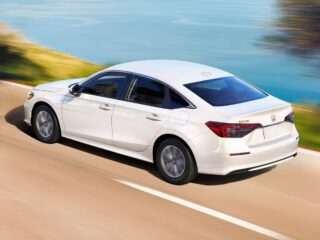
Recent events put the burden of its effects squarely on the Acura Integra A-Spec Tech 6MT, and its working class counterpart, the beloved Honda Civic Si. Marketed at $31,495 and $40,395 respectively, the Civic and Integra were two of the final holdouts in the turbo sports sedan market that were even slightly reasonably priced. Admittedly, the Civic Si was nearing the end of its service life, with the 11th-generation Civic already in its fifth year of production. Keep in mind, the previous Gen-X Civic managed that same production run before exiting stage left in 2021.
Meanwhile, the revived Integra is a bit less long in the tooth, having only debuted for the 2023 model year. Still, the financial math of both platforms seems to have started to not work out once new environmental regulations were staring them right in the face. Add the very real effects of automotive tariffs affecting every facet of the American automotive sector, and it’s clear that Honda was in an unenviable spot when it came to its low-end stick shift sports cars. Now, if you want a remotely similar experience out of a brand new Honda, you’ll have to go considerably further upmarket.

On the Honda side, the Civic Type R is your only fix, a flagship sporty hatchback packing a 2.0-liter turbo four-pot motor with 315 horsepower. It’s capable of sprinting to 60 in just under five seconds and onto a 13.5 second quarter mile. As for team Acura, the Integra Type S takes that very same engine, tunes it up to 320 horsepower, adds adaptive dampers and a 15-speaker ELS Studio 3D audio unit, plus a high-flow exhaust. For the privilege of ownership, you’ll be paying a phenomenal premium over the Civic Si and the base Integra, we’re talking $48,090 before fees for the Honda, and a hefty $53,400 before fees for the Acura. Compared to $40,395 for the Integra A-Spec and $31,495 for the Civic Si, that price jump is just too much to stomach.
The End, Or Just Intermission?

As doom and gloom as the news sounds, Honda appears adamant that the ostensibly temporary production halt on its prized turbo four-banger will be just that. While a 2027 model year is out of the cards, Honda anticipates that a revised edition, compliant with any and all new restrictions, could return as soon as the 2028 model year. At least, at the present day, that’s the claim.
Whether this prediction holds water when the time comes is anyone’s guess, but one thing is for sure. If there were any powertrain in all the land you could peg as environmentally problematic, a modern 1.5-liter turbo motor and a six-speed stick shift surely wasn’t one of them. Whether the story has a happy ending or not remains to be seen.

Related posts



Latest Post


No Comments