
2027 GMC Sierra 1500 Pricing Lands Above Silverado, But Here’s What You Actually Get for the Difference
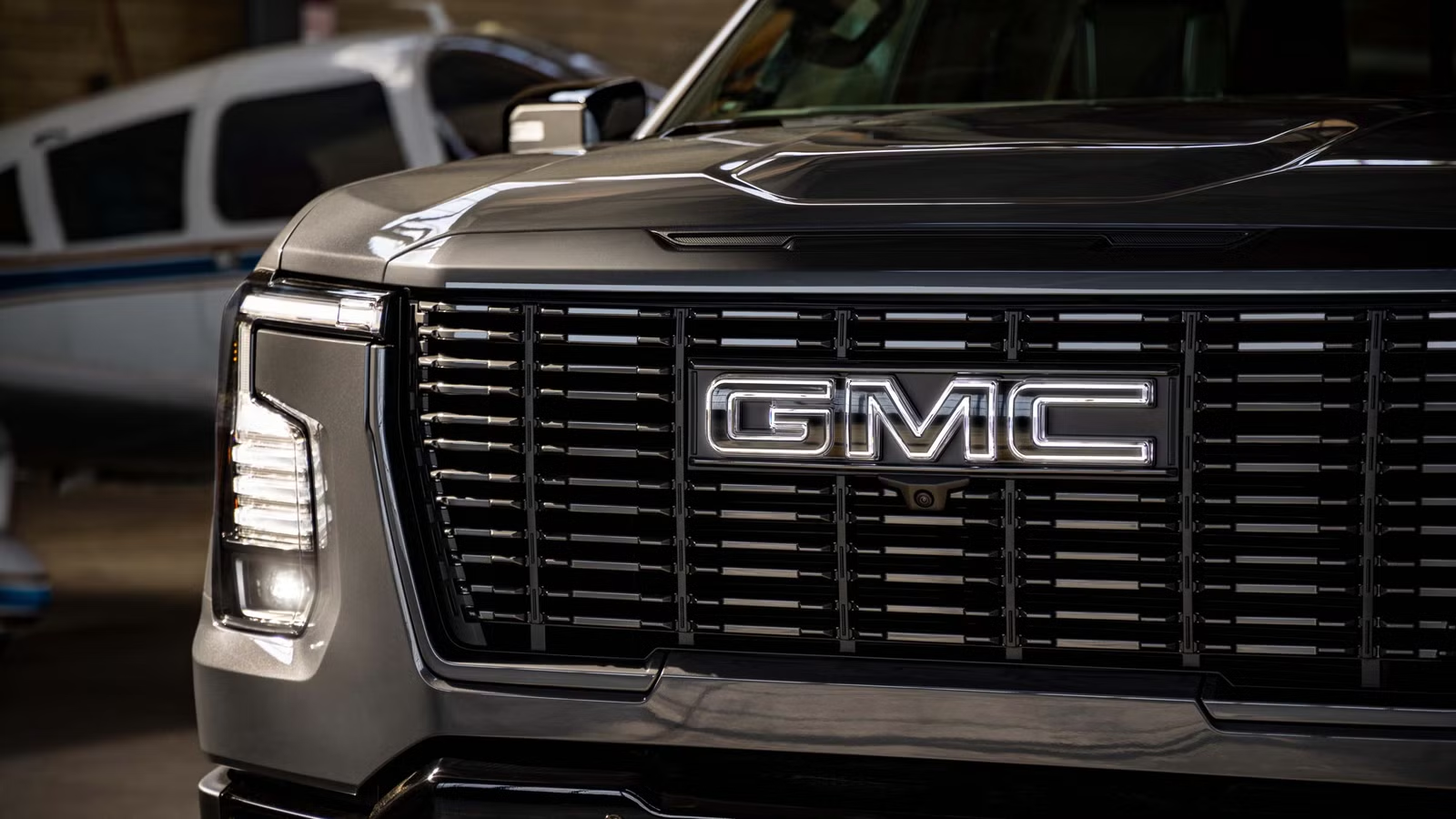
GMC has confirmed pricing for the 2027 Sierra 1500, and the numbers tell a clear story: this truck costs more than its Chevrolet Silverado sibling at every level, but the gap isn’t about capability. The most affordable 2027 Sierra, a single-cab 2WD Pro, starts at $42,095 with destination, just $700 above the equivalent Silverado’s $41,395. Step up to the crew-cab 4WD Pro that’s actually shipping first, and the Sierra runs $51,295, a full $1,000 more than the comparable Silverado.

That premium buys cabin ambiance, screen space, and trim-level polish, not more truck. In fact, the Sierra gives up a little of everything that matters to serious haulers: payload runs 20 to 60 pounds behind the Silverado across every powertrain, and towing capacity trails by 100 to 300 pounds once you’re in diesel or V8 territory. For buyers actively cross-shopping the two GM siblings, the choice comes down to whether GMC’s interior treatment and tech are worth paying more for less capability.
Why The Same Truck Costs More With A GMC Badge

GM builds the Sierra and Silverado on the same architecture, but GMC has always positioned its half-ton as the more upscale option, and the 2027 pricing widens that gap rather than closing it. The base Sierra Pro’s $700 premium over the Silverado is modest, but it’s misleading, because that trim isn’t the one landing at dealers first. GMC says regular cab, double cab, and other configurations will be announced as production ramps up, which means most early buyers are funneled straight into the Pro Crew Cab 4WD at $51,295, a full $1,000 above the equivalent Silverado configuration.
That gap only grows as you climb the trim ladder. Every 2027 Sierra comes standard with more built-in tech than its Chevy counterpart at the same price point, including a 16.3-inch center touchscreen and a 12.2-inch digital instrument cluster on the base Pro. GM isn’t shy about where that money goes: more screen space, better materials, and Denali-grade luxury touches, not extra payload or towing muscle.
The Trim Ladder: Pro Through Denali Ultimate
GMC trimmed the Sierra lineup down to six trims for 2027, dropping the long-running SLE and SLT names entirely. The Pro anchors the range at $51,295 for the Crew Cab 4WD, standard with the new 350-horsepower 2.7-liter TurboMax four-cylinder and a 10-speed automatic. Elevation follows at $59,995, adding front bucket seats, an articulating center display, dual wireless charging pads, and GMC’s MultiPro tailgate.
Off-road buyers get the AT4 at $73,495, which pairs a 2-inch factory lift and 34-inch all-terrain tires with the new 402-horsepower 5.7-liter V8 as standard. The AT4X jumps to $85,495 and adds 35-inch mud-terrain tires, Multimatic dampers, front and rear locking differentials, and a standard Duramax diesel with the 481-horsepower 6.6-liter V8 available as an upgrade. At the top, Denali starts at $76,795 with a panoramic roof and a dedicated luxury suspension tune, while the Denali Ultimate tops out at $87,895 with the 6.6-liter V8 standard, a 34-gallon fuel tank, and a passenger-side display.
The capability trade-off is small in absolute terms but consistent across the board. Payload trails the Silverado by 20 to 60 pounds no matter which engine you choose, and towing capacity drops by 100 pounds with the diesel, 200 pounds with the new 5.7-liter V8, and 300 pounds with the 6.6-liter V8. GM hasn’t given an official explanation, but the extra weight of the Sierra’s additional standard equipment, larger screens, more sound deadening, upscale trim pieces, is the likely culprit.
None of those numbers will matter to buyers who never approach max towing or payload figures. But for anyone actually using a half-ton to haul a trailer or load a bed near its limit, the Silverado holds a slight, measurable edge for less money. Single-cab and double-cab Sierra buyers will also need patience: GMC says those configurations arrive after crew cabs hit dealers before the end of 2026.
The math is simple enough for anyone configuring one of these trucks this fall: pay a little more for GMC’s nicer cabin and extra screen space, or stick with Chevrolet for a few hundred extra pounds of towing and payload. Neither answer is wrong, but buyers should go in knowing which trade-off they’re actually making.

Related posts




Latest Post


No Comments