
The Japanese Tourer Riders Buy Once And Keep For Decades
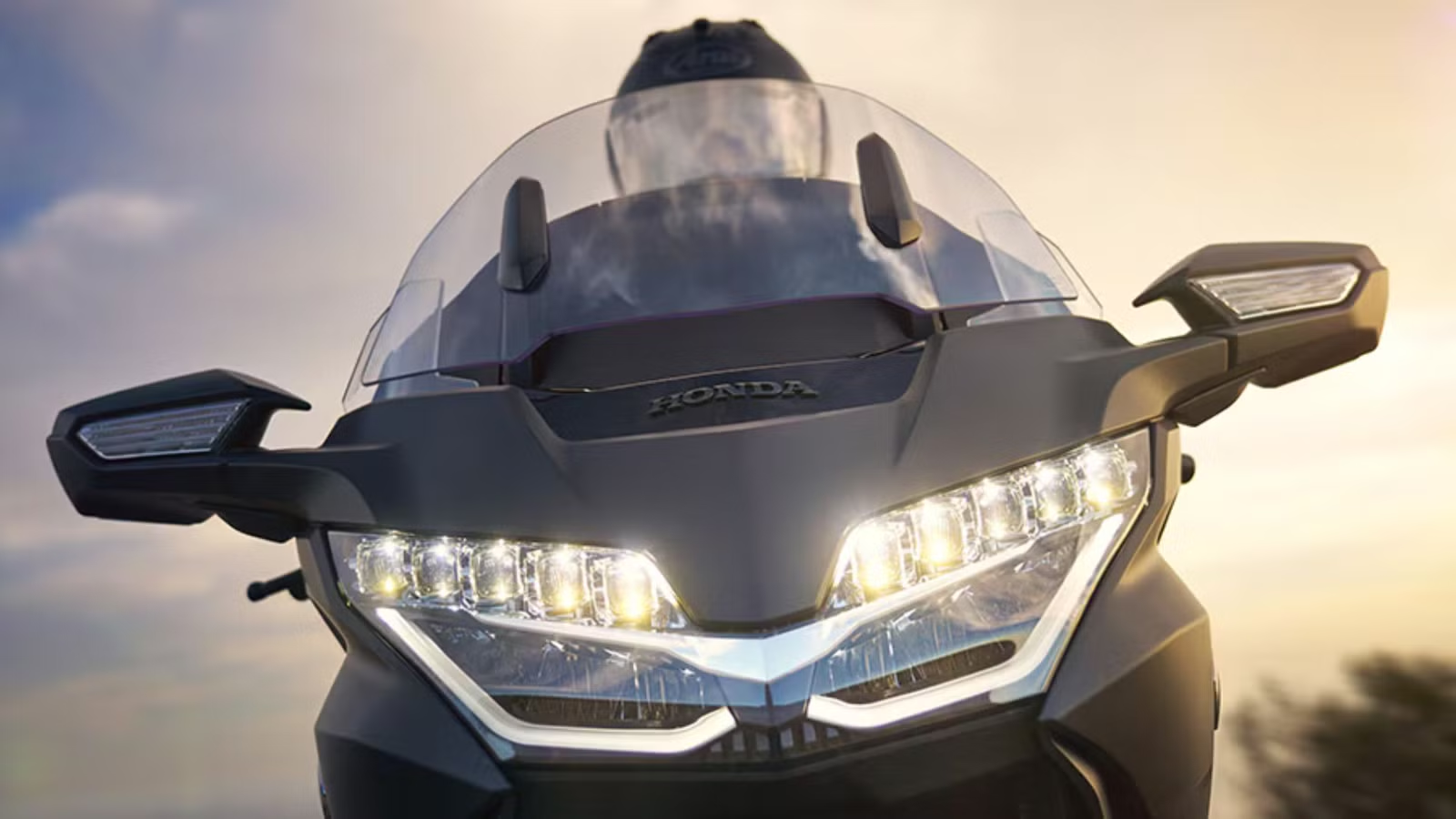
Long-distance riding has a brutal way of exposing every mechanical flaw in a motorcycle’s chassis. Strap a heavy bag onto a traditional cruiser or a top-heavy sport bike, and a simple weekend trip turns into a physical endurance test after three hours in the saddle. Your legs cramp up, the constant wind noise wears you down, and high-frequency handlebar vibration leaves your fingers tingling long after you pull into a gas station.

Riders put up with these physical compromises for decades because long-distance options were severely limited. You either suffered through the raw mechanical vibration of a traditional American cruiser or wrestled with a top-heavy sport bike that lacked real luggage capacity. Honda looked at that gaping void in the market and built something fundamentally different. By dropping an ultra-smooth, car-sized engine into a touring chassis, the Japanese brand created a machine that erases highway fatigue entirely.
Why Most Heavyweight Tourers Don’t Last The Distance
Most of the available touring rigs tend to age in dog years once the odometer reaches five digits. Large-displacement V-twin engines rely on massive pistons, generating intense internal heat and heavy primary vibrations. Over time, that constant mechanical strain starts to wear down internal seals, loosen body fasteners, and land you some heavy repair bills before the bike even hits middle age.

None of this is surprising; more miles usually means more repairs. Owners end up spending big money at the dealership replacing primary drive belts, servicing top ends, and chasing electrical gremlins caused by chassis vibration and moisture. The physical toll on the rider can also be severe if the bike lacks the design to combat the vibrations and bumps.
Why High-Revving Inline-Fours Burn Out Under Full Luggage Loads

High-revving inline-four sport-tourers do not fare much better when pressed into hard daily service. These motors make their peak horsepower way up in the powerband, forcing the engine to spin at 4,000 to 5,000 RPM just to maintain 75 mph on the interstate. That high operating speed accelerates ring wear, bakes the engine oil, and creates a high-pitched handlebar buzz that turns fingertips numb after 100 miles.
When you add a passenger and 100 pounds of packed luggage, small displacement engines struggle under the extra load due to their lack of torque. Of course, this is why we have transmissions, but the rider has to constantly dance on the gear shifter to keep the bike in its powerband when climbing mountain passes or merging into fast traffic. That constant strain leads many owners to trade their bikes in every three or four years rather than deal with long-term mechanical degradation.
The Honda Gold Wing Brings Japanese Dependability To The Touring World

The Honda Gold Wing completely rewrote the rules of long-distance riding when it debuted with liquid cooling and a smooth shaft drive. Instead of building a fragile, high-strung motorcycle engine, engineers designed an under-stressed power plant built to automotive durability standards. Tipping the scales with an over-engineered aluminum frame, this machine settled the chassis at highway speeds while keeping its center of gravity exceptionally low.
Sometimes called the Winnebago of motorcycles, the Gold Wing is probably more like a Honda Accord on two wheels. You sit completely upright with zero weight on your wrists, protected from the elements by a massive front fairing and an adjustable windscreen. By isolating the rider from road shock and engine vibration, Honda built a motorcycle that easily covers 800 miles in a single day without leaving you feeling like you wrestled a bear.
Prices Start From $25,500 For Modern Variants

Getting onto a brand-new showroom model requires a serious financial investment, but the standard equipment list justifies the sticker price when compared to other bikes in the same category. Base models start at $25,500 without destination charge, giving you the complete electronic package, integrated saddlebags, and the legendary smooth drivetrain straight off the dealer floor. If you want to go for full luxury, the Gold Wing Tour sells for $29,500, adding a massive rear trunk with an integrated passenger throne.
At the very top of the lineup sits the fully loaded Airbag Automatic DCT trim, which gets up near $33,800. While over $30,000 sounds steep for a motorcycle, it undercuts many fully optioned Harley-Davidson Road Glide models while offering far superior standard technology. Buyers also get integrated navigation, tire pressure monitoring, heated seats, and electronic reverse right out of the box.
The Complications Of Modernizing A Legend

Updating a legendary touring motorcycle is a dangerous game when you have a bike as revered as this. If you alter the formula too drastically, you risk alienating the loyal core audience that buys these machines. However, letting a platform sit unchanged for 15 years allows competitors to catch up with lighter chassis designs, modern touchscreens, and advanced electronic rider aids.
Honda faced this exact dilemma when redesigning the platform for the current generation. The engineering team needed to shave over 80 pounds off the dry weight, tighten up the overall footprint, and sharpen the handling dynamics. They had to achieve all of this while making sure the bike retained its rock-solid straight-line stability and legendary long-haul ergonomics.
How A Horizontal Six-Cylinder Eliminates Vibration And Keeps Legs Cool At 75 MPH

The mechanical heart of this touring benchmark is its massive 1,833cc liquid-cooled flat-six engine. Laying six cylinders completely flat in a horizontally opposed layout drops the heavy crankshaft and transmission weight right down between the rider’s ankles. This design generates 125 horsepower and a massive 125 pound-feet of torque, delivering instant passing power without needing a hard downshift.
Because opposing pistons naturally cancel out mechanical forces, the flat-six runs without the harsh primary vibrations found in V-twins. The engine cruises along quietly at just 2,500 RPM at highway speeds and generates almost zero heat against the rider’s legs. The new model delivers power so smoothly that you can roll on the throttle in high gear and accelerate without the sudden lurch that high-torque bikes typically produce.
The Seven-Speed DCT That Turned Skeptics Into Converts And Extended Riding Careers

One of the biggest gambles in recent touring history was introducing a seven-speed Dual Clutch Transmission to the heavyweight touring segment. Automatic motorcycles have always been a bit divisive, but the DCT quickly became the most popular option on dealer floors. The system uses two separate clutches to pre-select upcoming gears, delivering fast and smooth shifts that don’t disrupt the chassis balance.
In stop-and-go city traffic, the DCT eliminates hand fatigue by completely removing the clutch lever from the left handlebar. One of the features that made the Gold Wing famous was its reverse gear. The new model now includes a dedicated walking-speed mode for both forward and reverse maneuvering, making parking this huge bike a lot easier. For riders pushing past 60 years old, this feature extends their riding career by taking the physical panic out of moving an 800-pound machine at walking speeds.
Why Honda Scrapped Traditional Forks And Cut Brake Dive By 40 Percent

To fix the awkward, diving front end typical of heavy touring bikes, engineers tossed out traditional telescopic forks entirely. In their place sits a double-wishbone front suspension system that separates the steering control from the shock absorption duties. This setup moves the front wheel in a tighter vertical path, allowing the engine to be mounted further forward in the frame for better weight distribution.
When you hit the front brakes hard, the double-wishbone front end eliminates 40 percent of traditional brake dive. Also, the handlebars stay completely isolated from harsh road impacts, giving the rider incredible front-tire feedback through the grips. The setup makes an 800-pound machine feel surprisingly light on its feet when navigating tight mountain switchbacks.
The Economics Of Decades-Long Ownership

Buying a premium touring bike is a major financial decision, which is why the reliability of the Gold Wing is so important. While European luxury tourers are some incredible machines, they usually require specialized factory tools and frequent expensive dealer visits, whereas this Japanese platform is engineered for straightforward maintenance. The simple layout means routine fluid changes and inspection items can be handled easily in a home garage.
Data from valuation sites like J.D. Power shows that these bikes hold their resale value better than almost anything else on two wheels. Because buyers know the engine block is virtually unkillable, a ten-year-old model with 60,000 miles on the odometer still commands top dollar on the used market. This adds some comfort in knowing that buying a Gold Wing is more of a long-term transportation asset than a disposable toy.
Pocket-Friendly Maintenance And Resale Value

Routine service on a flat-six motor is surprisingly affordable. Valve adjustment intervals are stretched out to a generous 24,000-mile window, and the final shaft drive eliminates the constant adjustment, lubing, and replacement costs of drive chains or belts. Basic oil changes use standard automotive-grade fluids and can be performed at home to save additional money.
According to retail market data from Edmunds, secondary market demand for clean, used models remains remarkably strong across all generations. Even late 1990s GL1500 models with over 100,000 miles routinely fetch $4,000 to $6,000 if the body panels are clean. The combined benefit of low operating costs and high resale retention means owning one of these for a decade costs significantly less per mile than virtually any competitor.
Why This Touring Benchmark Is Still Worth Buying

Decades after defining the luxury touring category, the Honda Gold Wing remains the undisputed “gold” standard for cross-country travel. It successfully bridges the gap between a good classic ride and space-age technology, which gives riders the perfect weapon for crushing 1,000-mile road trips. Whether you choose a well-maintained used GL1800 or drive a brand-new 2026 DCT model off the showroom floor, you are investing in a machine built to outlast your riding career.
At the end of the day, riders buy this motorcycle because it eliminates every single excuse not to travel. You can take it on cold morning commutes, two-up weekend getaways, and even coast-to-coast interstate runs with the exact same composure. If you want one motorcycle in your garage that will last for many years and reliably carry you across the country, this Japanese legend is an excellent choice.
Source: Honda, J.D. Power, Edmunds

Related posts
Latest Post


No Comments