
The Harley-Davidson Engine That Deserves More Credit Than the Milwaukee-Eight
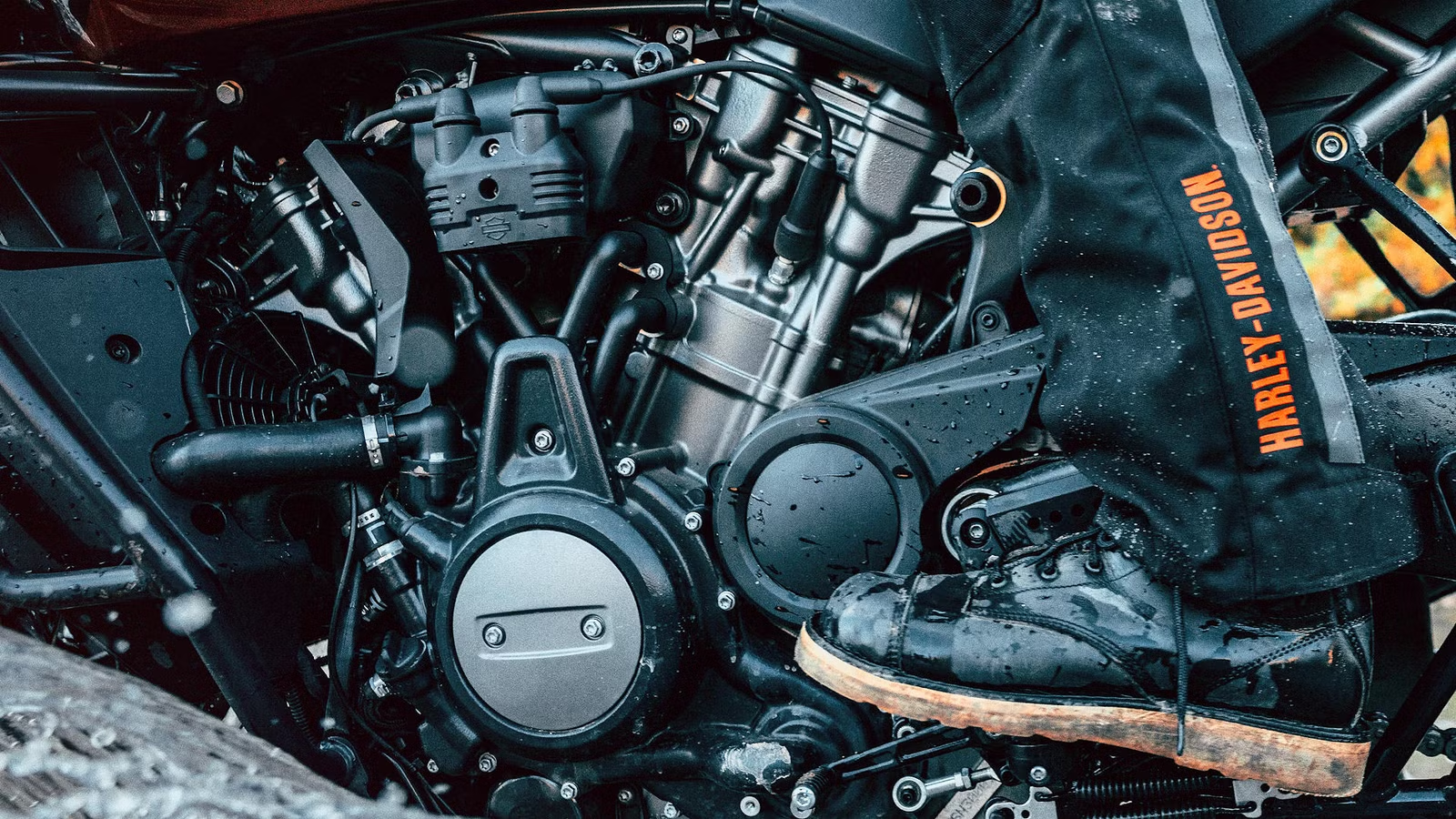
Harley-Davidson has a long, esteemed history. It is one of the few motorcycle manufacturers that has been around for over a century, and for much of its hundred-plus year history, the air-cooled V-twin has been the engine of choice. The Milwaukee-Eight is the current flag-bearer for this tradition, and while it is a fine piece of engineering, it overshadows what is easily the most advanced engine the brand has ever developed.
It Began With An Unheralded Superbike

By the late 90s, it was already pretty clear that Harley-Davidson had fallen behind the competition in terms of performance. A new flagship powertrain was needed, and it needed to be liquid-cooled. On the face of it, consulting a German sports car manufacturer might seem like a strange move, but Porsche had successfully transitioned from air- to liquid-cooling.
The fruit of this collaboration was the Revolution engine. While this was not a Porsche design, the German manufacturer took Harley’s failed superbike engine and helped convert it into a production-ready powerplant. While the VR1000 failed to win any races out on track, the millions of dollars invested in the superbike were not wasted. It essentially laid the foundation for what was to come.
The Revolution Max Is The Best Engine Harley-Davidson Has Ever Developed
How A 91 HP Twin Finally Lets Harley Compete With Japanese Middleweights


Although the Revolution engine, and, by extension, the V-Rod (the only motorcycle it featured in), enjoyed a relatively long production run (2002–2017), it remained something of a niche product. Loyal Harley fans were not won over by the added performance on offer with the liquid-cooled engine, and other customers were left unimpressed by the value proposition when compared to equally powerful Japanese rivals.
The latest Revolution Max engine was developed to shift this perspective, as well as help Harley compete in a couple of key market segments. It comes in two displacements, with the larger displacement lump making as much as 150 horsepower. While impressive, it is the smaller Revolution Max that can really take the fight to Harley-Davidson’s metric rivals, offering impressive value.
An Underutilized Middleweight Platform

As it stands, the Nightster is the only motorcycle currently making use of the 91 horsepower Revolution Max 975T V-twin. At just under $10,000, the base model offers fantastic value, and the Special trim certainly justifies its asking price with a few nice-to-have features (as well as the lesser spotted passenger seat). It just begs the question of why Harley hasn’t rolled out more bikes based on this platform. A middleweight naked bike, sport tourer, or ADV with a reasonable asking price would be just the tonic right now, with more versatile motorcycles very much in demand.
Why The Sportster S Is Neither Cruiser Nor Naked Bike — And Suffers For It

Even the most ardent Harley fans don’t really seem to know quite what to make of the Sportster S. It isn’t a conventional cruiser, but it certainly isn’t a naked bike either. While it offers good power from its 1250T engine, for some reason, it just doesn’t sit right that it has 30 horsepower less than the ADV. Its wide front tire also inhibits any actual sporting pretensions, and just like the old V-Rod, it remains something of a niche offering.
The Pan America ST’s 150 HP Proves The Revolution Max Was Worth The Wait

When the Pan America was launched in 2021, it was the perfect bike for the time. The fact that it sold in large numbers in its first model year, however, proved to be something of a double-edged sword. Some teething issues are to be expected from any brand-new motorcycle, and these teething issues affected, quite literally, thousands of riders. Even though the bike was everything it promised to be, many first-time Harley-Davidson customers were left with a bad taste in their mouths.
Although these issues have been fixed, the industry has moved on from big, full-sized ADVs. At this end of the market, sport touring bikes make more sense, and that is what makes the introduction of the ST model such a shrewd move. It offers a high level of specification, and of course, the most powerful Revolution Max 1250 engine. With 150 horsepower, it actually takes the fight to several more expensive bikes competing in this space.
Liquid-Cooling Remains Divisive

No matter how modern and sophisticated the Revolution Max engines are, most Harley fans will still take cooling fins over variable valve timing every day of the week. This is the main reason why the current selection of bikes that make use of these advanced engines is rather limited. Part of this might be down to tradition, but there is certainly more to it than Harley fans being unwilling to let go of their classic rumble.
Over the years, the air-cooled bikes have all proven to be incredibly durable, and remain relatively easy to both maintain and modify (even though the modern bikes are all fuel-injected, there are several bolt-on kits that yield performance gains). Maintenance costs for the liquid-cooled bikes are higher, and the added complexity means that some tasks will need to be carried out by experienced technicians. Hiring a shade-tree mechanic, or doing the work yourself to save money will be off the table.
Moving With The Times

In the past, Harley-Davidson was heavily criticized for stagnating, and leaning on tradition for sales. This is clearly no longer the case. The Revolution Max series of liquid-cooled engines is living, fire-breathing proof that this is a brand that is more than willing to move with the times. These are easily the most innovative engines currently bearing the famed Harley logo, and all deserve far more attention than they are currently getting.
Much of the attention they do get is also negative. With several recalls to their name, much of the criticism is merited. That, however, is just the price one must pay for innovation. Innovation is not easy; it invites risk, and while some customers will be left with a frustrating overall experience, the vast majority will get a far better motorcycle down the line. We can only hope that it isn’t too far down the line, because some customers are already starting to run out of patience.
Source: Harley-Davidson

Related posts

Latest Post


No Comments