
The 2026 Ioniq 9 Just Beat Its EPA Range Rating In Real-World Testing—Here’s What That Actually Means
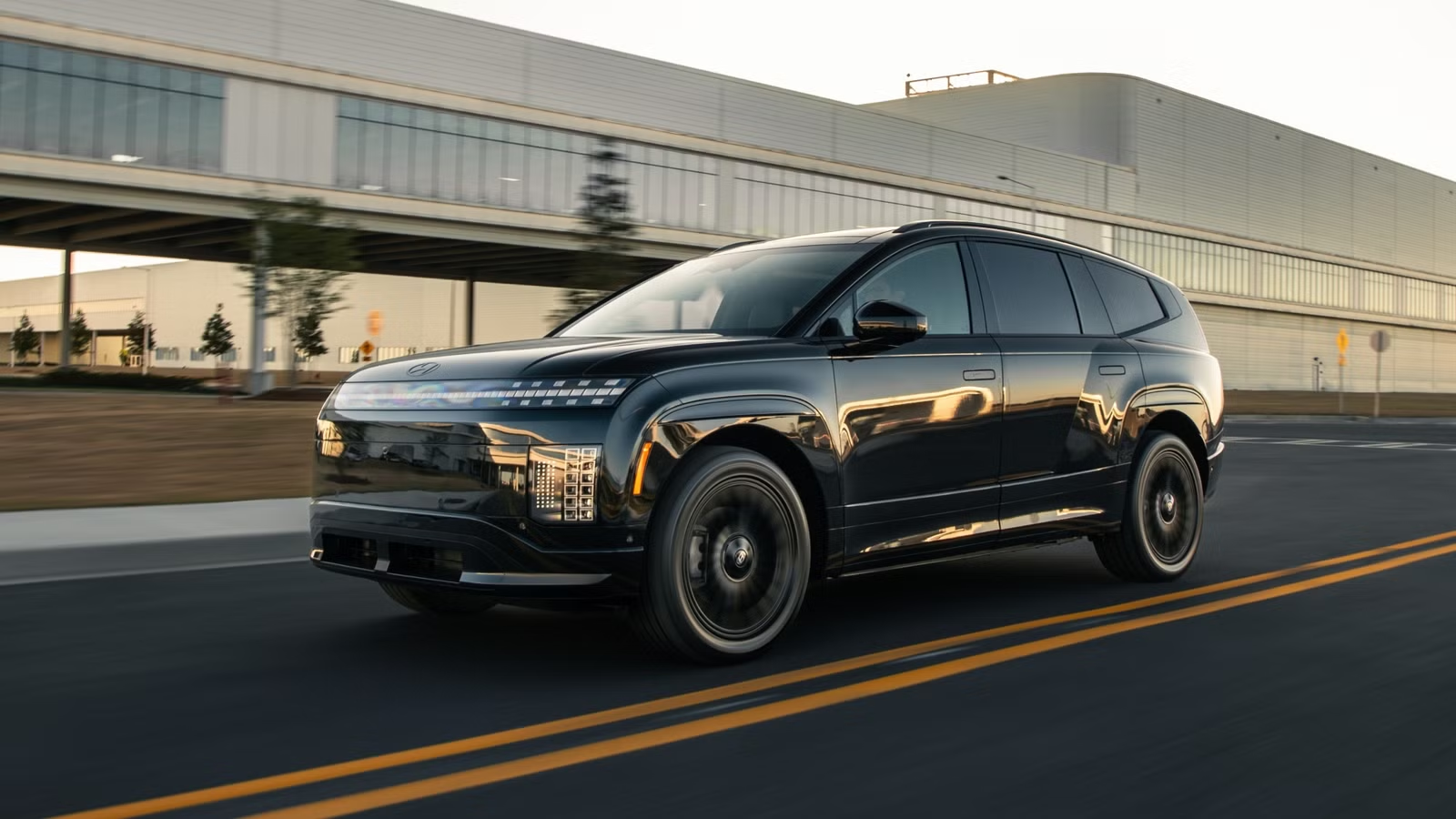
Range anxiety has been the defining obstacle for EV adoption, and it’s especially acute for three-row family haulers—vehicles where passengers, cargo, and highway miles all conspire against battery efficiency. So when the 2026 Hyundai Ioniq 9 cleared its EPA range estimate in real-world testing, it was the kind of result that actually moves the needle for skeptical buyers.

According to testing reported this week, the Ioniq 9 exceeded its EPA-rated range under real driving conditions—a result that’s genuinely uncommon in the EV segment, where real-world numbers typically fall short of the official figure. For families weighing whether a three-row electric SUV can handle actual road trips, not just optimistic lab cycles, this is worth paying attention to.
What The EPA Rating Is And Why Beating It Matters
The EPA range figure is derived from a standardized test cycle that blends city and highway driving under controlled conditions. It’s a useful benchmark, but it’s also famously optimistic for many vehicles—real-world factors like highway speeds above 65 mph, climate control use, cargo weight, and cold temperatures routinely shave 10 to 20 percent off the sticker number.
Beating that figure, even modestly, signals that the Ioniq 9’s efficiency tuning is conservative relative to the test cycle—meaning the vehicle is calibrated to perform well under conditions heavier than what the EPA simulates. For a three-row SUV carrying seven passengers and road-trip luggage, that margin matters more than it would on a two-seat commuter EV.
The Ioniq 9’s Position In The Three-Row EV Segment

The Ioniq 9 sits at the top of Hyundai’s electric lineup, slotting above the Ioniq 5 and Ioniq 6 as the brand’s first three-row EV. It competes in a segment that’s still finding its footing—large electric SUVs with genuine third-row utility are a short list, and range performance is the primary battleground.
For context, the Lucid Gravity—a direct rival in the premium three-row EV space—posted 720 kilometers (roughly 447 miles) of real-world range in a recent European efficiency test, leading that field. The Ioniq 9 operates in a different price tier, but the competitive pressure on range credibility is the same. Edmunds also recently pitted the Ioniq 9 against the Lexus TZ in a comparison test, underscoring how quickly this segment is filling in with serious alternatives.
The Skoda Peaq, just unveiled, claims up to 402 miles of range for the European market—another sign that three-row EV range expectations are rising fast. The Ioniq 9 beating its EPA number positions it well as that bar climbs.
What This Result Means For Road-Trip Planning

The practical implication is straightforward: if the Ioniq 9 delivers at or above its rated range under real conditions, buyers can plan charging stops using the EPA figure without building in a pessimism buffer. That’s a meaningful shift in how an EV road trip is calculated.
Most experienced EV owners already factor in a 10 to 15 percent real-world discount when mapping routes. A vehicle that erases that discount—or reverses it—simplifies the math considerably, especially on longer legs between fast chargers. For a family SUV where the alternative is a gas-powered Pilot or Pathfinder with no range anxiety at all, closing that psychological gap is as important as the raw mileage number.

It’s also worth noting that real-world range results are sensitive to test conditions. Highway speed, ambient temperature, HVAC load, and driving style all shift the outcome. The Torque News test result is a positive data point, but buyers planning high-speed summer highway runs in hot climates should still treat the EPA figure as a ceiling to plan around, not a floor.
The 2026 Ioniq 9 beating its EPA estimate won’t end range anxiety as a category concern—that’s a headline, not a verdict. But it does suggest Hyundai has tuned the vehicle’s efficiency conservatively enough that real-world performance holds up. For three-row EV shoppers who’ve been waiting for the segment to mature, that’s a concrete reason to move the Ioniq 9 higher on the test-drive list.
Sources: Torque News, Edmunds

Related posts
Latest Post



No Comments