
10 Honda Bikes That Rarely Give Owners a Reason To Complain
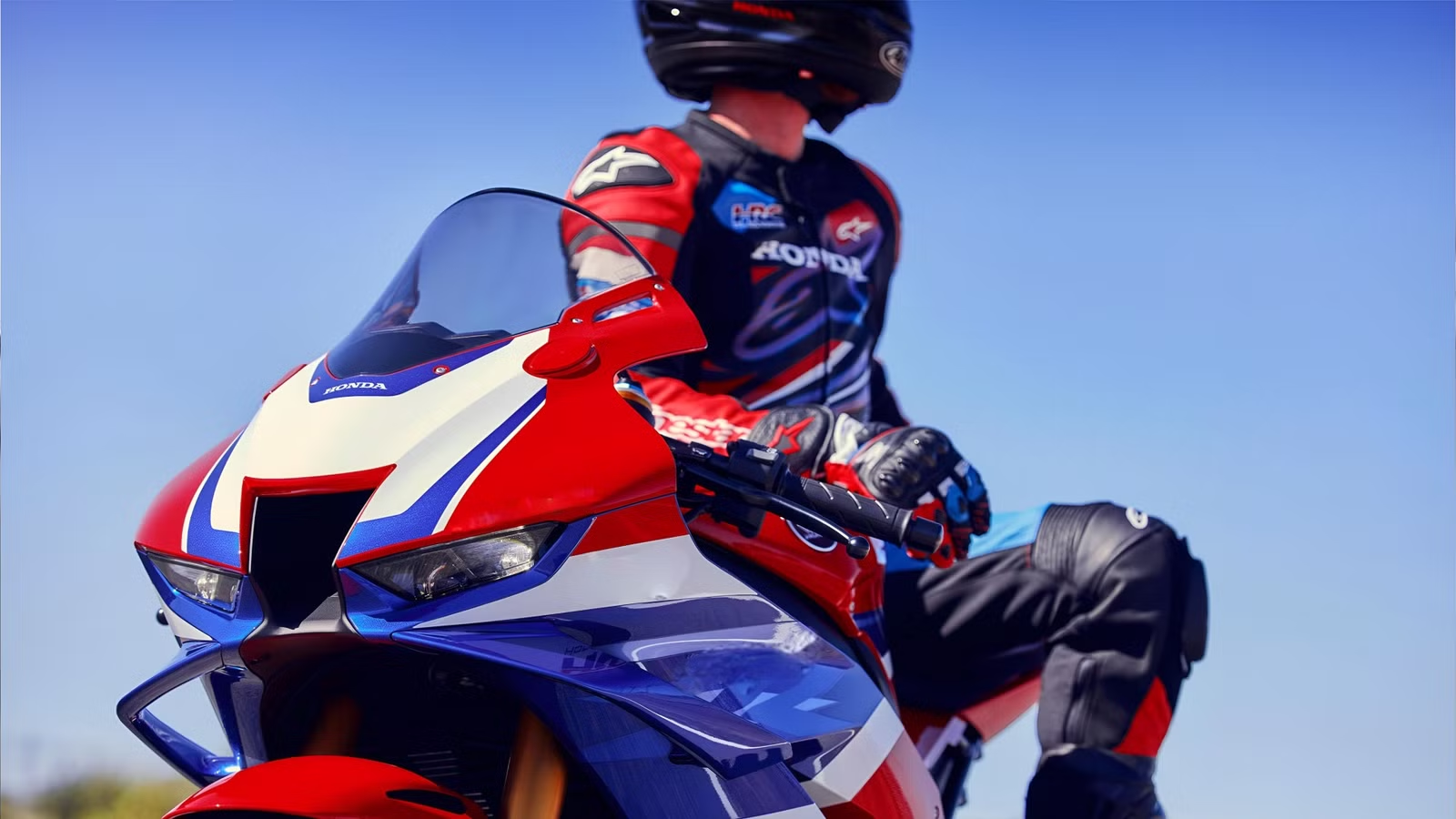
A bike can have impressive performance, sophisticated electronics, or beautiful styling, but none of that matters much when it spends more time in a garage than it does on the road. That is usually the recipe followed by Honda. Its best motorcycles tend to make ownership feel almost uneventful: change the oil, keep the chain adjusted, replace worn items, and keep riding. This peace of mind extends to all of its machines, starting from the Grom to the flagship RR-R Fireblade SP. And they all promise to keep doing their respective jobs year after year.
Honda Grom
Base Price: $3,599

Honda Grom’s whole personality is built around being cheap, small, and hard to kill. Its 124cc air-cooled single is the same basic architecture Honda uses in the Super Cub and Trail125, an engine family with a well-earned reputation for shrugging off abuse.

Owners in forums routinely report riding theirs to redline constantly, tens of thousands of miles in, with nothing more than chains and tires to show for it. When something does wear out, it’s usually cheap to replace, which is a big deal when the whole bike barely costs more than a decent laptop.
Honda CRF300L
Base Price: $5,749


Dual-sports live a rough life — dropped in the dirt, ridden hard, occasionally submerged — and the Honda CRF300L takes it in stride. Its liquid-cooled single carries forward Honda’s long streak of dead-simple thumpers that just keep running.

Riders describe it as reliable “as an anvil,” and most of the complaints floating around online are about snatchy low-speed fueling, not anything mechanical. The 2025 lighting and cooling updates only sharpened what was already a proven formula.
Honda Rebel 500
Base Price: $6,499

The Honda Rebel 500 borrows its parallel-twin from the CB500 family, a platform with some of the lowest reported failure rates in Honda’s entire lineup. Owners on cruiser forums bring up the stiff stock seat far more often than anything under the tank, and it’s not unusual to see Rebel 500s cross 75,000 to 100,000 miles on nothing but oil and tire changes.

For a $6,499 bike, that kind of longevity is almost unreal in the entry-level space. What makes matters sweeter is the fact that newer rivals still can’t shake up its dominance, despite some of them also being from Japan. We’re looking at you, Kawasaki.
Honda Shadow Phantom
Base Price: $6,899

The Honda Shadow Phantom’s 745cc V-twin has been around, in one form or another, since the mid-2000s. That is plenty of time for the Japanese auto giant to sand off any rough edges. As a result, you get a package that keeps you complaint-free.

Shaft drive means no chain to lube, adjust, or replace, which quietly removes the single most neglected maintenance job on most cruisers. It’s not a bike that generates headlines, but it’s also not a bike that generates warranty claims, and there’s something to be said for that kind of anonymity.
Honda CBR650R E-Clutch
Base Price: $9,199

The Honda CBR650R proves that a reliability-focused motorcycle doesn’t have to be boring. Its 649cc inline-four is one of Honda’s most appealing modern road engines, combining a high-revving character with a relatively conventional mechanical layout. Honda’s E-Clutch adds technology to the package, but the underlying six-speed transmission remains familiar.

The 2026 bike also benefits from the lower $9,199 base MSRP specified here. Owner experiences across forums have generally been positive. However, some owners have reported corrosion concerns and indicator-related electrical annoyances. Honda also issued a recall in 2025 concerning the gear-change arm on the CB650R and CBR650R.
Honda NC750X DCT
Base Price: $9,499

The Honda NC750X is perhaps the least interesting motorcycle on this list. Its 745cc parallel twin is tuned for strong low- and mid-range torque rather than headline power, while Honda’s DCT takes care of gear changes. Honda also gives the NC750X practical features such as integrated front storage and a relatively low center of gravity.

Owner discussions consistently point to reliability as a major strength. Riders with considerable experience regularly describe the platform as dependable, while questions about long-term DCT durability tend to attract owners reporting few or no significant problems.
Honda Rebel 1100 DCT
Base Price:$10,899

The Honda Rebel 1100 brings significantly more performance without losing the easygoing nature that made the smaller Rebel successful. Its 1,084cc parallel twin is shared with other Honda models, and the engine’s 10.5:1 compression ratio and SOHC configuration aren’t the kind of numbers that suggest an extreme state of tune.

The DCT also eliminates conventional clutch operation while retaining six forward gears. This is also the only system of its kind in the segment. Long-term owner feedback is encouraging, with some reporting nearly 10,000 miles with no engine problems, while other owners reportedly reaching 17,000 miles without issues.
Honda Africa Twin
Base Price: $15,199

The Honda Africa Twin has built a strong reputation for durability over the years. The 2026 base model uses Honda’s 1,084cc Unicam parallel twin, long-travel suspension, 21-inch front wheel, and a six-axis IMU-equipped electronics package. The core engine and drivetrain have proven themselves under genuinely demanding use.

That is what matters most on a machine intended to cross continents. Owner forums back that up with regular mentions of 100,000- and 200,000-mile examples still running their original engines. The 1084cc parallel-twin isn’t the most powerful in its class, but it’s proven itself in places where a breakdown means a very long walk home.
Honda CBR1000RR-R Fireblade SP
Base Price: $28,999

The Honda CBR1000RR-R Fireblade is an outlier in this list — a 218-horsepower, Öhlins-suspended, MotoGP-derived superbike. However, Honda’s inline-four architecture has a genuinely strong reliability record even at this level of tune. Older Fireblade generations are frequently described by owners as bulletproof, and the current CBR1000RR-R is generally considered one of the more dependable liter-class superbikes on sale today.

That said: this is a bike that demands the maintenance schedule be followed to the letter. Oh, and there are some budget components in some areas, which you might need to address if you actually want to use this as intended (on the racetrack chasing apexes).
Honda Gold Wing Tour
Base Price: $29,500

At the end of the list sits the motorcycle that has arguably done more than any other Honda to build the company’s reputation for long-distance durability. The Honda Gold Wing Tour uses a 1,833cc horizontally opposed six-cylinder engine, with a six-speed manual available alongside automatic DCT versions.

Honda pairs that engine with full-touring equipment, a 61-liter trunk, electronic suspension, and smartphone connectivity. The real evidence, however, comes from owners who have simply refused to stop riding. Gold Wing owner forums contain numerous examples of GL1800s passing 100,000 miles, including owners reporting machines with 150,000 miles or more still going strong.
Source: Honda Powersports

Related posts


Latest Post


No Comments