
Polestar Formula 2030 Concept: What the US Is Missing
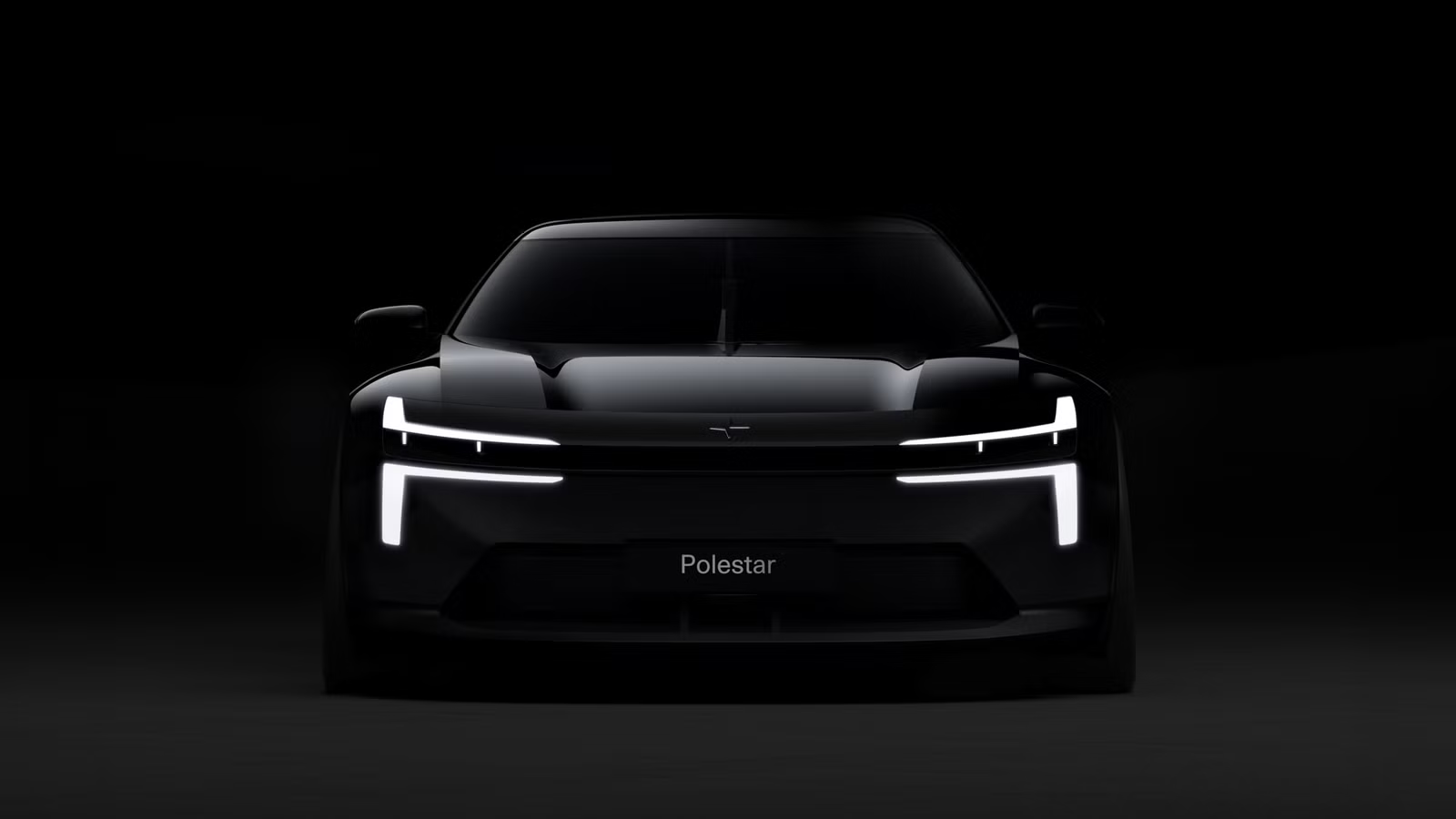
Polestar dropped the first teaser image of its Formula 2030 Concept this week, and the shadowy frontal view is striking enough to make the timing genuinely sting. Wide-flared fenders push out to the edges of the side-view mirrors. A muscular, bulging hood dominates the nose. And bisecting the windshield is what appears to be a Formula 1–style halo element — an unorthodox structural flourish that signals exactly how seriously Polestar is taking its performance ambitions. The problem, for American fans at least, is that none of it is coming here.

The concept’s full reveal is scheduled alongside the media drive for the Polestar 4 station wagon SUV later this year, with a private preview already held for investors and VIP customers at The Cube, Polestar’s minimalist cuboid headquarters in Gothenburg. What the teaser confirms is that this design language — aggressive, low-slung, planted — will shape the next-generation Polestar 2 sedan arriving in 2027 and the Polestar 7 compact crossover expected in 2028. Both of those models are being built for a world that no longer includes the United States.
What The Teaser Actually Shows
Even shrouded in shadow, the Formula 2030 Concept communicates intent. The front fascia is wide and planted, with cambered front wheels pushing the stance lower than anything in Polestar’s current lineup — lower, visually, than even the Polestar 5 grand tourer, which currently sits as the brand’s halo model. The signature Dual Blade daytime running lights survive the transition, but they now appear flanked by Lucid-style headlamp elements integrated between the blades, updating a lighting signature that has defined Polestar since its earliest production cars.

Autocar also noted what appears to be an S-duct in the front fascia — an aerodynamic device that channels air through the grille and exhausts it through a duct in the hood, generating downforce at the nose. Whether that makes production is another question entirely, but its presence on the concept underlines the performance direction head of design Philipp Römers is pursuing. The halo element at the windshield is the wildcard: it could be a structural design feature, an unconventional wiper arrangement, or pure showcar theater. Road & Track noted it’s almost certainly something enthusiasts would prefer stays on the concept floor.
Bold Evolution, Not Revolution

Römers, who joined Polestar in January 2025, is clear about his philosophy. “It was obvious we needed a bold evolution not revolution of what came before,” he said in Polestar’s official statement. “Formula 2030 delivers this, showcasing our future while respecting brand-defining elements like the familiar Dual Blade headlights, ensuring it remains recognisably a Polestar.”
In interviews with Autocar, Römers elaborated on the brief he set for his team: “The cars have to look super-attractive and should not scare people. Ambitious, but not aggressive.” That’s a deliberate counterpoint to the increasingly sharp, confrontational face language spreading across the EV segment. Polestar is betting that a premium, distinctly Swedish restraint — evolved rather than reinvented — is the right move as it targets 100,000 annual sales, up from around 60,000 in 2025, with the Polestar 2 and Polestar 7 doing the heavy lifting.
The US Exit Makes This A Farewell, Not A Preview

The Formula 2030 Concept landed just weeks after Polestar confirmed it would stop selling new vehicles in the United States after the 2026 model year. The US Commerce Department’s Connected Vehicle Rule bars sales of vehicles using Chinese-linked connected technology, and Polestar — owned by Geely — could not secure an exemption. Volvo, which shares hardware, software, and a South Carolina production line with the Polestar 3, received one. Polestar did not, and has said it will not appeal.
Existing US customers are covered under what Polestar calls its “Polestar Promise” — warranty support, genuine parts, its roughly 32-retailer service network, and continued over-the-air software updates. But no new cars. The remaining 2026-model-year inventory is being sold off, in many cases at steep discounts. For American fans, the Formula 2030 Concept and the design language it introduces — the next Polestar 2, the Polestar 7 — will exist in markets they’d need a passport to visit. A trip to Canada, as Road & Track put it, is the closest most US enthusiasts will get to seeing it firsthand.
Polestar posted a record 30,423 deliveries in the first half of 2026, even as it absorbed an $842 million net loss for the period. The Formula 2030 Concept is, in part, the brand’s argument to investors that a profitable future is still possible — just not one that runs through North America. For the enthusiasts who followed Polestar here, it’s a clean, angular, genuinely exciting design direction arriving at exactly the wrong moment. The future looks sharp. It’s just not ours to drive.

Related posts

Latest Post


No Comments