This Mazda SUV Now Feels Pricier Than A Loaded X3 M50
9 minutes reading
Thursday, 10 Sep 2026 17:30 0 7 autotech
Step inside this Japanese SUV and the first thing you notice isn’t a badge, it’s the leather. Supple, deeply grained, stitched with the kind of patience that usually comes with a German price tag. Then there’s the wood. Not a synthetic wrap, but real open-pore ash running across the dash. The cabin feels hushed, tailored, expensive in a way that doesn’t announce itself. Only after you’ve settled in does the twist arrive: this is a Mazda, and it costs nearly $9,000 less than a BMW X3 M50 loaded with comparable ambition. Mazda didn’t stumble into this. It aimed here on purpose.
The CX-90 3.3 Turbo S Premium Plus is the clearest evidence yet that Mazda’s “premium without the badge” strategy has matured past marketing copy. Open the door and the first material you touch is Nappa leather across the seats, armrests, and door panels—a grade of hide typically reserved for cars wearing a Mercedes or Audi emblem. It’s softer and more supple than the corrected-grain leather found in most mainstream three-row SUVs, with a visible, natural grain pattern rather than the uniform, embossed texture that gives cheaper leather away.
Then there’s the wood. Mazda uses genuine open-pore ash trim on the dash and center console, sanded and finished to show real grain rather than a photo-printed laminate under gloss plastic. Run a fingernail across it, and you feel actual texture, not the dead-flat surface of appliquéing trim. It’s a small detail, but it’s the kind of small detail that separates a cabin that looks expensive from one that actually is.
2025 Mazda CX-90 front seatsChris Chin | TopSpeed
Panel gaps are tight and consistent around the console and door cards, stitching on the seats and armrests is even, and the switchgear—the volume knob, the rotary infotainment controller, the drive mode dial—has genuine metal weighting and damping rather than the light, hollow click common at this price point. None of this happened by accident. The materials alone could justify a higher price tag — but Mazda isn’t charging one. The number gap between this cabin and the BMW that inspired it is where this story gets strange.
A $57,570 CX-90 Undercuts The $66,500 X3 M50 Before Options Even Enter The Equation
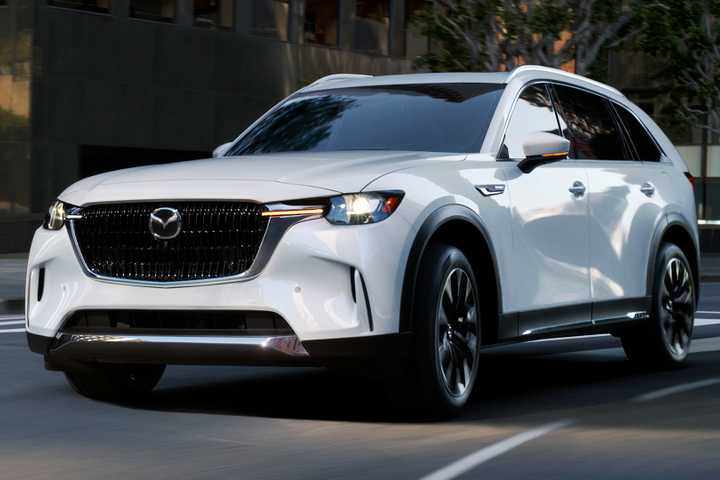
Front 3/4 shot of 2026 Mazda CX-90 parkedMazda
Here is where the comparison stops being abstract and becomes math. The Mazda CX-90 3.3 Turbo S Premium Plus, the range-topping trim with the Nappa leather and ash wood already described, carries an MSRP of $57,570. The 2025 BMW X3 M50, the performance flagship of BMW’s redesigned X3 lineup (which now runs xDrive30 and M50, having dropped the old M40i designation), starts at approximately $66,500 before a single option box is checked.
That’s a gap of roughly $9,000 before destination fees, before packages, before anything. And in the real world, that gap tends to widen rather than close. BMW buyers chasing the M50’s full potential typically add the M Sport Package, adaptive suspension, and the Driving Assistance Professional package, pushing a well-equipped example past $70,000 with destination included. The CX-90 Turbo S Premium Plus, by contrast, arrives from the factory essentially fully loaded: Nappa leather, wood trim, the 12.3-inch driver display, and the full driver-assistance suite are standard at that $57,570 price, with only paint and a handful of accessories left as true options.
Rear 3/4 shot of 2026 Mazda CX-90 Towing A MotorcycleMazda
Add destination charges to both—roughly $995 for Mazda, around $995 for BMW as well—and the delta barely moves. What you’re left with is a genuine apples-to-apples gap of nearly $9,000 between a fully dressed Mazda and an entry-point BMW performance SUV that isn’t even wearing its favorite options yet. For buyers cross-shopping this segment on value, that’s not a rounding error, it’s a different tier of spending.
Second-Row Comfort And Cabin Quietness Show Where Mazda Chose Luxury Over Sport
Interior shot of the 2025 Mazda CX-90 rear seatsMazda
The price gap tells half the story; the packaging tells the rest. The CX-90 is a three-row SUV, and Mazda has clearly prioritized the people sitting behind the driver. Second-row captain’s chairs (standard on this trim) offer a meaningful recline range, generous padding, and enough travel to genuinely stretch out—this is a cabin built around the idea that passengers, not just the driver, deserve to feel pampered. The X3, by comparison, is a strict two-row SUV with a tighter rear bench, less thigh support, and a more upright seating position dictated by the car’s sportier roofline and lower ride height.
Road noise tells a similar story. Mazda has invested specifically in acoustic glass, extra sound-deadening in the floor and firewall, and revised engine mounts for the turbocharged inline-six, and the result is a cabin that stays remarkably composed at highway speed: wind noise is muted, tire roar is filtered out, and the standard 12-speaker Bose surround system doesn’t have to fight ambient noise to sound rich. This quietness isn’t accidental; it’s a deliberate engineering target, the same way German brands tune for autobahn stability. The X3 M50, meanwhile, was never built to be silent. Its sportier tires generate more road noise, and BMW’s tuning leaves a bit more engine and exhaust note in the cabin on purpose, because in a performance model, that’s a feature, not an oversight.
How The Infotainment Experience Reinforces The Same Divide
2025 Mazda CX-90 dashChris Chin | TopSpeed
Mazda’s system, controlled primarily through a rotary dial rather than a touchscreen, takes a moment to learn but rewards you with fewer distracted glances at the road once you have; menus are shallow, and the physical dial means you can adjust things without hunting for a virtual button while driving. BMW’s iDrive 9, running on the curved display, is more visually impressive and quicker to respond to inputs, but it buries some functions in submenus that require more screen time to find. Neither is a deal-breaker, but the two systems reflect the same philosophy split as everything else in these cabins: one prioritizes calm, low-effort usability, the other prioritizes flash and immediacy.
The X3 M50 Wins On Speed And Handling But Gives Up Mazda’s Relaxed Road Manners
Front 3/4 shot of 2026 Mazda CX-90 parkedMazda
None of this means the BMW has nothing to offer—quite the opposite. The X3 M50 is the more athletic machine, full stop, and that’s exactly what its badge promises. Its turbocharged inline-six sends power through a quick-shifting automatic and xDrive all-wheel drive, and the result is a 0-60 time in the low four-second range with a chassis tuned specifically for confident, tossable handling. Steering feel is sharper and more direct, body control through corners is tighter thanks to adaptive dampers and a lower center of gravity, and the M50 simply changes direction with more urgency than a three-row SUV ever will.
The CX-90’s turbocharged inline-six is no slouch either—it’s genuinely quick for a three-row family SUV—but it’s tuned for smooth, linear delivery rather than outright aggression, and the taller, heavier body means it will never match the X3’s cornering composure or outright pace. This is the real trade-off at the heart of this comparison: the M50 earns its performance premium honestly. If you want a vehicle that rewards a spirited backroad and genuinely engages the driver, the BMW is still the sharper tool.
Rear 3/4 action shot of 2026 Mazda CX-90 driving on roadMazda
What you give up for that sharpness is exactly what Mazda has chosen to prioritize: a relaxed, cosseting ride on rough pavement, a quieter highway cruise, and a cabin that doesn’t remind you every mile that you’re driving something tuned for the last tenth of a second. Neither approach is wrong; they’re just aimed at different drivers, which is precisely why this comparison resists a simple winner.
Resale And Depreciation Could Decide Which Premium SUV Makes More Financial Sense
Sticker price is only one side of the ownership ledger, and depreciation curves complicate the picture in interesting ways. BMW’s X3 has historically held resale value reasonably well for a German luxury SUV, buoyed by strong brand cachet and steady demand in the used-luxury market — though performance trims like the M50 can see slightly steeper early depreciation as they’re often driven harder and optioned more aggressively, which shows up in used-market condition reports.
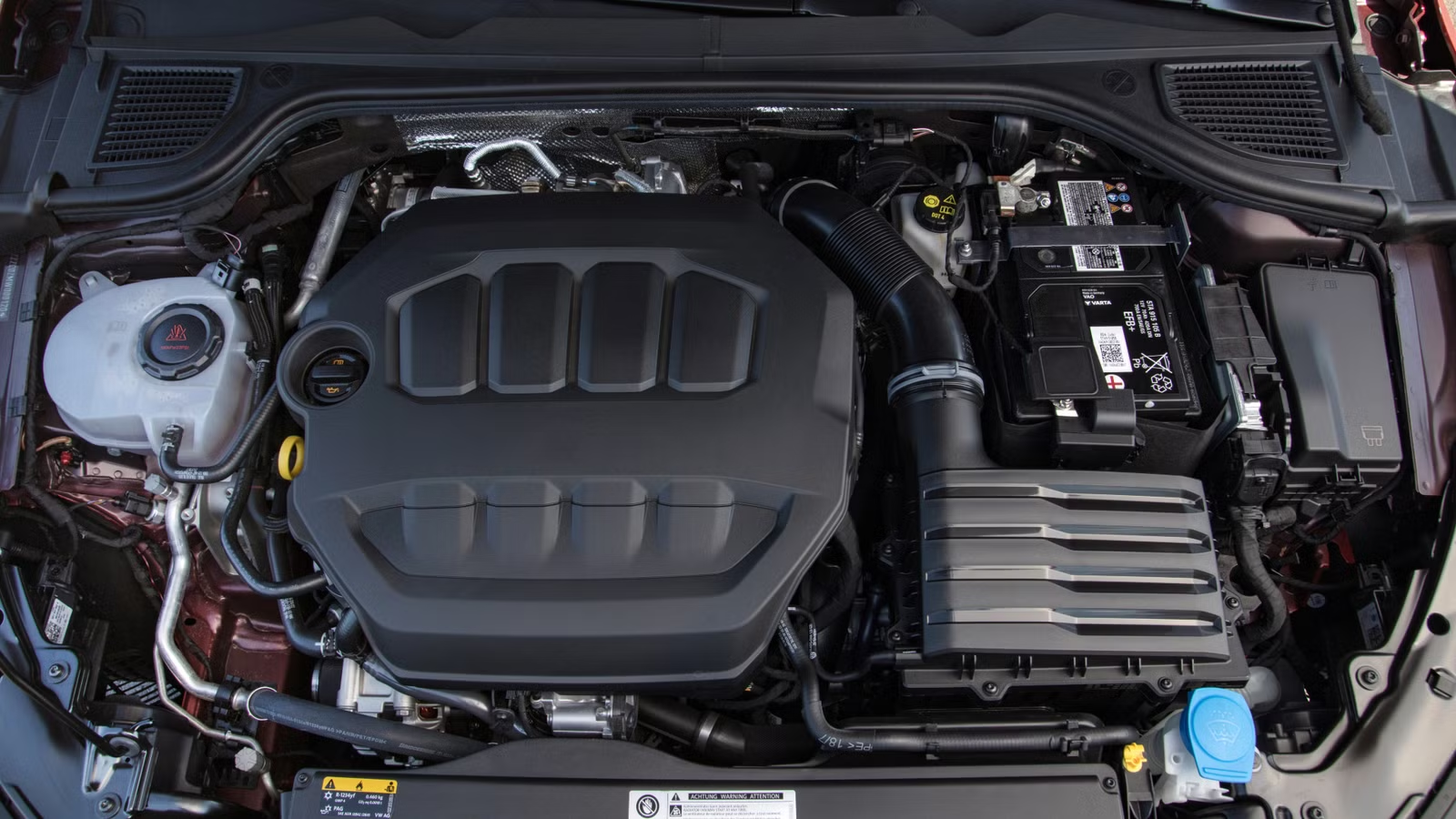
2025 Mazda CX-90 engineChris Chin | TopSpeed
Mazda, meanwhile, has built a reputation for resale strength that occasionally rivals or beats mainstream luxury competitors, a byproduct of strong brand trust and comparatively low production volumes keeping used supply in check. The CX-90, still early in its life cycle, doesn’t yet have the long-term data that the X3 has accumulated over multiple generations, but early indicators suggest it’s tracking well against three-row luxury and near-luxury rivals.
For a buyer running the numbers over a five-year ownership window, the calculation becomes genuinely interesting. A lower purchase price paired with strong projected retention could make the CX-90 the more financially sound choice, even before factoring in Mazda’s typically lower maintenance costs compared to BMW’s pricier service intervals. The X3 M50 will likely hold its badge value and its performance appeal, but it does so from a higher starting point and a costlier maintenance runway.
2025 Mazda CX-90 side shotChris Chin | TopSpeed
Ultimately, this isn’t a comparison with a clean winner; instead, it’s a fork in the road. If cabin richness, second-row comfort, and everyday value top your list, the CX-90 makes a compelling, well-reasoned case for itself. If you want the driving engagement and badge prestige that come with genuine sport-SUV credentials, the X3 M50 still earns every cent of its premium. The real takeaway is simpler than either verdict. Mazda has proven that luxury feel and performance ambition are no longer the same conversation, and knowing which one you actually want is the only decision left to make.













No Comments