
How Much A 6-Year-Old Harley-Davidson TriGlide Ultra Is Worth In 2026
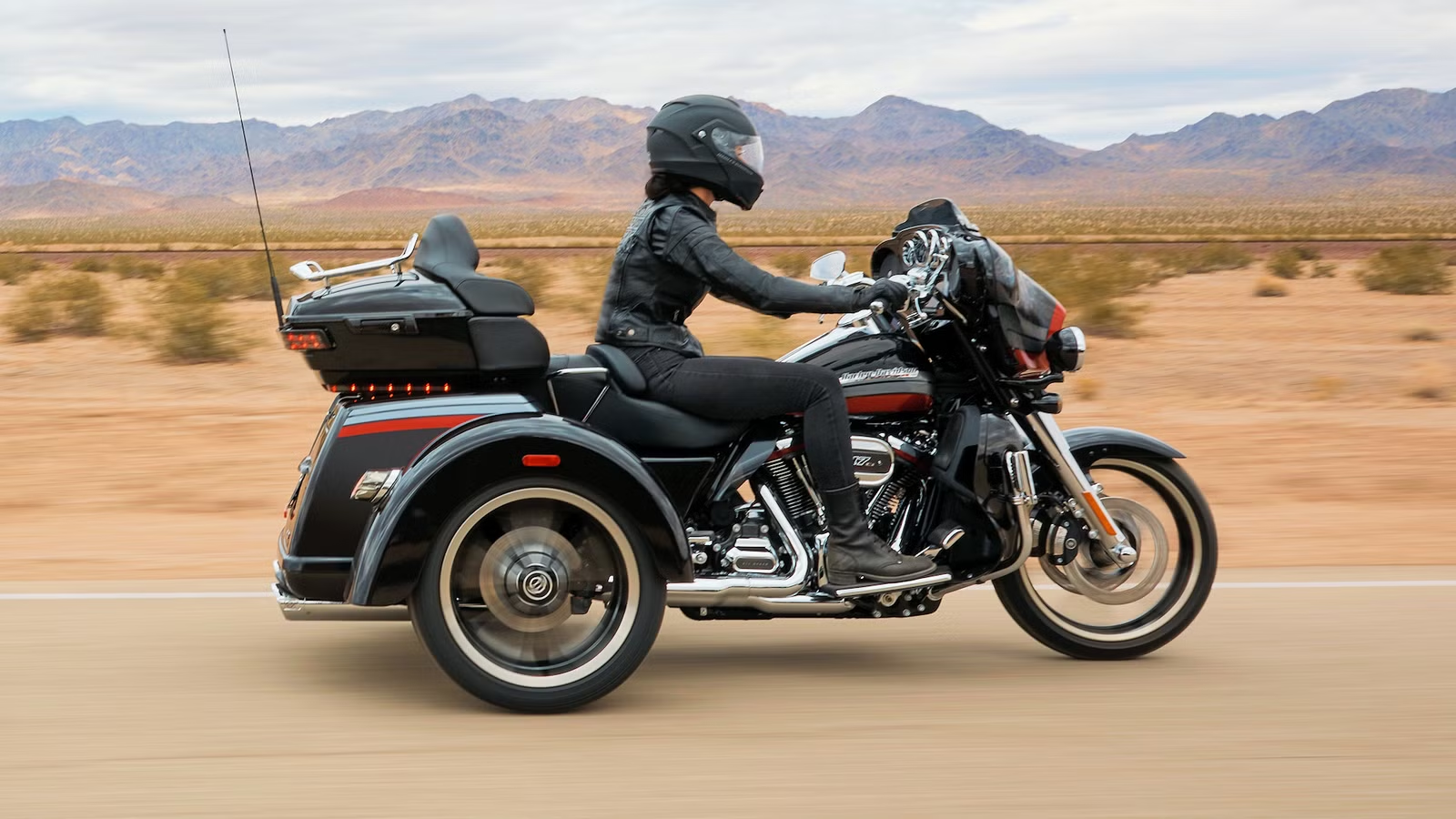
Harley-Davidson’s Tri-Glide Ultra has long occupied a rarefied spot in the Motor Company’s lineup — a full-dress touring trike that blends old-school American iron with modern convenience. The lineage runs deep: three-wheel Harleys trace their roots to the flathead-powered Servi-Car of 1932, a workhorse beloved by delivery drivers, ice cream vendors, and meter maids alike. Today’s Tri-Glide Ultra is a far more sophisticated machine, but it carries that same spirit of purposeful, unhurried travel. If you own one and are thinking about selling, the question isn’t whether it holds value — it’s how much of that value you’ve protected.

In more contemporary times, it’s a favorite of riders who engage in long-distance touring and are perhaps unable or unwilling to do it on two wheels. Unless you planned on giving your Tri-Glide Ultra a forever home, it pays to treat the purchase as an investment — and like any investment, it can hold its value or shed it with little hope of recovery. With this type of vehicle, condition trumps mileage as the primary factor when arriving at a viable asking price, based on my experience as a certified Harley-Davidson mechanic. Let things slip, and you can expect to take a real beating at the negotiating table.
2020 Harley-Davidson Tri-Glide Ultra Resale Value: What To Expect
Pricing, Trade-In Insights, And Market Trends For Your Three-Wheel Tourer
If you bought your Tri-Glide Ultra new, you likely paid at least the base list price in Vivid Black, with the cost climbing from there depending on your color choice — options such as Spruce, Midnight Blue/Barracuda Silver, River Rock Gray/Vivid Black, and Tahitian Teal all carried a premium. That same trike, provided it’s in excellent or even near-new condition, can still command strong money today depending on options and add-ons.

Generally, though, you can expect to get less than that no matter to whom you sell. According to KBB, a 2020 Harley-Davidson Tri-Glide Ultra has a trade-in value of $24,600. Trading it in is a mixed bag: you walk away with less money — sometimes significantly less — but the transaction is quick and clean, and it typically means you’re rolling into something new. If an upgrade is on the table, you don’t want the selling process to slow things down. The typical listing price, on the other hand, is $29,965 for a six-year-old Harley-Davidson Tri-Glide Ultra in 2026. Opt for the Freewheeler, and the trade-in and typical listing prices drop to $18,050 and $22,970, respectively. All the prices are for trikes in good condition with typical mileage.
Maximizing Your Harley-Davidson Tri-Glide Ultra’s Resale Value
Maintenance, Storage, And Customization Tips To Protect Your Investment

Hopefully, you thought ahead and planned for this eventuality, then stuck to that plan. One also hopes you were able to keep it indoors and out of the elements, because exposure will weather the finish and quickly erode value — condition is placed at such a premium when pricing a trike. A well-maintained, regularly washed and waxed Tri-Glide will hold much of its value.
But beware of heavy customization. It rarely pays for itself, let alone adds meaningfully to the overall value. As for maintenance, your owner’s manual has a spot for shops to record all service work done and at what mileage. Use it, along with your receipts, to prove that you did your part to maintain the machine.
Selling Your Tri-Glide Ultra: What Affects Its Resale Value
Haggling Tips, Common Value Killers, And How To Get The Best Price

No matter to whom you sell it — dealer or private buyer — expect some haggling. But not all haggling is created equal. Dealership sales staff tend to drive a hard, relatively inflexible bargain, because the house always wins. As for the things that will cut into what you can recoup, weathering from outdoor storage sits right at the top of the list. Sun-cracked tires are no bueno — a genuine safety issue that the new owner will have to address at their expense.
Faded paint, worn clear coat, and rusty chrome come next, and that’s just the cosmetics. Old, persistent oil leaks will stain aluminum components in ways that won’t simply wash away, so they’ll tell the whole story if you ran the bike in need of repair for too long. Excessive or poorly executed custom work will also pull the sale price down, so if you plan to go that route, do it well ahead of time — or you’ll pay for it in the end.
Harley-Davidson Tri-Glide Ultra: The Ultimate Three-Wheel Touring Machine
A Stable, High-Tech Trike Packed With Power, Comfort, And Premium Touring Features
Harley-Davidson’s Tri-Glide Ultra puts all The MoCo’s touring yummygoodness on the super-stable trike platform for a one-of-a-kind riding experience. It pushes the new Batwing fairing with a fat, FLHT front end made fatter yet by classic chrome beercan fork skirts and the addition of auxiliary lights to supplement the headlight’s output. The SplitStream vent draws fresh air through the front fairing to relieve the vacuum behind the windscreen and mitigate the wearisome head-buffet effect at the top of the rider’s pocket.
This was the first year for the new traction-control system, and it also came with the quad-cone Boom! Box GTS infotainment package so you can pipe in your tunes and share them with everyone around you. Real-time weather and traffic support come along with the stock package. Dual Bending-Valve forks float the front end with automatic, demand-driven damping adjustments that deliver a superior ride compared to conventional stems.
Out back, a Tour-Pak and built-in trunk area provide ample space for weekending, long-haul trips, and even a productive run to the grocery store. Power comes from a Twin-Cooled Milwaukee-Eight 114 V-Twin engine producing 93 horsepower and 121 pound-feet of torque. Paired with the trike’s planted stance and wide, automotive-style rear tires, those figures translate to strong launches and confident acceleration down the road.
Sources: Harley-Davidson, Harley-Davidson Marketplace, Kelly Blue Book

Related posts




Latest Post


No Comments