
10 Classic Cars That Aged Better Than Anything Built Today
Timeless design is rarer than it sounds. Even the most celebrated marques and their most talented designers have produced cars that looked dated within a decade — victims of chasing trends or leaning too hard into the technology of the moment. But every so often, an automaker gets the formula exactly right, and the result is a car that doesn’t just hold up over time — it actively makes newer machines look like they’re trying too hard. The classic cars on this list belong to that elite group. They didn’t just age gracefully; many remain genuinely thrilling to drive, and the market has taken notice. Some of them are now worth a staggering fortune.
Ford Mustang (First Generation)
Average Used Value: $60,066

The first-generation Ford Mustang has to be one of the most important cars ever built in America. It was one of the first pony cars to ever hit the market, and one of the cars that properly brought muscle car power and performance to the mainstream. While modern Mustangs do look great, there’s just something about the design of these early models that can’t be beaten.
As a mass-market model intended to make sports car motoring genuinely affordable, the first-generation Mustang came with a wide range of engine options spanning inline-6s and V8s. Some of those V8s were seriously powerful for their era. One of the most impressive is the 7.0-liter Cobra Jet V8, available as an option in the original Mustang Mach 1. It produces 335 bhp and 440 lb-ft of torque — more than enough to make it a handful.
Jaguar E-Type
Average Used Value: $60,696-$136,232


Enzo Ferrari himself once dubbed the Jaguar E-Type as the most beautiful car in the world. Nobody would dispute that! Whichever iteration of the E-Type you go for, its design is absolutely timeless. Compared to the more traditional designs of previous Jaguar sports cars, it really was a revelation. That long hood and those swooping curves made it more aerodynamic as well as more stylish, and it was legitimately one of the best performance cars you could get during the 1960s.
The E-Type used a couple of iterations of the legendary XK inline-6 during its production run — the 3.8-liter and 4.2-liter versions — and the final Series III models used the 5.3-liter V12. The XK-engined cars remain the more sought-after examples, even though they aren’t as powerful or as fast as the Series III V12s. According to Classic.com, the average E-Type now trades hands around $81k, though the most desirable examples have fetched up to $797,000 at auction.
Porsche 911 (First Generation)
Average Used Value: $108,081

Porsche is often accused of being a bit lazy with the design of the 911. It might be wise of them not to change things much, though. They got it right with the very first generation of the car. The classic 911 shape is already clearly there, and in many ways it looks cleaner and more elegant than modern versions. It also retains the original air-cooled flat-6, which many enthusiasts still argue is more characterful than the later water-cooled units.
More modern 911s may have much better performance and technology than the original 1960s ones. But you can’t deny that the very first version of the 911 is easily one of the best-looking.
Chevrolet Corvette Sting Ray Split Window (C2)
Average Used Value: $177,948

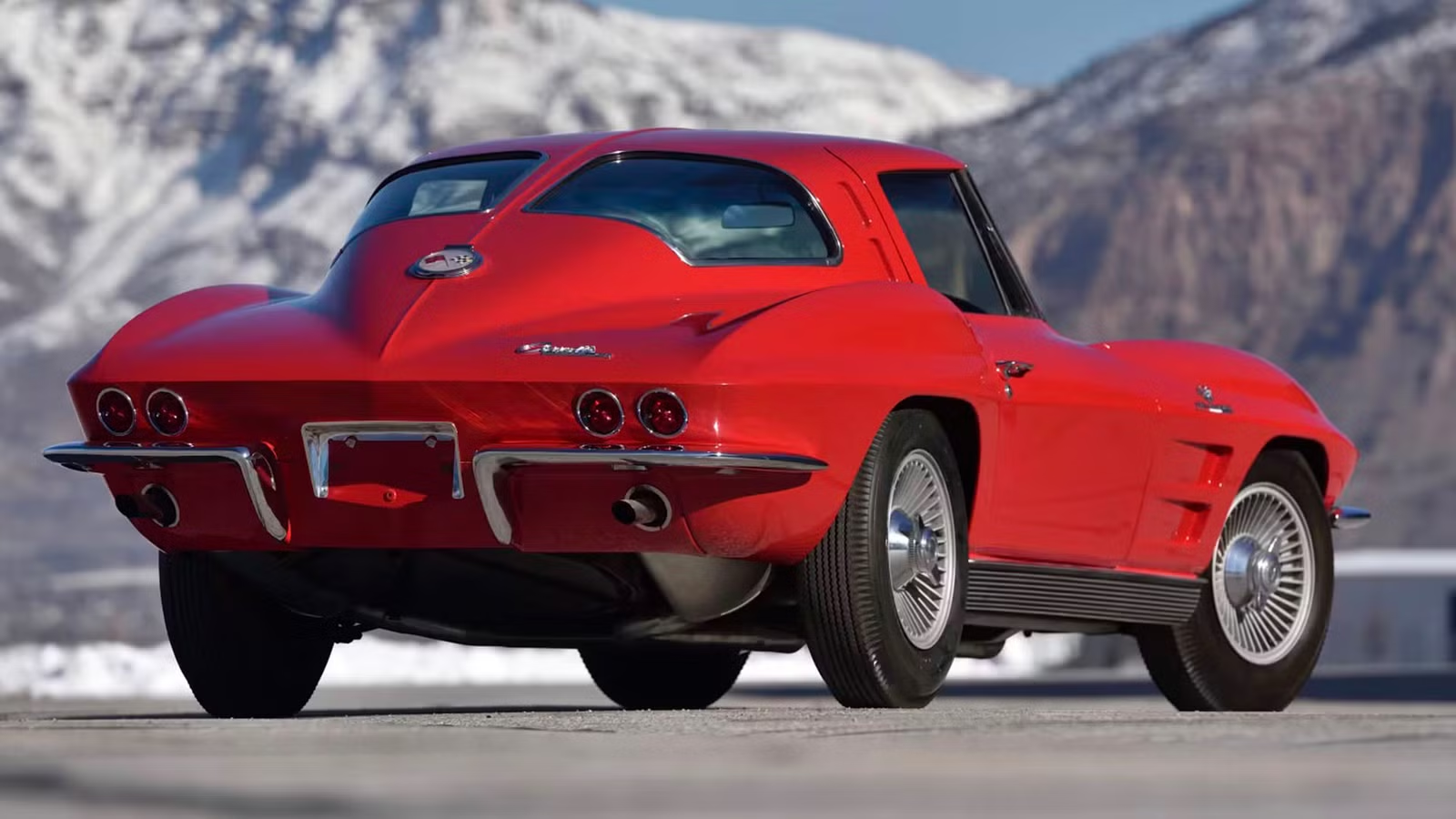
There have been many great-looking iterations of the Chevrolet Corvette. None are as gorgeous, though, as the C2-generation Corvette Sting Ray. The first Corvette to bear the Sting Ray nameplate, the coupe version of this car has to be one of the most iconic pieces of automotive design ever. That’s especially true of the super-rare split-window cars. These were only made for one model year, and as a result, they’re among the rarest Corvettes you can get. That makes them incredibly valuable — it’s not unheard of for split-window Sting Rays to sell for over $450,000.
The C2 Corvette Sting Ray was available with several engine options, all of them V8s. These ranged from the typical 327ci small-block units up to the extremely rare aluminum-head 427 (7.0-liter) L89 big-block engine. The L89-equipped C2s were genuine performance monsters, producing as much as 435 hp in 1967. You didn’t need to go for the big-block to get serious power, though — the small-block engines could be had with as much as 375 hp. The C2 Sting Ray is a fantastic combination of timeless styling and genuinely great performance, a pairing that’s harder to find than it sounds.
Aston Martin DB5
Average Used Value: $640,197 – $1.7 Million

Whenever anyone thinks of iconic Aston Martins, the DB5 always gets mentioned. It’s impossible not to! Even if it hadn’t been immortalized through its role as a hero car in multiple James Bond films, it would still be regarded as one of the best-looking Aston Martins ever made. It continued the design language from the DB4 — also an absolutely gorgeous car — and shared many of the same components.
The main difference between the DB4 and the DB5 was a new powertrain: an all-aluminum 4.0-liter inline-6 paired with a ZF 5-speed manual transmission. That engine was rated at 282–325 hp depending on whether it’s a standard car or a Vantage, making it one of the fastest grand tourers of the 1960s. Its output may seem modest by today’s standards, but every enthusiast can agree it looks far better than its modern equivalents.
Bugatti Type 57SC Atlantic
Average Used Value: $772,239 (Type 57)
Pre-war Bugattis are often considered to be some of the most beautiful cars ever made. The Type 57SC Atlantic is no exception — in fact, it stands apart even among those pre-war beauties. Only a handful of genuine examples exist, and no modern grand tourer has managed to match its visual drama. Its streamlined body was inspired by the Type 57 Aerolithe prototype, and the design still looks futuristic today.
Like the Alfa Romeo 8C 2900, this Bugatti is powered by a supercharged inline-8 — a 3.3-liter unit with roots in the Type 59 Grand Prix cars. That supercharger pushed the 57SC Atlantic’s output to 200 hp, a remarkable figure for the 1930s, and gave it a reported top speed of 125 mph.
Type 57SC Atlantics very rarely appear on the used market. That’s because only four were ever made, and only three are known to still exist. When they do surface at auction, they rank among the most expensive cars ever sold — commanding a significant premium even over regular Type 57s, which themselves average around $772,239.
Lamborghini Miura
Average Used Value: $1.7 Million – $4.4 Million

The Lamborghini Miura is a car that was groundbreaking in several ways. It’s often regarded as the first supercar ever made, and it was also the first out-and-out sporting model to emerge from Sant’Agata. Ferruccio Lamborghini was originally more interested in building luxurious grand tourers than proper sports cars, but the Miura fully established his company as a force in the emerging supercar world — and it’s stayed that way ever since. It also helped that the Miura’s styling surpasses virtually any modern supercar. Those ‘eyelash’ headlamps are now absolutely iconic, and countless later cars borrowed heavily from its design language.
As any classic Lamborghini should be, the Miura is powered by a V12 — a 3.9-liter version of the legendary Lamborghini V12, producing 345–380 hp in road-going trim depending on the variant. The 380-hp version is found in the ultra-rare P400 SV and P400 SV/J models, which are holy grails for supercar collectors. Miuras now average around $2.9 million, a figure that reflects just how revered they’ve become.
Mercedes-Benz 300SL Gullwing
Average Used Value: $2 Million

One of the most famous Mercedes-Benz models ever made, the 300SL Gullwing has captured the imaginations of enthusiasts for generations. That’s entirely thanks to its design. Its smooth, clean lines and those distinctive gullwing doors still feel space-age decades on. That retro-futuristic body conceals fairly conventional Mercedes mechanicals — a high-performance, fuel-injected version of the 3.0-liter inline-6 found in the brand’s top luxury sedans of the era — along with a chassis and suspension setup that was known to be demanding at the limit.
Alfa Romeo 8C 2900B
Average Used Value: $2.9 Million
Pre-war Alfa Romeos are cars that often don’t get talked about outside of niche enthusiast circles. That’s a genuine shame, because some versions of the 8C 2900B rank among the most beautiful cars ever made. Built in the coachbuilding tradition, these cars were bodied by several renowned styling houses. The most acclaimed were crafted by Carrozzeria Touring Superleggera in either coupe (Berlinetta) or Spider form. The chassis came in short (Corto) and long (Lungo) wheelbase configurations, with the Touring-bodied Lungo Spiders being among the most prized variants of all.
While these cars are mainly celebrated as stylish, luxurious grand tourers, they have a serious racing pedigree to back up their looks. The 8C 2900B was originally developed to compete in the most grueling endurance events of the day, including the Mille Miglia, which it dominated throughout the 1930s. Central to that success was its supercharged inline-8 — a 2.9-liter unit producing 180 hp in road-going form. By modern standards that’s modest, but in the 1930s it was genuinely formidable.
Ferrari 250 GTO
Average Used Value: $38.5 Million

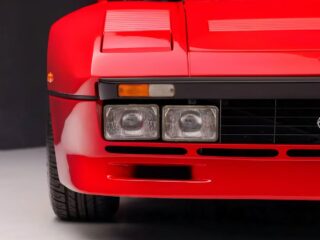
No Ferrari is more famous than the 250 GTO. A race-bred, limited-production special, this is the holy grail of Ferraris for collectors the world over — and for very good reason. As well as being a raw, light, and powerful sports car, it looks absolutely stunning. It sounds incredible, too, thanks to its 3.0-liter Colombo V12.
Because the Ferrari 250 GTO is the ultimate collector’s Ferrari, examples command extraordinary prices at auction. One sold for $48.4 million at an RM Sotheby’s auction, making it the most expensive Ferrari ever sold at the time.
Sources: Alfa Romeo, Aston Martin, Bugatti, Chevrolet, Classic.com, Ferrari, Ford, Jaguar, Lamborghini, Mercedes-Benz, Porsche, RM Sotheby’s

Related posts
Latest Post


No Comments