
The Harley-Davidson That Even Japanese Bike Fans Secretly Admire
When this ADV first launched, I was strictly a skeptic who couldn’t get past that rectangular front headlight assembly. I understood the design team was attempting to echo the iconic nose of a classic tourer, but since I never cared for that heavy fairing aesthetic on traditional baggers, the styling failed to grab me. Yet once the initial specification sheets dropped, it became clear Milwaukee was targeting Japanese stalwarts like Honda and European heavyweights like BMW on pure, unadulterated performance. It’s a legitimately engineered adventure bike that forces metric riders to pay respect.

The divide between metric riders and Milwaukee traditionalists has always centered on functional engineering versus heritage marketing. Metric riders typically dismiss American machinery for relying on low-revving engines and heavyweight frames that tend to scrape floorboards on even mild back roads. However, this American two-wheeler does a very good job of putting those historic preconceptions to bed by introducing a sophisticated, high-revving powertrain and a dynamic chassis designed to tackle adventure bike territory. By matching and occasionally surpassing the tech standards set by legendary global competitors, American engineering earned genuine credibility from enthusiasts who previously ignored the brand entirely.
How Japanese Riders Built A Performance Checklist That Locked Out Every Harley Ever Made
Japanese motorcycle enthusiasts have historically operated on a completely different set of engineering values than traditional American cruiser riders. On a cruiser, you want those deep exhaust rumbles, heavy chrome plating, and relaxed low-rpm highway cruising. Metric purists, on the other hand, evaluate machines strictly on power-to-weight ratios, cornering clearance, and mechanical durability. This philosophical split meant that riders loyal to high-efficiency Japanese platforms viewed heavy big-twins as obsolete relics of a bygone era.

When you opt for lightweight aluminum frames, precise liquid cooling, and high-rpm engines, traditional pushrod engines simply look outdated. For the most part, metric buyers prioritize function over form and look at components that contribute directly to speed, braking, and handling performance rather than aesthetics or nostalgia. This expectation creates a persistent barrier for American manufacturers attempting to win over sportbike riders, off-road touring diehards, and dual-sport mechanics.
Why Engineering Purists Prioritize Power-To-Weight Over Nostalgia

To earn the respect of a Japanese bike fan, a motorcycle must demonstrate exceptional thermal efficiency, precise chassis geometry, and severe stress-tested durability. Japanese brands built global dominance by engineering engines that could sustain brutal operating conditions without suffering mechanical breakdowns or compression loss. For those accustomed to engineering standards at this level, a motorcycle is fundamentally an instrument of athletic performance rather than an expression of lifestyle identity. It’s a completely different mindset about what a motorcycle is.
Consequently, any American machine seeking to cross that cultural aisle has to forgo classic air-cooled cylinder fins and heavy steel cradles in favor of cutting-edge structural architecture. A high compression ratio, sophisticated electronic rider aids, and lightweight structural components are mandatory admission tickets to this market segment. Those were the rules. And for decades, no American manufacturer came close to meeting them — until Harley-Davidson scrapped everything it knew about building motorcycles.
Harley Built The Pan America 1250 From Scratch — And It Shows In Every Spec

The official arrival of the Harley-Davidson Pan America 1250 completely disrupted the long-standing assumptions held by metric enthusiasts. Rather than rebadging an existing touring chassis with high handlebars and plastic handguards, Milwaukee engineers developed an entirely clean-sheet flagship adventure touring rig built to challenge the world’s most capable all-terrain motorcycles. But bold specs on a press release mean nothing. The question was whether the engineering actually delivered — starting with an engine that had to kill the pushrod myth once and for all.
When you strip away the branding and evaluate the Pan America on pure capability, it delivers an impressive package that performs far beyond expectations. Updated details for the lineup—such as finned engine covers that pay stylistic homage to classic air-cooled blocks on a fully modern liquid-cooled mill—showcase an appealing blend of style and engineering substance. With multiple trim levels including the street-focused ST, the feature-packed Special, and the range-topping Limited, Harley-Davidson proved it could execute a serious, multi-tiered adventure lineup.
The Revolution Max Engine Throws Out The Traditional Pushrod Blueprint

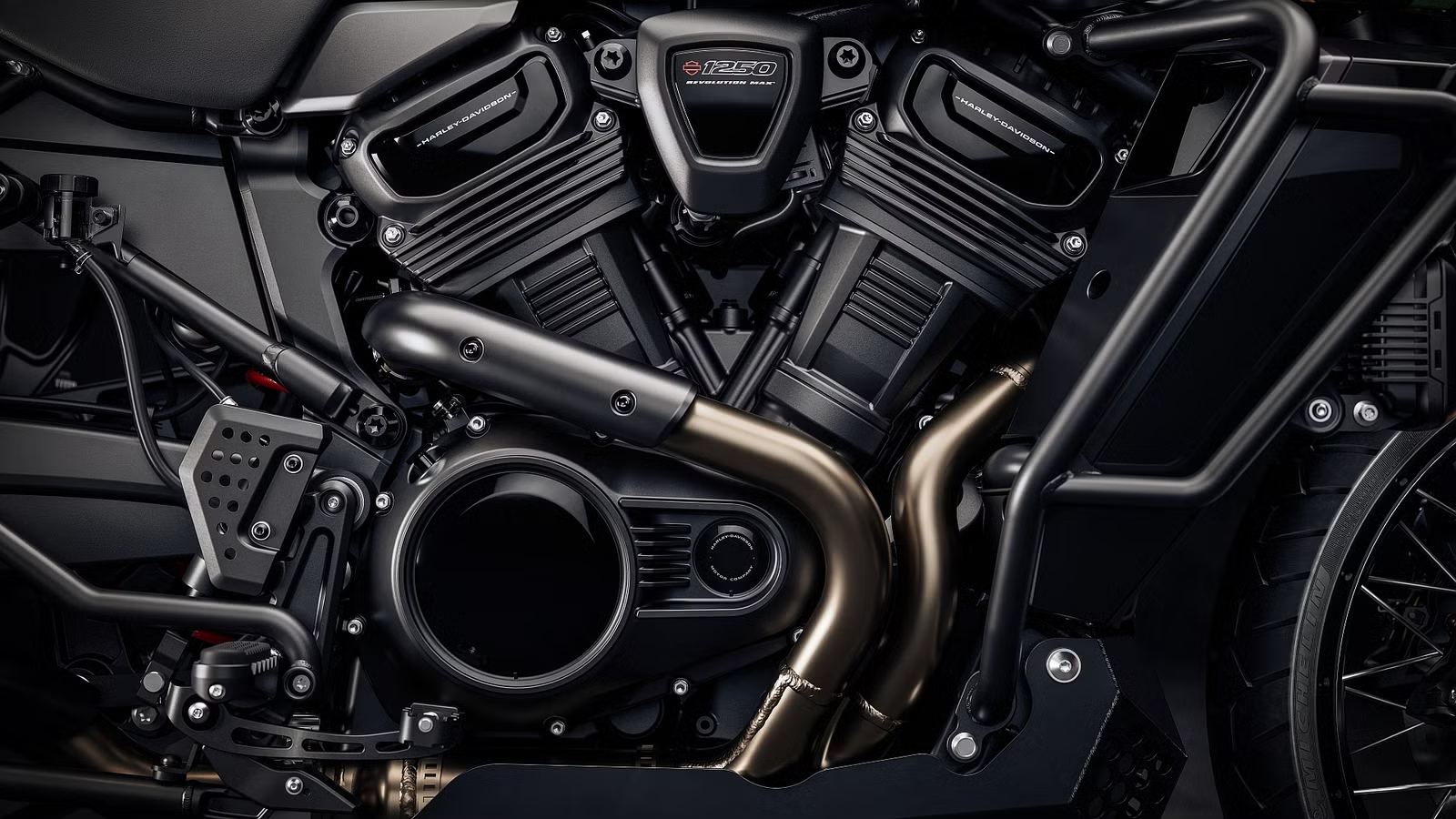
The heart of this bike is the Revolution Max 1250, a liquid-cooled 1,252cc 60-degree V-twin featuring dual overhead camshafts, variable valve timing on intake and exhaust cams, and a high 13.0:1 compression ratio. This powerplant generates a massive 150 horsepower at 8,750 RPM and 94 pound-feet of torque at 6,750 RPM while revving all the way out to a 9,500 RPM redline. For context, that easily outguns the 101-horsepower Honda Africa Twin by nearly 50 horses and comfortably matches the high-output European leaders in the class.
Even more impressive to chassis engineers is the fact that the Revolution Max serves as a central stressed member of the frame. The front frame, mid-structure, and rear tail section bolt directly to the engine block, eliminating the weight of a traditional full-length steel cradle. For a manufacturer historically known for heavy, lazy-revving engines, this high-tech unit is a significant departure from its established identity.
Semi-Active Showa Suspension And 7.5 Inches Of Travel Turn 578 Pounds Into A Capable Trail Bike

Translating impressive engine output into actual dirt performance requires a sophisticated chassis setup. The Pan America Special utilizes a 47mm inverted Showa front fork and a linkage-mounted rear monoshock, both featuring semi-active electronic damping with 7.5 inches of suspension travel at both ends. This electronic suspension system dynamically adjusts damping based on terrain and rider inputs, which is crucial for the 578-pound wet-weight machine as it navigates harsh rocks and deep trail ruts.
On the pavement, the bike tracks steady through tight twisties, while off-road mode tames the throttle response to make 150 horsepower manageable in loose gravel. When equipped with the optional anodized aluminum tubeless laced wheels and aggressive off-road knobby tires, the machine transforms into a surprisingly agile dirt bike. The tubeless design allows riders to fix trailside punctures with a simple plug kit in minutes, which is critically important on a bike meant to go the distance.
Adaptive Ride Height Is A Genuine Technological Breakthrough

The Pan America Special’s standout electronic innovation is the revolutionary Adaptive Ride Height (ARH) system. This factory option automatically lowers the motorcycle’s seat height by one inch as the rider rolls to a complete stop, allowing shorter riders to easily flat-foot the bike at intersections or on uneven trails. Once the rider accelerates away, the semi-active suspension pumps back up to normal ride height for maximum ground clearance.
When Harley-Davidson introduced this, it was a first of its kind. Motorcycle height is a major barrier for adventure riders struggling with tall seat heights. It worked so well that European competitors eventually developed their own versions to keep pace. For Japanese bike fans accustomed to seeing foreign brands lead the tech race, watching global competitors copy a Harley-Davidson feature was an interesting turn of events.
The Glove-Compatible TFT And Lean-Sensing Headlight Prove Harley Mastered The Tech Stack

Beyond the suspension, the Pan America comes equipped with a comprehensive, modern electronics suite driven by a six-axis inertial measurement unit. The system manages cornering-enhanced ABS, cornering traction control, drag-torque slip control, and hill-hold control to keep the heavy machine stable in tricky conditions. Everything is monitored through a tilt-adjustable 6.8-inch TFT touchscreen display that remains fully functional while wearing riding gloves.
Lighting is handled by the signature Daymaker adaptive LED headlight, which uses lean-angle sensors to illuminate deep into dark turns as the bike leans. The inclusion of custom ride modes—including Off-Road Plus, which dials back traction control and rear ABS—gives experienced off-roaders the precise manual control needed for adventures of this kind.
Hydraulic Valve Adjusters Eliminate The Pan America’s Most Expensive Routine Service Bill

If you talk to anyone who wrenches on Japanese adventure bikes, their main hesitation with an American-made bike usually comes down to long-term garage hassle. Harley mitigated some of that worry by outfitting the Revolution Max with hydraulic valve lash adjusters. On a typical European or Japanese twin, checking valve clearances means removing bodywork, pulling the cams, and swapping tiny shims every 12,000 to 15,000 miles. By contrast, the Pan America’s hydraulic lifters adjust automatically as you ride, completely wiping out one of the most expensive routine shop bills in the entire ADV segment.
Out on the trail, the rest of the mechanical layout leans heavily into practical, zero-stress ownership. The 5.6-gallon fuel tank easily delivers between 200 and 250 miles of range, depending on how aggressively you hit the throttle. While some touring riders prefer a sealed shaft drive like a GS over a standard chain final drive, swapping sprockets in the field is far simpler if you ever want to alter your final gearing.
Brembo Brakes And Showa Forks Mean You Can Source Parts At Any Dealership On Earth

Harley engineered the Pan America to be serviced anywhere in the world. The braking system features high-end radially mounted Brembo monoblock four-piston calipers biting dual 320mm front rotors, delivering immediate stopping power with excellent lever feel. Suspension duties are handled by proven Showa hardware. Because Showa and Brembo supply major Japanese and European factories worldwide, sourcing replacement brake pads, fork seals, or rebuild kits at a local dealership in remote corners of the globe is genuinely achievable.
Routine maintenance tasks are straightforward for those who prefer to do the work themselves. The air filter box sits right under the tank cover, letting you pop off a quick panel and swap out the filter without tearing the whole front end apart. Thanks to the hydraulic lifters, you don’t need specialized clearance tools or bucket shims just to keep the valve train in spec. It is a practical, mechanic-friendly setup built so overland travelers can easily source wear items and tackle routine trail repairs anywhere.
Why This American Adventure Machine Remains A Smart Modern Investment

At a $19,999 base sticker for the Special, Harley undercut the pricing structures of optioned-out European bikes while also beating metric rivals on pure output. When you consider an Africa Twin Adventure Sports ES DCT sitting at $18,600 with 101 horsepower, dropping an extra thousand or two for the Pan America buys you almost 50 additional horsepower, crash bars, and adaptive ride height technology. A comparable BMW R1300GS might start right at twenty grand, but the moment you check the boxes for cross-spoke wheels, electronic suspension, and engine guards, the German bike’s price tag inflates heavily. Getting that entire performance suite bundled into a single factory crate makes the Pan America a surprisingly sharp buy on paper and on the showroom floor.
What truly sets this bike apart for open-minded metric fans is how effectively it handles the reality of single-bike ownership. It has enough raw power to devour endless highway miles, handles twisty paved bypasses with precision, and still possesses the low-speed balance to carry its own weight through wet rocks and sand trails. Instead of forcing you to choose between a comfortable long-range tourer and a rowdy dirt bike, Milwaukee built a machine that genuinely tackles both without feeling compromised. If you ever dismissed American motorcycles as heavy chrome jewelry, riding the Pan America off-road will make you rethink what a Harley-Davidson can actually do.
Source: Harley-Davidson, Honda, BMW

Related posts



Latest Post


No Comments