This Driver’s Car Balances Performance And Peace Of Mind
10 minutes reading
Tuesday, 23 Jun 2026 13:01 0 115 autotech
Here is the number that should bother you: zero. That is how many naturally aspirated V8 sport sedans you will be able to buy new by this time next year. The segment that once defined the breed has gone turbocharged, hybridized, and in one infamous case, four-cylindered. Every brand that built its reputation on eight cylinders and a redline has moved on, and most buyers never got a vote.
One sedan still sitting on dealer lots refuses the entire premise. It pairs the segment’s last old-school V8 with something even rarer in this class: the kind of dependability that makes a ten-year ownership plan sound sensible rather than brave. Its maker has already pulled the plug, so consider this less a review and more a deadline. First, though, some honesty about what this segment does to the people who love it.
The Modern Sport Sedan Has A Habit Of Punishing Its Most Devoted Owners
2026 BMW M3 Competition rear third quarter viewBMW
The same hardware that makes the spec sheets sing, twin turbochargers, intercoolers, 48-volt systems, plug-in hybrid battery packs, is exactly the hardware that fails expensively once the odometer gets serious. Direct-injection turbo engines carbon up their intake valves. Boost plumbing leaks. Hybrid packs age. None of it is cheap to put right, and all of it sits under the hood of every fast German sedan on sale today.
The rankings put numbers to it. BMW sits 30th out of 32 brands on RepairPal’s reliability index; Mercedes-Benz does little better, and both carry annual running costs near double the industry’s best. It is why so many fast sedans get traded in the month the warranty expires, and why an out-of-warranty performance German is a standing punchline on every enthusiast forum. Somewhere along the way, the industry decided performance and peace of mind do not mix. One company never signed that memo.
Forget The BMW M340i Or The Audi S5—The Mercedes-AMG C 43 Is The Luxury Performance Sedan You Need
This luxury performance sedan strikes the perfect balance between AMG aggression and daily usability.
A V8 In A Turbocharged World
2025 Lexus IS500 front 3/4 shotGarret Donahue | TopSpeed
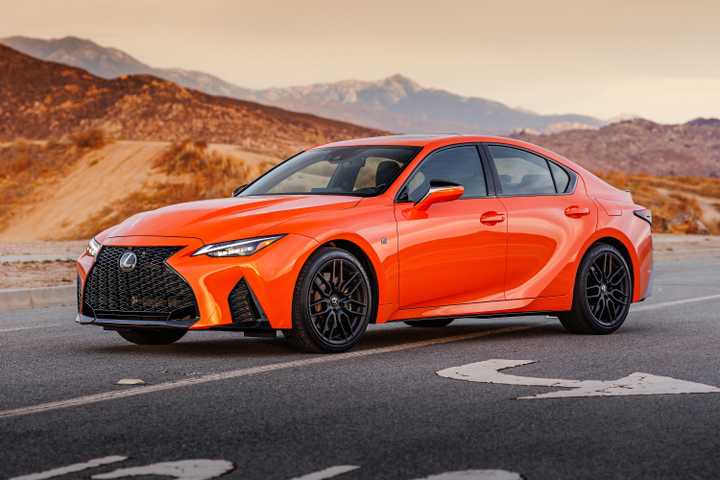
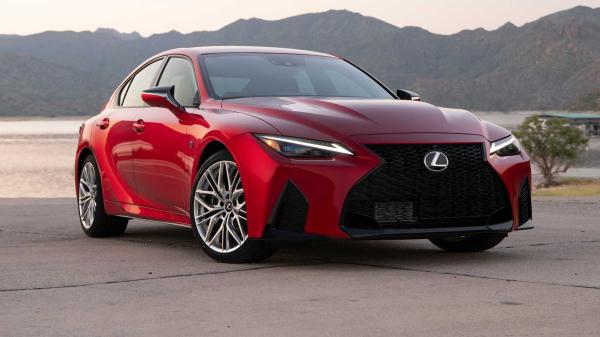
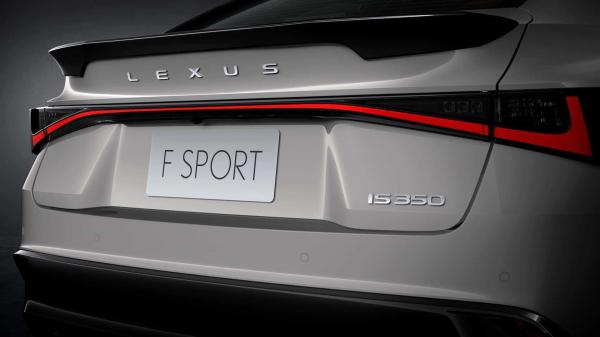
The holdout is the Lexus IS 500. While BMW runs a twin-turbo six in the M3, Mercedes-AMG stuffed the C63 with a plug-in hybrid four-cylinder, and Audi’s new RS5 carries a plug-in hybrid V6, the IS 500 soldiers on with a 5.0-liter naturally aspirated V8. No turbos, no battery, no apologies. And now, no future: Lexus has dropped it from the 2026 lineup, the refreshed IS tops out with the V6 IS 350, and the LC 500 follows it out the door when production ends in August. What is sitting on dealer lots right now is the last of the breed.
Revs You Have To Earn
2025 Lexus IS500 clusterGarret Donahue | TopSpeed
The 2UR-GSE V8 makes 472 horsepower at 7,100 rpm and 395 pound-feet of torque at 4,800 rpm. Read those rev figures again. Peak power arrives just shy of the redline, which means the IS 500 makes you work for it, and the work is the point. Throttle response is immediate because there is nothing between your right foot and the combustion. No spool, no lag, no electric motor filling a gap. Just a linear surge that builds all the way to the top of the tach.
Base Trim Engine
5L V-8 ICE
Base Trim Transmission
8-speed automatic
Base Trim Drivetrain
Rear-Wheel Drive
Base Trim Horsepower
472 HP @7100 RPM
Base Trim Torque
395 lb.-ft. @ 4800 RPM
Base Trim Fuel Economy (city/highway/combined)
17/25/20 MPG
Base Trim Battery Type
Lead acid battery
Make
Lexus
Model
IS 500
Lexus quotes 0-60 mph in 4.4 seconds, and Car and Driver has tested it at 4.3. Quick, not class-leading, and the eight-speed automatic deserves some honesty: it is the oldest piece of this car. Pull the left paddle, and there is a beat, a noticeable pause while the gearbox considers your request, where BMW’s ZF eight-speed or any half-decent dual-clutch would have already fired the gear home. Left in auto, it hangs onto tall gears longer than an engine this rev-hungry deserves. You learn to drive around it. You shouldn’t have to. Fuel economy sits at 17 mpg city and 25 highway. If those numbers offend you, the IS 350 exists. This car is for the people who looked at the spec sheet and went straight to the rpm figures.
The Sound No Turbo Four Can Fake
Front and side view of a 2023 Lexus IS500Lexus
Now consider what Mercedes did. The current C63 makes 671 horsepower and 752 pound-feet from a 2.0-liter four-cylinder hybrid. On paper, it destroys the Lexus. In the real world, buyers rejected it so thoroughly that Mercedes is killing it. Production is wrapping up as we speak, and a milder inline-six C53 is taking its place. The most powerful car in the segment is also the least loved. That should tell you what people buy these cars for.
They buy them for character, and character is what the IS 500 has in surplus. The intake honk above 4,000 rpm, the hard-edged bark at redline, the way the whole car comes alive as the revs climb. A turbo four with a speaker-assisted soundtrack cannot fake this. Neither can a hybrid V6 hauling around a battery pack. The Lexus sounds like what it is, and what it is has just become extinct everywhere else. Built to be driven, not just admired. A great engine in a dull chassis is a dyno queen. The IS 500 avoids that fate because Lexus tuned it as a road car first, not a Nürburgring brag sheet.
B-Roads And Daily Commutes
Side-shot 2024 Lexus IS500 F Sport driving on roadLexus
The setup is classic sport sedan: rear-wheel drive, a Torsen limited-slip differential, and an adaptive variable suspension tuned by the F division. At 3,983 pounds, it is taut without being punishing. The ride breathes with the road instead of fighting it, the steering has actual texture, and in its softer drive modes, the IS 500 settles into a relaxed mini-GT character that makes a daily commute genuinely pleasant.
With heavy, direct steering, level body control, and confident suspension and chassis tuning, the IS 500 is properly set up for a good time either on a curvaceous mountain road, or even a track day.
Point it at a canyon road, and it tightens up beautifully. The diff lets you lean on the rear axle out of corners, the chassis communicates clearly, and the engine gives you precise, repeatable throttle control that no boosted rival matches. Its one dynamic weakness is sustained track work, where the brakes will fade before the chassis gives up. Lexus built this for the road, and on the road, it is one of the most satisfying sedans on sale.
The Most Powerful Naturally Aspirated V8 Available In A Modern Sedan
With its 5.0-liter powerhouse under the hood, the IS 500 delivers an intoxicating blend of power, precision, and luxury.
The German Question
Front 3/4 view of 2024 black Mercedes-AMG C63 S E-Performance.Mercedes-AMG
Let’s be straight about the hierarchy. The BMW M3 is quicker, sharper, and the dynamic benchmark of the class. The C63 out-punches everything on paper and is already on death row. And the new RS5 makes 630 horsepower from its plug-in hybrid V6 while weighing 5,129 pounds, which is more than 1,100 pounds heavier than the Lexus. Think about that. Audi’s compact sport sedan now weighs as much as a midsize pickup.
So the IS 500 is the slowest of the four. It is also the lightest, the simplest, and the only one you could honestly call analog. Every rival adds complexity to chase a number. The Lexus subtracts it to chase a feeling. Which philosophy ages better at 100,000 miles is not a mystery, and that brings us to the part of this argument no German can answer.
What The Service Bills Say
Side view of the 2025 Lexus IS500 parked in front of hillsGarret Donahue | TopSpeed
The data is not close. RepairPal rates Lexus 4.0 out of 5.0 for reliability, ranking it seventh out of 32 brands, with an average annual repair and maintenance cost of $551. BMW, third from the bottom of that same index, scores 2.5 out of 5.0 and costs an average of $968 per year, with a 15 percent chance that any given repair is a severe one. Mercedes-Benz lands at $908 per year. The Lexus IS specifically averages $543 annually against a $739 average for luxury midsize cars.
Run that forward. Over ten years of ownership, the gap between an IS and a 3 Series in repair costs alone is over $4,000, and that is before you account for the BMW’s higher probability of a wallet-emptying failure. The IS 500 buyer gets to spend that money on tires and fuel, which is where a driver’s car budget belongs.
200,000 Miles, No Drama
View of the engine bay of the 2025 Lexus IS500Garret Donahue | TopSpeed
The 2UR-GSE is not a new engine, and that is its superpower. It has been in continuous service since the 2008 IS F, did duty in the RC F, and still powers the LC 500. Nearly two decades of production have shaken out its weaknesses, and there are not many to report. Its combined port and direct fuel injection sidesteps the intake valve carbon buildup that plagues direct-injection-only turbo engines, and with no turbochargers, no intercoolers, and no hybrid hardware, there is simply less to fail.
Owner accounts back the engineering. High-mileage examples of this engine family routinely cross 200,000 miles on nothing more exotic than scheduled maintenance, and the IS 500 community’s most common complaint is about the infotainment, not the drivetrain. When the worst thing long-term owners can say about your performance sedan is that the touchscreen feels old, you have built something the Germans have not managed in this segment for a generation.
Lexus Keeps 2026 IS Sedan Relevant With These Changes
Lexus’ compact sedan gains some worthy changes, including the IS 350 F Sport.
Three buyers, one car. The gearhead gets the last naturally aspirated V8 sport sedan on Earth, rear-driven, high-revving, and honest. The German defector, worn down by four-figure annual repair bills and warranty roulette, gets to keep the performance and lose the anxiety. The reliability-first buyer who wants exactly one fast car for the next ten years gets the only option in the class with a credible plan for year eight.
Now the honest part. The rear seat is tight for adults, the trunk is a small 11 cubic feet, and the base eight-inch touchscreen feels a generation behind, with the 10.3-inch unit locked to the pricier Premium trim. The gearbox, as covered, makes you ask twice. And the clock is ticking: with the model discontinued for 2026, remaining new 2025 examples are listing around $68,000 to $69,000, and those numbers are not going to soften now that the supply is finite. If anything, the IS 500 has just become the rare sport sedan you can buy without bracing for depreciation.
TopSpeed’s Take
The IS 500 is not the most modern sport sedan on the market. It knows that. It does not have the M3’s pace, the C63’s headline numbers, or the RS5’s technology. What it has instead is something the entire segment abandoned and is only now realizing it misses: an honest, high-revving, rear-wheel-drive V8 sedan that you will still trust unconditionally at 100,000 miles. Performance and peace of mind were never supposed to live in the same car. They do here, and only for a little while longer.
Source: Lexus, Cars.com, U.S. News, Edmunds, RepairPal, Kelley Blue Book



















No Comments