Remember When EVs Were A Compromise? This Car Killed That Era
8 minutes reading
Monday, 31 Aug 2026 20:00 0 6 autotech
Until recent significant developments in the industry, most American consumers viewed electric cars as slow, short-range alternatives to internal combustion models. Choosing an EV during the early introduction days required major functional sacrifice. That perspective has shifted completely thanks to a quiet revolution that reset consumer expectations overnight.
Modern EVs now achieve over 300 miles of driving range, rapid high-power charging, and instant sports-car acceleration at a competitive price point. There’s one specific EV option that has permanently established a new industry baseline. This sedan proves that zero-emission driving can offer superior daily utility and continuous software updates. Today, buyers evaluate every new electric car against the exact standard that this single model quietly establishes.
The U.S. electric vehicle market is navigating a transitional phase marked by changing consumer habits and evolving federal policy. Early adopters and tech enthusiasts have largely made their purchases, leaving automakers to target pragmatists who prioritize affordability, reliable infrastructure, and daily utility. At the same time, the expiration of key federal purchase tax credits has cooled initial rapid sales growth, shifting buyer interest toward standard hybrid and plug-in hybrid options as stepping stones toward pure electrification.
Overall, practicality has become the main requirement. Consumers now demand low purchase prices, improved driving ranges that match gasoline cars, and seamless charging experiences. Consequently, manufacturers are adjusting their strategies by discounting existing models, expanding affordable vehicle options, and shifting focus toward total cost of ownership. Over the next decade, the industry is poised to move past current adoption plateaus through technological advancements and standardized infrastructure.
The nationwide rollout of the North American Charging Standard (NACS) and expanding public fast-charging networks aim to diminish range anxiety. Battery innovations will lower production costs and bring true price parity with internal combustion engines. These include solid-state chemistry advancements, lithium-iron-phosphate adoption, and local supply chain integration. Federal mandates are shifting toward market-driven dynamics. State-level zero-emission targets and long-term capital investments ensure that electric vehicles will gradually dominate new passenger car sales across the country.
The Tesla Model 3 Set The Foundation For EV Demands In The U.S.
2019 Tesla Model 3Tesla
When introduced in 2017, the Tesla Model 3 redefined buyer expectations for electric vehicles by proving that zero-emission transport does not require functional compromise. The American EV manufacturer’s most affordable option changed the industry’s baseline by offering substantial driving range, rapid fast-charging access, and instant electric performance at an accessible price point of $35,000.
Even today, Tesla integrates software directly into the Model 3’s architecture. Over-the-air updates continuously refine vehicle performance, energy efficiency, and cabin features long after purchase. This capability treats the automobile as an evolving digital platform rather than static hardware. Buyers now expect every modern electric vehicle to feature responsive touch controls, integrated charging routing, and frequent feature updates.
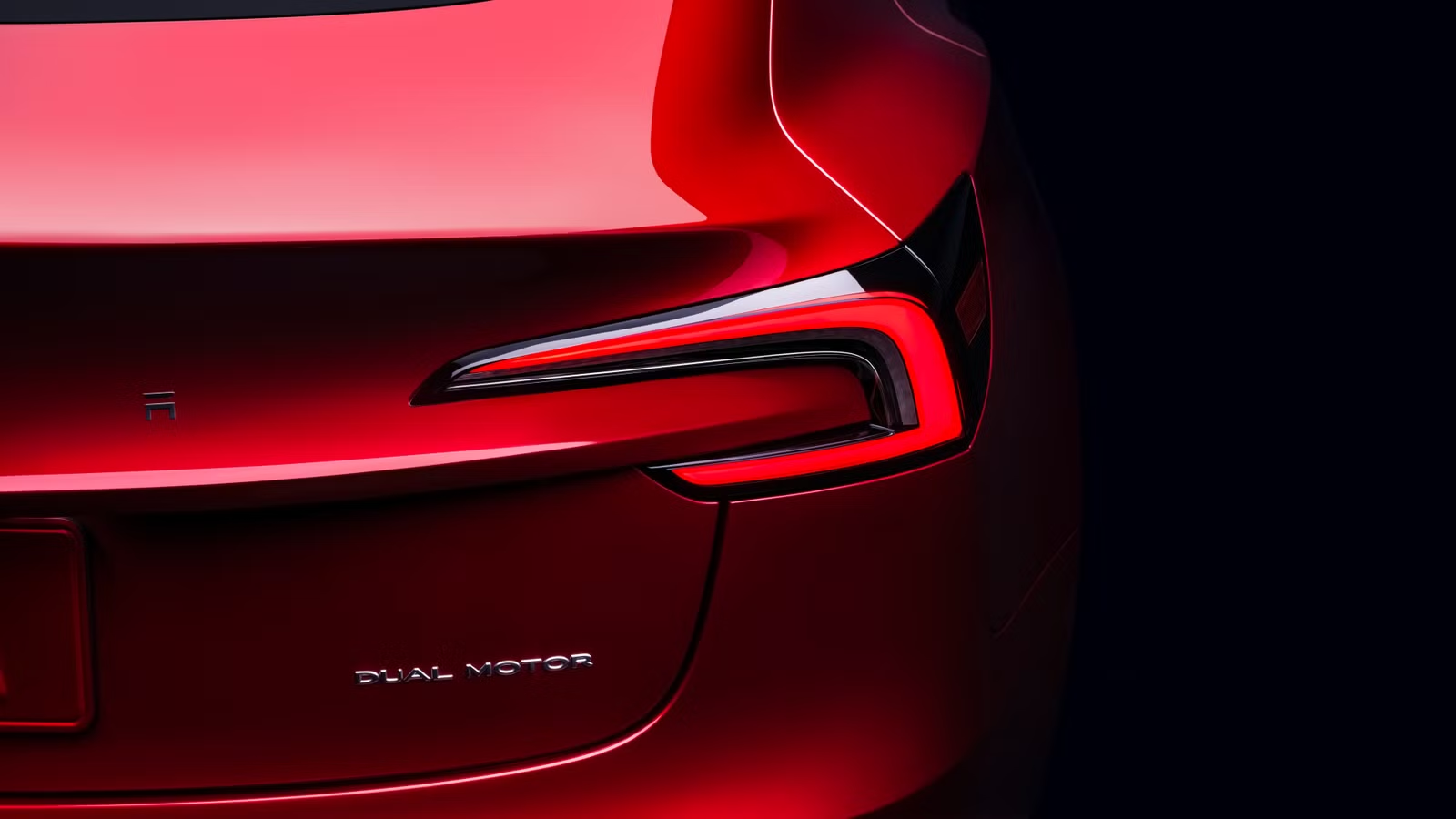
The Model 3 also elevated performance standards for midsize cars. Dual-motor all-wheel-drive variants deliver sports-car acceleration while maintaining daily utility. In addition, direct integration with a nationwide fast-charging network eliminated distance anxiety for long-distance driving.
Launch Issues Affecting The 2017 Model 3’s Launch
White 2017 Tesla Model 3 At A Dealer With Open Front Trunk/Frunk
The launch year of the 2017 Tesla Model 3 wasn’t a smooth process, as it was riddled with some major issues. Regardless, consumers accepted its flaws, and the brand made timely updates and improvements to the products, increasing overall demand and faith in the brand. Early production models of the 2017 and 2018 Tesla Model 3 suffer from various manufacturing and hardware reliability issues. Misaligned body panels and uneven door fitment are common cosmetic defects resulting from early factory assembly challenges.
Water ingress into the trunk and taillight assemblies frequently leads to condensation buildup or electrical failures. Owners frequently report paint defects, including thin clear coats and premature chipping along rocker panels. Inside the cabin, squeaks and rattles develop around the dash, center console, and interior door panels. The primary 15-inch infotainment touchscreen often experiences ghost touches, black screen reboots, or yellowing around the display edges due to glue breakdown. Mechanical and electrical components also fail, including noisy upper control arms, faulty HVAC cabin heaters, failing 12V battery systems, and glitchy exterior door handles or charge port latches.
The 2026 Tesla Model 3 Further Enhances The Entry EV Game
A white Tesla Model 3 Standard driving on the roadTesla
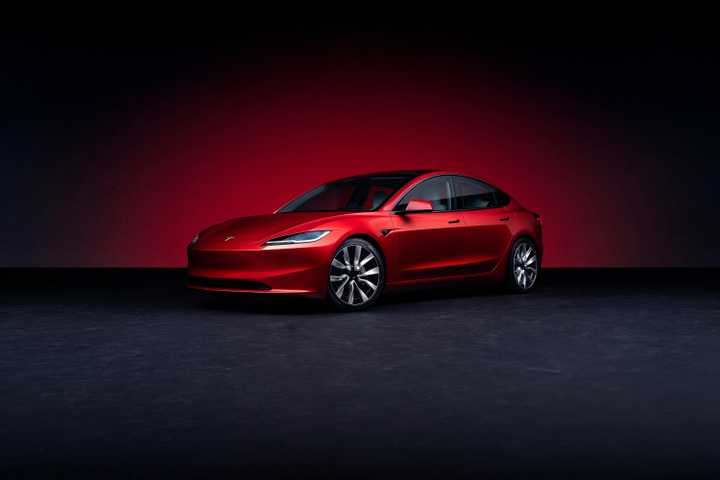
Following the major Highland refresh in 2025, the 2026 Tesla Model 3 introduces targeted trim, hardware, and software refinements across the lineup. Tesla restructures the lineup into distinct base Standard and elevated Premium tiers, making entry-level models more affordable by using simpler interior materials. The interior receives a darker headliner along with updated cabin trim elements.
Low-angle shot of 2025 Tesla Model 3 interior showing front cabinCarBuzz
Addressing driver feedback, Model 3s sold in global markets reintroduce a physical turn-signal stalk on the steering column. Tesla also expands options with a dedicated Long Range Rear-Wheel Drive variant that incorporates an upgraded battery pack to maximize single-charge range. On the tech front, 2026 models feature integrated 5G connectivity, a front bumper camera, expanded AI-driven software functionality, and hands-free Grok voice assistant integration.
Modern Motor Technology Makes The Model 3 A Segment Leader
2025 Tesla Model 3 Exterior Driving On Wet RoadTesla
The 2026 Tesla Model 3 offers two single-motor rear-wheel-drive configurations. The base Model 3 Rear-Wheel Drive utilizes a single rear motor producing 286 horsepower. Its lithium-iron-phosphate battery pack delivers an EPA-estimated range of 321 miles. This variant achieves a 0 to 60 MPH time of 5.8 seconds and reaches a top speed of 125 MPH. Upgrading to the Long Range Rear-Wheel Drive retains the single-motor layout while incorporating a higher-capacity nickel-manganese-cobalt battery pack. The larger battery increases driving range to an EPA-estimated 363 miles. This configuration accelerates from 0 to 60 MPH in 4.9 seconds and maintains the same 125 MPH top speed.
The remaining Model 3 configurations feature dual-motor all-wheel-drive setups powered by the higher-capacity battery pack. The Long Range All-Wheel Drive uses front and rear motors generating a combined output of 425 hp. This trim provides an EPA-estimated range of 346 miles, accelerates from 0 to 60 MPH in 4.2 seconds, and reaches a top speed of 125 MPH. At the top of the lineup, the Model 3 Performance produces 510 hp and 546 lb-ft of torque. The added power reduces the EPA-estimated range to 309 miles. The Performance variant launches from 0 to 60 MPH in 2.9 seconds and reaches a top speed of 163 MPH.
Tesla Prioritizes Minimalist And Functional Interiors
2024 Tesla Model 3 InteriorTesla
The entry-level 2026 Tesla Model 3 Standard starts at $36,990. Standard features include synthetic leather seats, acoustic glass, ambient cabin lighting, and dual wireless phone chargers. A 15.4-inch infotainment system handles navigation and infotainment, while an 8.0-inch rear screen gives rear passengers climate and media controls. A nine-speaker audio system provides sound to the cabin.
Upgrading to the Model 3 Premium Rear-Wheel Drive brings the base price to $42,490. This trim adds ventilated front seats, heated rear seats, and a heated steering wheel. The Model 3 Premium All-Wheel Drive starts at $47,490 and upgrades the cabin entertainment to a 15-speaker audio system with dual subwoofers.
The Performance Adds Intensity To The Cabin
Passenger side view of the front seats of the 2024 Tesla Model 3 PerformanceTesla
The range-topping Model 3 Performance carries a starting price of $54,990. It includes sport seats with extra side bolstering, carbon fiber dashboard trim, an Alcantara headliner, adaptive suspension damping, and 20-inch wheels. Tesla offers identical optional extras across all Model 3 variants. Stealth Grey paint and Pearl White Multi-Coat come standard. Deep Blue Metallic and Diamond Black paint add $1,000 to the total price.
Ultra Red and Quicksilver paint options cost $2,000. Upgrading non-Performance trims from standard 18-inch wheels to 19-inch Nova wheels costs $1,500. Selecting the Black and White interior theme costs $1,000. For software, Tesla sells Supervised Full Self-Driving for $8,000. Charging equipment options include a Mobile Connector for $250 and a Wall Connector for $450. Physical accessories include all-weather floor liners for $225 and a roof rack for $400. Every 2026 Model 3 order requires a $1,390 destination fee and a $250 order fee, which increases the final delivery total by $1,640.
The Model 3’s Divided Owner Reception
2025 Tesla Model 3 with T Sportline Carbon Fiber bodykitT Sportline
The 2026 Tesla Model 3’s improvements result in it enjoying good reception from the market, despite low sales. J.D. Power publishes an 84/100 consumer-verified overall score, including 82/100 for quality and reliability, 94/100 for the driving experience, and 77/100 for resale. iSeeCars doesn’t have any data for the 2026 Tesla Model 3’s reliability, but it does signify that it will lose $20,158 or 54.5 percent of its value after five years, which is on par with the average for midsize electric cars.
The 2026 Tesla Model 3 currently sits with a 3.7/5 overall score on the Edmunds consumer review section. It earns high praise for its
technological features, driving experience, and value, but some criticize it for returning poor reliability and manufacturing quality.
Base Trim Engine
EV
Base Trim Transmission
Automatic
Base Trim Drivetrain
Rear-Wheel Drive
Base Trim Horsepower
295 HP @7000 RPM
Base Trim Torque
309.3 lb.-ft.
Base Trim Battery Type
Lithium ion (Li-ion)
Make
Tesla
Model
Model 3
Segment
Compact Sedan
Sources: Tesla, The EPA, J.D. Power, iSeeCars, and Edmunds.









No Comments