
Driving in Belgium: what UK motorists need to know
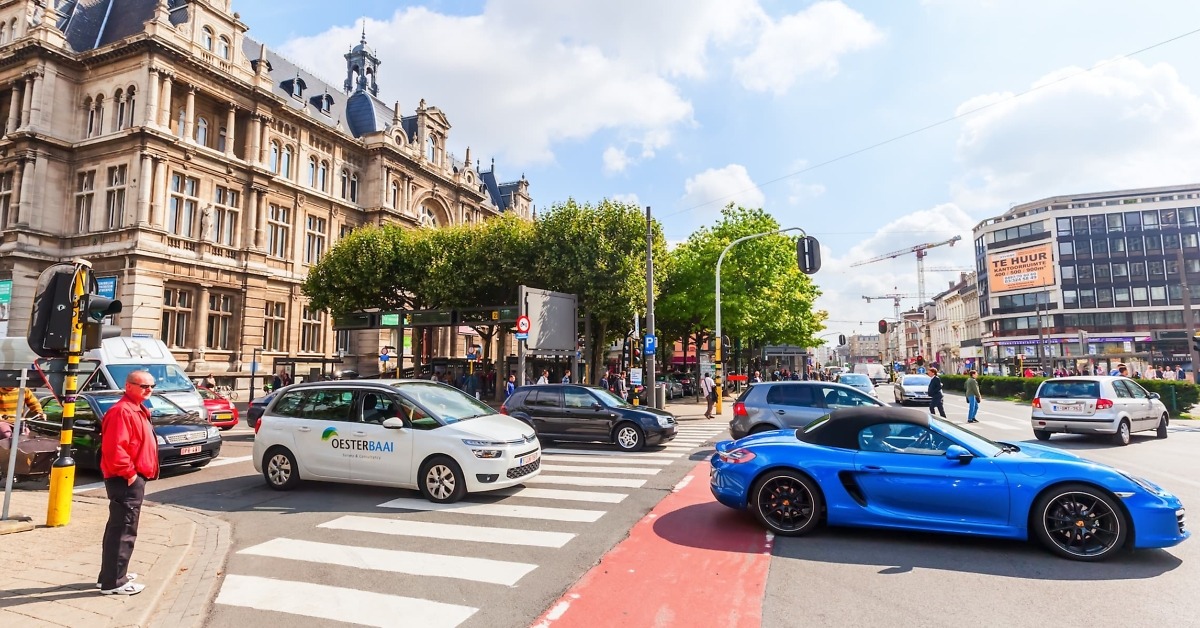
Belgium is an easy country to underestimate. For many UK motorists, it is a short hop across the Channel or part of a longer journey to Germany, the Netherlands or beyond. But it still has its own rules, signs, speed limits and local restrictions, and getting caught out can be expensive.
It’s also a country where you can cross regional boundaries without necessarily noticing. Speed limits and road rules can differ between Brussels, Flanders and Wallonia, so you need to pay attention to signs rather than relying on one simple national rule. Road signs may also be in French, Dutch or German depending on where you are.

For UK drivers, the main differences are familiar enough: traffic drives on the right, and distances and speed limits are in kilometres. But Belgium also has a few traps for visitors, including low-emission zones, priority-from-the-right junctions and strict urban speed limits.
If you’re taking your own car from the UK to Belgium, you may also be driving through France or the Netherlands depending on your ferry or tunnel route. Make sure you check the rules for every country you drive through, not just your final destination.
Quick checklist before driving in Belgium
Before you travel, make sure you have:
- Full UK driving licence
- Passport
- V5C vehicle registration document
- Proof of insurance
- MOT certificate, if your car is more than three years old
- UK identifier on the car, either on the number plate or as a separate sticker
- Warning triangle
- High-visibility jacket
- Headlamp beam adjustment or beam deflectors
- Low-emission zone registration, if entering Brussels, Antwerp or Ghent
- European breakdown cover, strongly recommended
- Permission letter or VE103 certificate, if the car is leased, financed, hired or not registered in your name

It is also sensible to carry a first-aid kit, fire extinguisher, spare bulbs if suitable for your car, a torch, water, screenwash, a phone charging cable and offline navigation backup.
Documents you need to drive in Belgium
You must carry your full UK driving licence when driving in Belgium. For most UK drivers with a photocard licence, you do not need an International Driving Permit for a short visit to Belgium. If you still have a paper licence, or your licence was issued outside Great Britain, check the latest UK government guidance before travelling.
You should also carry your passport, proof of insurance and the car’s V5C registration document. If your car is more than three years old, take the MOT certificate as well.
If the car is not registered in your name – for example, if it is leased, financed, hired or borrowed – you should take written permission from the registered keeper. For leased or hired cars, this usually means a VE103 certificate.
You no longer normally need a European insurance “green card” for Belgium, but you should still check your policy before you travel. Some UK policies only provide the minimum third-party cover abroad unless you arrange extended European cover.
UK stickers and number plates
Your car must show that it is from the UK. A number plate with a UK identifier and Union flag is accepted in Belgium. If your number plate still has a GB badge, an EU flag, a national flag such as England, Scotland or Wales, or no country identifier at all, you need to display a separate UK sticker on the rear of the car.
The old GB sticker is no longer valid for UK cars driving abroad.
Rules of the road
Belgium drives on the right. Roundabouts run anticlockwise, overtaking is on the left, and you should move back to the right after overtaking on motorways and dual carriageways.
For UK drivers, one of the most important Belgian rules is priority from the right. At some junctions, traffic coming from your right has priority unless signs or road markings say otherwise. This can feel strange if you are used to the UK system, where the larger or busier road often seems to have natural priority. In Belgium, do not assume – look for signs and markings, and be ready for traffic emerging from the right.
Traffic signs may be in Dutch, French or German depending on the region. Place names can also vary by language, which can be confusing around Brussels and on longer routes. For example, you may see different names for the same city depending on whether signs are in Dutch or French.
Belgium has many cycle lanes, tram routes and bus lanes, especially in cities. Watch carefully for cyclists when turning, opening doors or crossing cycle lanes. In some streets, cyclists may be allowed to travel in both directions even where cars are not.
Seatbelts must be worn where fitted. Children must use suitable child restraints, and you should check the latest rules before travelling if you are carrying young passengers. As a practical rule, bring appropriate child seats with you rather than assuming you will be able to buy or hire the right equipment at short notice.
Mobile phone use while driving is not allowed unless you have a hands-free system. As elsewhere in Europe, the safest approach is to set up navigation and music before moving off.
Speed limits in Belgium
Belgium uses kilometres per hour, not miles per hour. Speed limits also vary by region, so the safest rule is to follow the signs in front of you rather than relying on memory.
Unless signs say otherwise, the usual limits for cars are:
| Road type | Speed limit |
|---|---|
| Built-up areas in Brussels | 30km/h (18mph) |
| Built-up areas in Flanders and Wallonia | 50km/h (31mph) |
| Roads outside built-up areas in Flanders | 70km/h (43mph) |
| Roads outside built-up areas in Wallonia | 90km/h (55mph) |
| Motorways | 120km/h (74mph) |
Lower limits are common around schools, residential streets, roadworks, tunnels and urban roads. Brussels is particularly important because the default limit across much of the region is 30km/h, unless signs show otherwise.
Belgium has speed cameras and average-speed checks. Fines can follow you back to the UK, so do not assume that a foreign number plate means you are invisible.
Speed camera warning devices and apps may be restricted in some European countries. Before travelling, check whether any speed-camera alert functions on your satnav or phone app need to be disabled.
Alcohol limits
Belgium has a lower drink-drive limit than England, Wales and Northern Ireland. The standard blood alcohol limit is 0.5g/l, and lower limits apply to some professional drivers.
The safest advice is simple: if you are driving, don’t drink. Even small amounts of alcohol can affect judgement and reaction times, especially when you are driving on the right, reading unfamiliar signs and dealing with city traffic or motorway lane changes.
Belgian police can carry out roadside checks, and penalties can be serious.
Motorways, tolls and breakdowns
Belgium has a dense motorway network, and most motorways are toll-free for ordinary cars. This makes the country a common route for UK drivers heading to the Netherlands, Germany, Luxembourg, France or further south.
Motorways are usually well lit around major cities, but traffic can be heavy, particularly near Brussels, Antwerp and Ghent. Lane changes can be frequent, exits may come up quickly, and signs may be in different languages depending on the region.
If you break down, put on your high-visibility jacket before getting out of the car, use your warning triangle and move passengers to a safe place away from traffic. European breakdown cover is strongly recommended, especially if Belgium is only part of a longer journey.
If you are towing a caravan or trailer, check your licence, insurance, breakdown cover and trailer registration requirements before travelling. You should also check speed limits and any route restrictions that apply to your outfit.
Low-emission zones in Belgium
Belgium has low-emission zones in Brussels, Antwerp and Ghent. These are especially important for UK drivers because foreign-registered vehicles may need to be registered before entering the zone, even if the vehicle meets the emissions standard.
Brussels applies a low-emission zone across the Brussels-Capital Region. Antwerp and Ghent also have their own zones, with their own registration systems and rules. The details can change, so check the official city or regional website before you travel.
Do not leave this until you are already at the city boundary. Registration may be free, but you may need information from your V5C, and processing is not always instant. Be careful with unofficial websites charging unnecessary admin fees.
If you are only passing through Belgium on the motorway, you may not need to enter a low-emission zone at all. But if you plan to visit Brussels, Antwerp or Ghent by car, check your vehicle before you go.
What you must carry in the car
You should carry a warning triangle and high-visibility jacket when driving in Belgium. Keep the jacket somewhere you can reach from inside the car, not buried under luggage in the boot.
Your headlights must not dazzle oncoming traffic. Some modern cars allow you to switch the beam pattern or tourist mode through the car’s settings. Others may need stick-on beam deflectors.
Belgian-registered vehicles must carry a first-aid kit and fire extinguisher. The position for foreign-registered vehicles is often described differently by different touring organisations, so the safest approach is to carry both. A European driving kit may include some of these items, but check the contents rather than assuming everything is covered.
Spare bulbs can be useful, but many modern cars use LED or sealed lighting units that cannot be changed easily at the roadside.
Parking in Belgium
Parking rules vary by town and city, and enforcement can be strict. Pay attention to signs, road markings, residents’ zones, parking meters and time-limited spaces.
Many towns use disc parking in blue zones, where you need to display a parking disc showing your arrival time. These are inexpensive and useful to keep in the car.
Do not park on cycle lanes, bus stops, tram tracks, pedestrian crossings or anywhere that blocks access. In city centres, it is often easier to use a car park or park-and-ride rather than looking for on-street parking.
If you are visiting Brussels, Antwerp or Ghent, remember that parking and low-emission-zone rules are separate issues. Paying to park does not mean your vehicle is allowed to enter the zone.
Fuel, charging and route planning
Fuel stations are common on Belgian motorways and main roads, but prices may be higher on the motorway than away from it. Do not leave refuelling too late if you are travelling late at night or heading into rural areas.
If you are driving an electric car, Belgium has a growing public charging network, but access and payment can vary by operator. Plan charging stops before you travel, take more than one payment option and check whether your charging app or RFID card works in Belgium.
Belgian fuel names are usually familiar, but always check the pump before filling. E10 petrol is widely available, but check your car’s compatibility if you are unsure.
Emergency numbers in Belgium
If you need emergency help in Belgium, dial 112. This is the European emergency number and can be used for ambulance, fire or police assistance.
Belgium also has separate national numbers: 100 for ambulance or fire services and 101 for police. If you are unsure which number to use, 112 is usually the simplest option.
The European emergency number 112 can be called free of charge from a mobile or landline. You should be able to get help in English, although this may depend on where you are and who answers the call.
If you break down on a motorway or fast road, do not stay in the car if it is unsafe. Put on your high-visibility jacket, move everyone away from the traffic if possible, and call for help from a safe place.
Common mistakes by UK drivers in Belgium
The first mistake is thinking Belgium is just a short transit country where the rules do not matter. It may be a small country, but enforcement is real and local rules can vary sharply between regions and cities.
The second is missing the low-emission-zone rules. Brussels, Antwerp and Ghent are all places UK visitors may naturally want to drive into, and foreign vehicles may need registration even when they meet the emissions standard.
The third is getting caught out by priority from the right. If you are driving through towns, villages or residential areas, do not assume that the bigger-looking road automatically has priority.
Speed limits are another trap. Brussels is not the same as Flanders or Wallonia, and rural roads in Flanders are not the same as rural roads in Wallonia. Watch the signs and remember that the posted limit is a maximum, not a target.
Finally, do not rely on old European driving advice. GB stickers, insurance documents, low-emission zones and equipment rules have changed over time. Check current guidance before travelling.
Final checklist for driving in Belgium
Before leaving the UK, check that you have:
- Driving licence
- Passport
- V5C registration document
- Proof of insurance
- MOT certificate, if required
- UK sticker or UK number plate identifier
- VE103 or written permission, if needed
- Warning triangle
- High-visibility jacket
- Headlamp beam adjustment or deflectors
- Low-emission zone registration, if needed
- European breakdown cover
- First-aid kit
- Fire extinguisher
- Torch
- Phone charging cable
- Offline maps or paper map
- Water and screenwash
Belgium is usually straightforward for UK motorists, but it rewards a bit of preparation. Check your route, watch the regional speed limits and sort any low-emission-zone registration before you travel.
Read more:
* The Car Expert has commercial partnerships with both the RAC and AA. If you click on any of their links for breakdown cover, we may get a small commission. This does not affect the price you pay.

Related posts

Latest Post


No Comments