
The Kawasaki That Makes Ownership Feel Effortless
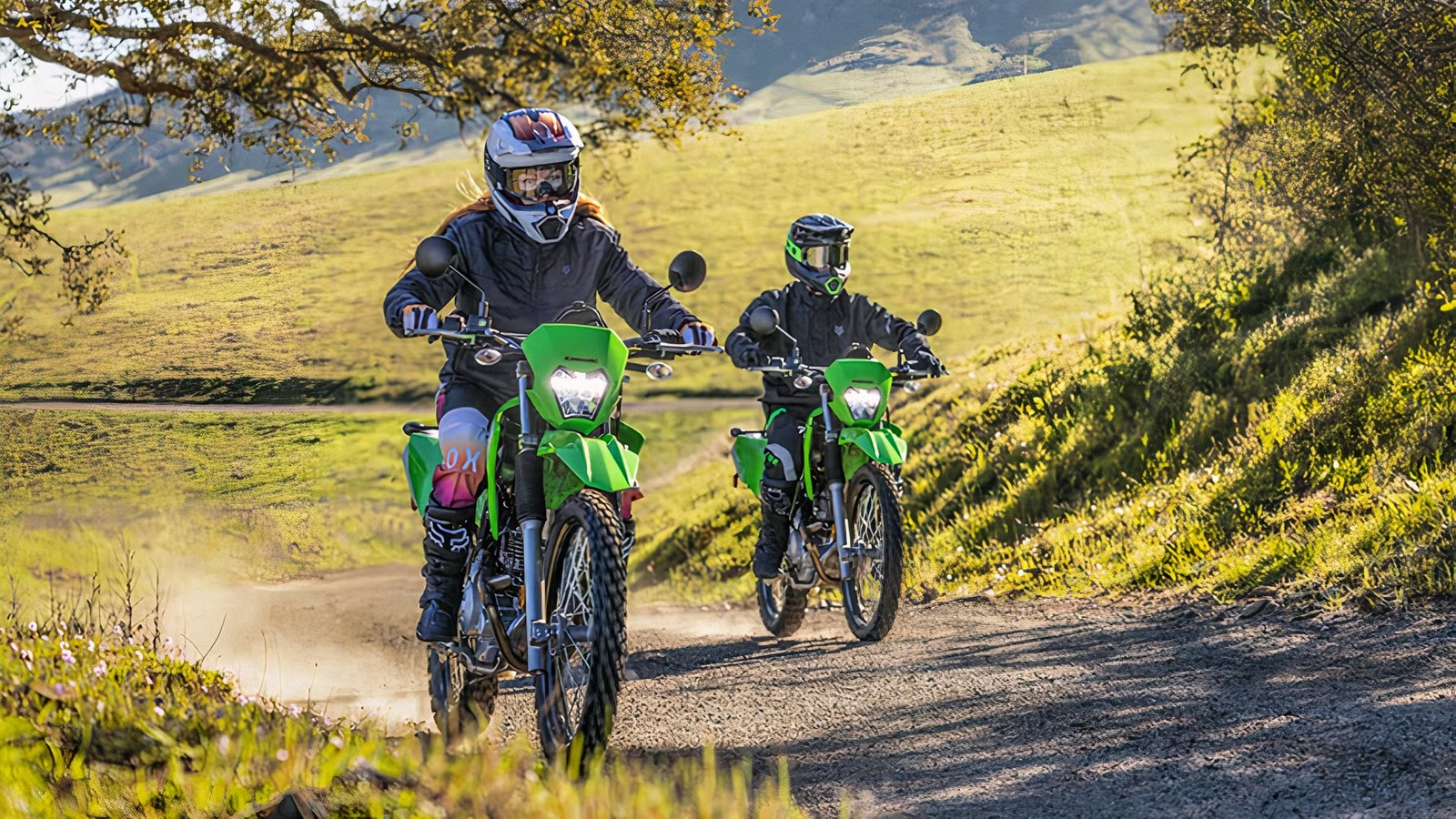
Motorcycle ownership doesn’t have to feel like a second job. The best bikes can turn a quick trip into an adventure without demanding too much in return. They start reliably, behave predictably, and best of all, cost relatively little to keep fed. These bikes are usually happy just going to the grocery store, a back road, and sometimes even maybe where the pavement ends and a trail begins. Kawasaki, in particular, has usually nailed this side of motorcycling. Its bikes have always been cheap and reliable; yes, even the flagships like the ZX-14R. But if you want something that makes ownership truly effortless, a dual-sport is what we’d recommend.
The Prerequisites Of An Effortless-To-Own Motorcycle

Motorcycle ownership has the potential to be wonderfully simple. Take some of the emerging economy nations, for example, where people primarily use motorcycles as their daily commuters. Much like cars, they just put fuel in the tank and go off on their way. Riders check the oil every once in a while, have it serviced once a year, and the bike just chugs along without any complaint. That’s usually the first prerequisite of something that’s effortless to own.

The next part comes when things do go south. The modern motorcycle market has a habit of turning even straightforward transportation into a mechanical ecosystem. But more displacement means more weight, and more equipment means more systems to understand. And most of all, bigger motorcycles mean you need bigger pockets. So when things go wrong, you need a specialist, and that can cost serious money. Something that’s simple to fix with cheap spares is what you need then.
Small-Capacity Bikes Nail These Things

Think of these things, and a small motorcycle is what you end up with. Something like an entry-level dual-sport, for instance. They are wonderfully simple to use and can be taken just about anywhere in the world. The small engine sizes also mean that they have phenomenal mileage compared to larger gas-guzzlers, and if you can strap a fuel cell or two to the back of the bike, there’s no telling how far you can travel without stopping at a gas station.

Why The Kawasaki KLX230 Makes So Much Sense

That brings us to the KLX230. It was chosen because its entire design seems to revolve around usability. The smaller engine capacity gives you greater fuel mileage, and the simple engineering and exposed mechanicals make it easy to work on, too. It’s also extremely affordable when compared to the other bikes in Kawasaki’s lineup, with a starting price of just under $5,500. Oh, and if you’re worried about its tall nature, the ‘S’ variant gets a seat height that is nearly short enough for the average rider. The spring is soft, too, so that height comes down as soon as you transfer your weight to the bike from your legs.
The KLX230’s Single-Cylinder Is Highly Reliable

At the heart of the Kawasaki KLX230 is a 233 cc four-stroke single-cylinder engine that produces 17 horsepower and 13.3 pound-feet of torque. This is no highway cruiser with oodles of torque or a racetrack star, but Kawasaki highlights the way it’s tuned. This engine produces torque in the low to mid-range of the tachometer, emphasizing its dirt use. In fact, this is also great for the city, where revving high is unnecessary and, honestly, tiresome. You don’t need noisy acceleration, just linear progress from a standstill or during overtakes.

Six gears in the transmission box means you have a usable spread of power in any situation. Lower gears allow you to trundle around in the dirt, and the higher gears let you settle into a sort of rhythm on the highway. You put all of this together, and you get a mileage of about 80 – 90 miles per gallon. If you want to use this bike for your daily commute to work, it’s going to cost you less than your car.
The Real Advantage Of The KLX Is The Ownership Cost

Because of how simple and small the engine is, the Kawasaki KLX230 is very light on the pocket. Thanks to this simplicity, maintenance is relatively easy even for wayside mechanics. Tires, brake pads, and chain/sprocket sets wear out based on off-road use, but Kawasaki is well-established, and parts are plentiful and easy to find, making them fairly affordable too. Annual insurance is cheap, too, typically running around $75-$150 depending on your age and location.
Some Details That Make Ownership Even Easier

Despite the beginner-bike engine, the chassis of the KLX230 projects more dual-sport credentials. Kawasaki uses a high-tensile steel perimeter frame with a short 53.7-inch wheelbase. Ground clearance is 9.4 inches, giving the bike enough room to deal with rocks, roots, and ruts. Suspension is taken care of by a 37 mm telescopic fork with 7.9 inches of travel and a Unit-Trak rear system with a single shock offering 8.8 inches of travel.

Braking is taken care of by a 265 mm front petal disc and dual-piston calipers, and a 220 mm rear petal disc with a single-piston caliper. Dual-sport calibrated ABS comes standard with the bike for safety reasons, but it is also switchable, should you want to play around a lot more. None of these systems are special. They’re all designed to be not just cost-effective, but easy to work with.
The KLX Design Has KX Flavor

Visually, the KLX230 borrows heavily from Kawasaki’s off-road family. The KX-inspired shrouds, side panels, and front fender give it the stance of something that would be perfectly comfortable parked beside a trailhead covered in dust. The design is functional, obviously. Kawasaki says the frame, seat, fuel tank, and gas cap were all shaped to improve grip and chassis control, while the seams between the panels are kept flush for better movement.

Keep in mind, there are a few flavors of KLX230 to choose from. Most of the basics remain the same, but you have a Sherpa variant, which offers a lower seat height, and a DF variant for a taller, more rugged build. There’s also SM, which stands for supermoto. So, take your pick. Now, of course, neither variant has a lot of tech involved, but that’s part of its appeal. The essentials are there: LED headlights, switchable ABS, fuel injection, and an LCD instrument cluster. There’s also smartphone connectivity via Kawasaki’s app for a layer of convenience, and that’s about it. This short and sweet list reduces the number of tech gremlins that can disable your bike.
The Kawasaki KLX230 Is A Capable Dual-Sport That You Don’t Think Twice About

The Kawasaki KLX230 does not need enormous horsepower, elaborate electronics, or a towering equipment list to be useful. Instead, it combines a simple 233 cc air-cooled single, full-size wheels, and long-travel suspension into a package that one can ride anywhere, be it city streets or dirt trails. More importantly, thanks to Kawasaki’s durability, the bike’s running costs and maintenance schedules make it easier to own than one would imagine.
Source: Kawasaki USA

Related posts



Latest Post


No Comments