
The American Bagger That Quietly Out-Tours Harley’s Heritage Classic Two-Up
A motorcycle can be perfectly capable of touring and still not be the best choice when two people plan to spend several days aboard it. Add luggage, long highway stretches, and the inevitable rough pavement, and what matters to the rider starts to change. The right motorcycle needs to carry both people without drama, keep its composure when fully loaded, and give the passenger enough room to settle in for the long haul. In Harley’s cruiser lineup, the Heritage Classic does those things surprisingly well. But there is an American motorcycle with a different design priority that makes it an intriguing alternative when two-up touring isn’t an occasional adventure, but the reason for the ride.
The Heritage Classic Is Already A Capable Lite Tourer

The Harley-Davidson Heritage Classic doesn’t need much help making a case for itself as a touring motorcycle. It comes with lockable saddlebags, a detachable windshield, rider floorboards, and a comfortable two-up seat. I’ve put my own butt on that pillion, and I wouldn’t call it comfortable if it wasn’t. That’s a substantial amount of touring equipment on a motorcycle that still retains the character of a traditional cruiser.

The Softail platform is part of the appeal. The Heritage Classic isn’t trying to be a full-dress touring motorcycle, and at 719 pounds running order with a 64.2-inch wheelbase, it is considerably lighter than some of the heavier machines built specifically for covering big miles. Its five-gallon tank and 1.6 cubic feet of luggage capacity give useful fuel range and storage for extended rides.
Two-Up Touring Changes The Equation

None of that changes when a passenger climbs aboard. The Heritage remains a legitimate two-up motorcycle, with the suspension and luggage capacity to handle the additional load. For a couple taking occasional long trips, it can make a compelling case without requiring them to buy a dedicated touring motorcycle.


But a 1,000-mile trip changes the question. Two people bring more luggage, put greater demands on the suspension, and spend considerably more time asking the chassis to remain composed at highway speeds. The motorcycle also has to be manageable when the highway ends and a fully loaded bike has to be maneuvered through gas stations, parking lots, and unfamiliar towns.

That’s where the distinction between a motorcycle that can tour and one that was built around touring starts to matter. The Heritage Classic is a remarkably capable cruiser that can take two people a long way. But if another American motorcycle can make that same trip while putting touring duty closer to the center of its design, that’s a difference worth exploring.
The Indian Springfield Brings Touring DNA To The Comparison

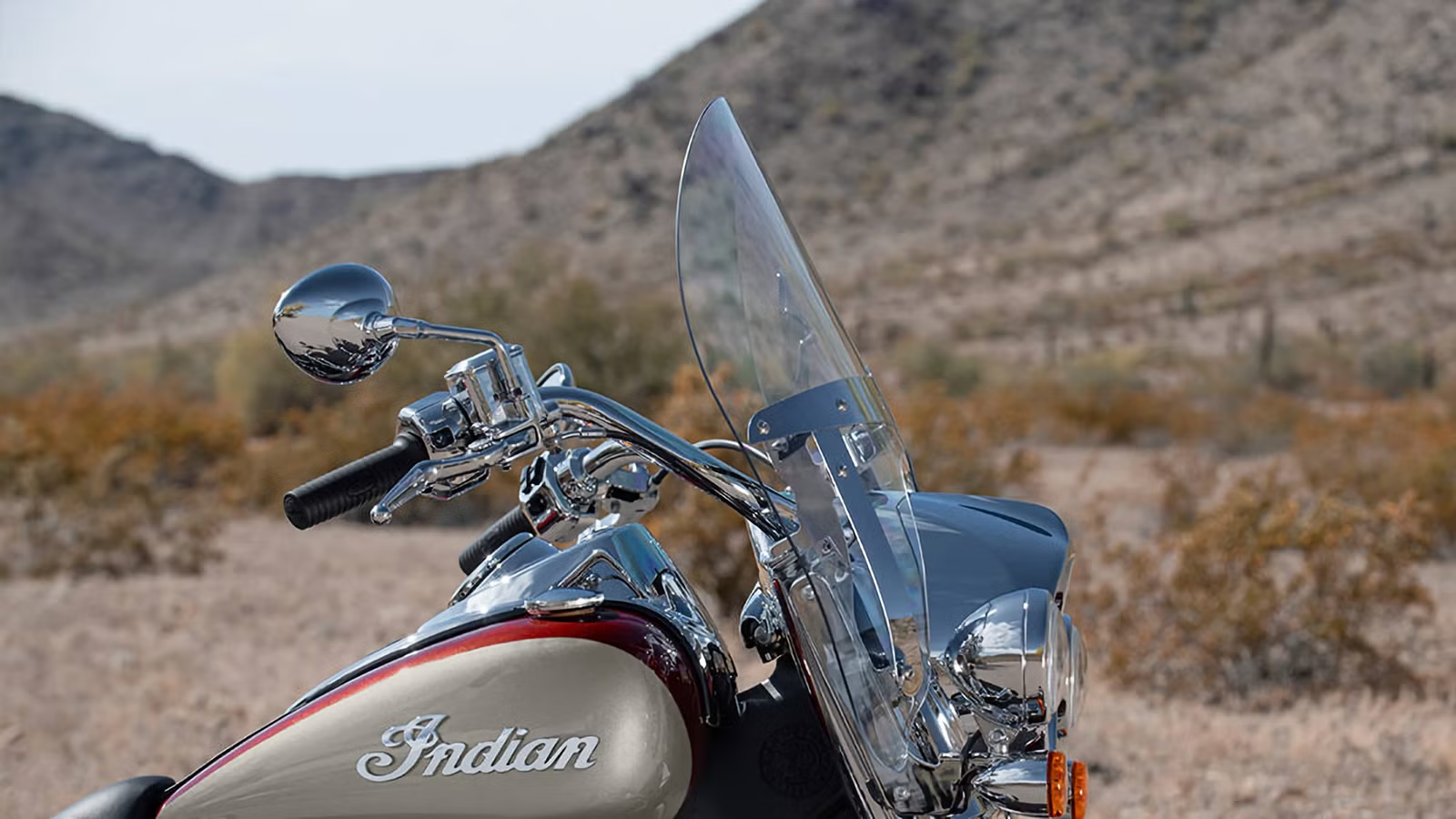
The motorcycle that quietly changes this comparison is the Indian Springfield. It looks every bit as traditional as the Heritage Classic, with valanced fenders, a chrome-heavy finish, and a quick-release windshield, but underneath that old-school styling is a motorcycle Indian categorizes as a bagger. Long-distance riding is much closer to the Springfield’s design priorities than it is to those of the Softail-based Harley.

That difference becomes obvious in the hardware. The Springfield has a 67-inch wheelbase and weighs 827 pounds in running order, putting considerably more motorcycle underneath the rider than the 719-pound Heritage Classic. That extra mass isn’t automatically an advantage, but on a long highway run with a passenger and luggage, the longer wheelbase and substantial touring chassis help the motorcycle feel settled rather than busy.

The Springfield also gets Indian’s Thunderstroke 116, producing 126 pound-feet of torque at 2,900 RPM. That’s plenty of engine for moving a heavily loaded motorcycle, but the engine isn’t the reason it wins this particular comparison. The more revealing numbers are elsewhere: a 5.5-gallon fuel tank, 17 gallons of remote-locking hard-bag storage, and an air-adjustable rear shock are all part of the standard package.
The Passenger Isn’t An Afterthought

And then there’s the passenger’s side of the equation. The Springfield comes standard with a two-up seat and passenger floorboards, giving the passenger a proper place to put their feet rather than treating them as an afterthought. It doesn’t come with a passenger backrest, but neither does the Heritage, so you’ll have to hit the accessories catalog for one in either case.
The Springfield Makes The Long Haul Easier

The difference between these two motorcycles becomes easier to appreciate after the first few hours on the road. A 1,000-mile trip isn’t one long highway run; it’s a succession of hours spent maintaining speed, dealing with changing pavement and carrying the added weight of another person and their luggage. That’s where the Springfield’s touring-oriented design starts to make more sense.
Its longer wheelbase and greater mass aren’t necessarily advantages around town, but they make more sense once the road opens up. The Springfield feels substantial beneath two people rather than like a cruiser platform being asked to do a job outside its original mission. That doesn’t make the Heritage unsettled or uncomfortable, but it does give the Indian an advantage when the trip itself becomes the priority.
Packing For Two Is A Different Game

The same thing happens when it’s time to pack. A solo rider can get surprisingly creative with luggage, but two people preparing for several days away from home needs enough room to bring clothing, toiletries, and whatever the weather might demand. The Springfield’s larger saddlebags give a couple more freedom to pack for the trip rather than packing around the motorcycle.
That matters every morning of the trip, not just when the bags are loaded at home. There’s less need to decide which jacket stays behind or wedge a soft bag somewhere it doesn’t belong because the saddlebags are already full. It is a mundane advantage, but touring is full of mundane things that become surprisingly important after several days.
The Passenger Gets One Meaningful Advantage

The Springfield also gives the passenger one clear piece of equipment the Heritage doesn’t: floorboards. I’m not going to claim the Indian has a more comfortable passenger seat, and I know from experience that the Heritage’s two-up seat is comfortable. But giving the passenger a broad platform for their feet is a legitimate advantage when they’re spending hours on the pillion. The distinction is important because the Heritage doesn’t suddenly become a bad two-up motorcycle.

It remains lighter, comfortable for two, and capable of carrying a couple a long way. The Springfield simply aligns more closely with the demands of carrying two people and their gear over distance. That’s the quiet advantage behind the title. The Heritage Classic is a cruiser that tours exceptionally well, while the Springfield is a tourer whose design priorities are already aligned with the demands of a long trip. When two people are planning to spend several days and hundreds of miles together, that difference is enough to give the Indian the edge.
Higher Price Gets You More Long-Haul Abilities

The Springfield’s advantage doesn’t come without a price. At $23,999, the 2026 Indian starts $4,000 higher than the $19,999 Heritage Classic, and that’s before destination, taxes, and dealer fees enter the picture. For a rider who mostly cruises locally and takes an occasional weekend trip, that difference is difficult to justify. But that’s not really the buyer we’re talking about. If two people are actually planning multi-day trips and intend to make touring a regular part of their adventures together, the Springfield’s additional cost gets them a motorcycle whose design priorities are much closer to that job. Not to mention, the base Heritage doesn’t have a pillion saddle or windscreen. You need to pay $2,000 more to have that.
The Better Choice Depends On What You Actually Ride

That doesn’t make the Heritage Classic a bad value. In fact, its lower price and 108-pound weight advantage make a strong case for the rider who wants one motorcycle to do a little bit of everything. It can handle two-up trips, but it doesn’t demand that every ride be an expedition. Its greater touring capacity means fewer compromises once the bags are loaded and the miles begin, while the passenger floorboards and touring-oriented chassis make the same trip easier to manage.
That’s why the Indian Springfield quietly out-tours the Heritage Classic two-up. The Harley remains a versatile cruiser, but when two people are buying a motorcycle specifically because they want to spend days traveling together, the Springfield is the one built for the job. It doesn’t win by making the Heritage look bad. It wins by being exactly what the title asks it to do: two-up touring, all day long.
Source: Harley-Davidson, Indian Motorcycle

Related posts
Latest Post


No Comments