
Audi Is Charging $115 To Disable Notification Spam On A Car You Already Own—And Owners Are Furious
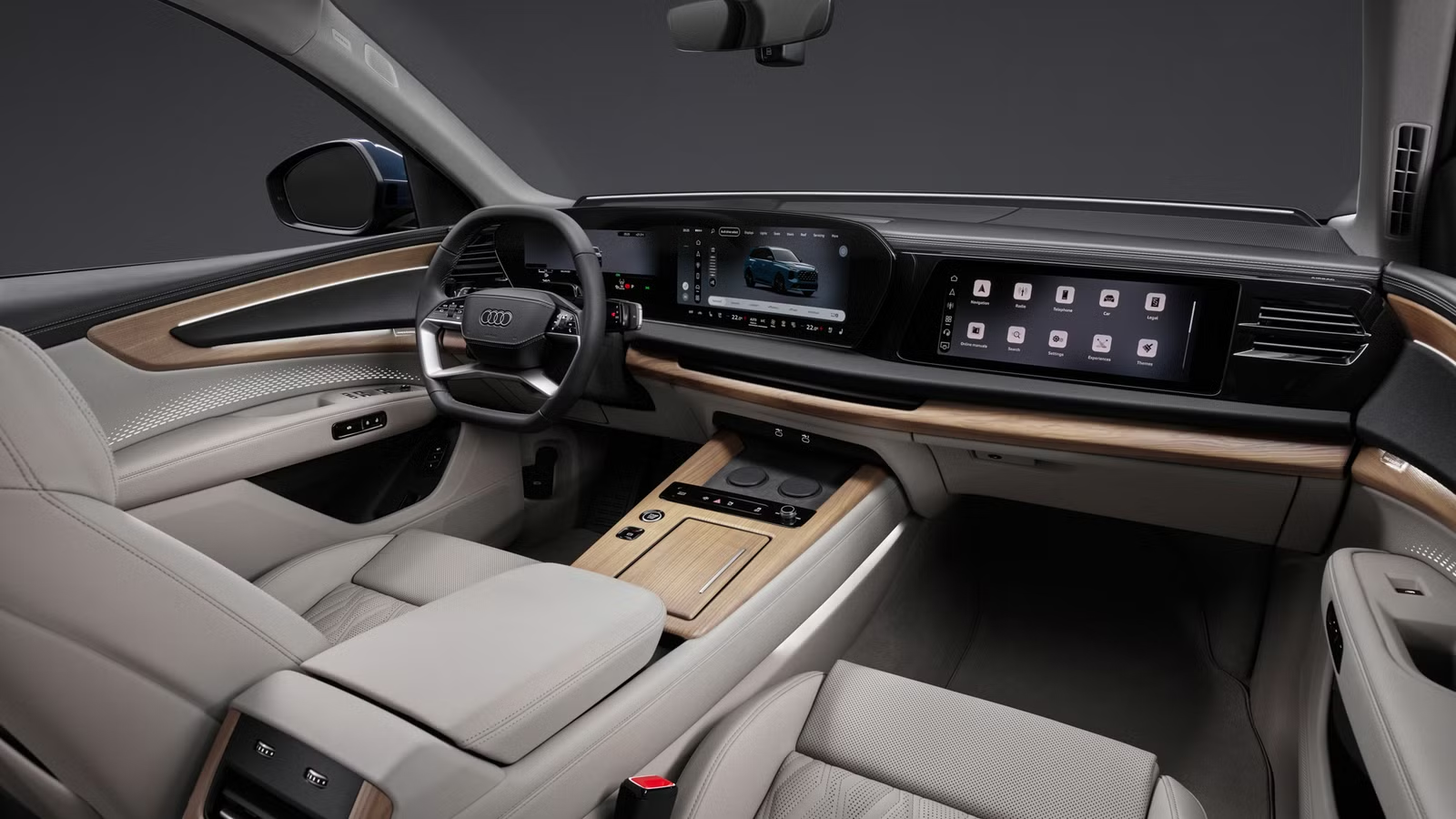
An Audi owner recently discovered her new car was bombarding her with constant notifications—and when she turned to the dealership for help, the answer was a $115 fee just to turn them off. The response, which she called “such a scam,” quickly went viral, and it’s easy to see why: paying a service charge to disable alerts on hardware you already own feels like a fundamental breach of the buyer-seller relationship.

The story broke this week and landed hard because it isn’t really about one woman’s frustrating afternoon at a dealership. It’s a sharp, concrete example of a trend that’s been quietly building across the automotive industry—automakers treating software settings as billable services rather than features that come with the car.
What Actually Happened With The Audi Notifications
The owner’s new Audi had been sending her a stream of notifications she hadn’t asked for and couldn’t easily silence through the car’s own menus. When she contacted her dealership, the fix wasn’t a quick settings toggle or a software update pushed over the air. Instead, the dealership quoted her $115—apparently for a technician to go in and make the change on the back end.

Her reaction, shared publicly and widely circulated, was blunt: “Such a scam.” That framing resonated. The notifications themselves weren’t a safety feature or a regulatory requirement—they were, by most accounts, the kind of ambient digital noise that any reasonable owner would expect to be able to mute themselves. The fact that doing so required a paid dealership visit reframed a minor annoyance into a pointed question about who actually controls the car after the sale.
Software Paywalls Are Becoming A Pattern, Not An Anomaly

Audi isn’t alone here, and that’s the bigger story. Across the luxury and mainstream segments, automakers have been quietly restructuring what comes “included” with a vehicle versus what requires an ongoing subscription or a one-time unlock fee. BMW drew significant backlash a few years ago for putting heated seats behind a subscription paywall in some markets—a feature physically installed in the car, simply gated by software. General Motors has moved toward subscription-based access for services that were previously bundled. Tesla has long charged for software-enabled performance upgrades on hardware already sitting in the car.
A Torque News report from earlier this month highlighted how automakers are increasingly hiding features that buyers paid for inside EVs, with third-party software tools emerging specifically to expose what’s locked away. The direction of travel is clear: as cars become rolling software platforms, manufacturers are applying the same subscription logic that works for streaming services to physical products that buyers expect to own outright.
Why Dealerships End Up In The Middle—And Why That Makes It Worse

Part of what makes the Audi case sting is the dealership’s role. The $115 fee isn’t going to Audi directly—it’s a labor charge for a technician’s time to access a system the owner can’t reach herself. That structure puts the dealer in an awkward position: they’re not setting the policy that locked the setting, but they’re the ones collecting the fee and absorbing the customer’s frustration.
For buyers, though, the distinction barely matters. Whether the paywall is set by the manufacturer or enforced through dealer labor rates, the result is the same—a feature that should be a simple user preference requires a paid intervention. And unlike a mechanical repair, there’s no obvious reason a notification toggle should be inaccessible to the owner in the first place. That gap between expectation and reality is exactly what makes these stories go viral.
What This Means For Buyers Going Forward

The practical takeaway for anyone shopping for a new car—especially in the luxury segment—is to ask specifically about software settings before signing. Which features require subscriptions? Which settings can you change yourself, and which require a dealer visit? Are there recurring fees attached to anything currently included? These aren’t questions that used to matter much. They matter now.
The Audi notification story is a small dollar amount in isolation. But it points toward a future where the cost of owning a car doesn’t end at the sticker price—it extends into an ongoing relationship with the manufacturer’s software ecosystem, on terms the manufacturer controls. For buyers who expect to own their car fully once the loan is paid off, that’s a shift worth paying attention to.
Sources: Motor1, Torque News

Related posts






Latest Post


No Comments