
The Touring Trike That Quietly Gets Everything Right
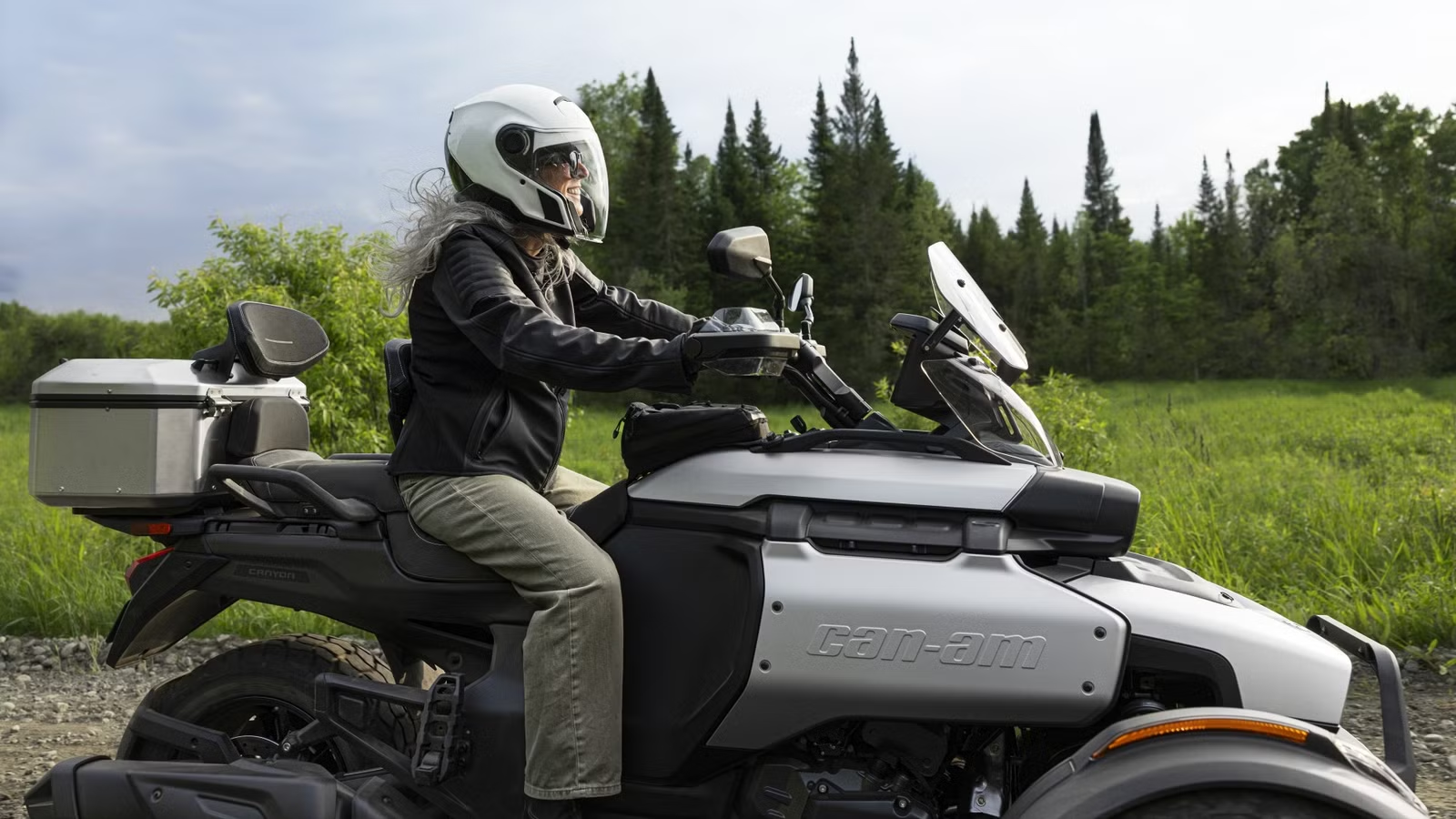
Trikes bridge the gap between two-wheeled bikes and fully-fledged cars. Generally, these are designed to excel at touring. But like all segments, versatility is the need of the hour. That has birthed some impressive do-it-all trikes, even though there are limits to how usable a trike can be day-to-day, mainly because of its size and weight. If such a versatile trike is what you want, we’re going to highlight one such trike that nails the fundamentals and goes further by offering adaptive riding dynamics and underpinnings that take it beyond the tarmac.
Trikes Are Usually Oriented Towards Easy Touring

Trikes are famed for offering a unique mix of stability, comfort, and accessibility beyond the two-wheeled world of motorcycles. Three wheels mean no balancing is required, which helps riders relax their core and legs. The three-wheeled setup also creates a more relaxed riding posture, so long rides are much more forgiving on the rider’s back, joints, and muscles. The added dimensions also increase cargo space, sometimes even to basic car-grade levels. Then there are sizable powertrains with meaty low- and mid-range torque that cater to a relaxed riding experience.

Harley-Davidson’s extensive lineup of trikes is powered by three chunky versions of the Milwaukee-Eight V-twins—the 114, the 117, and even the mighty 121. Every component on popular trike models today is designed to make 500-mile days feel cozy and easy. Touring is the priority here, which is also why these are the least versatile when it comes to do-it-all trikes. In fact, given the heft and size of these three-wheelers, it is hard to create one that can do it all.
But Some Trikes Offer More

Examples like the Polaris Slingshot series lean more towards a car-like approach with side-by-side seating and a proper steering wheel for control. In fact, Slingshot models can be equipped with a roof to protect occupants from the elements. This adds versatility on the road by letting riders enjoy highways longer without the fatigue of wind blast. This is where the fairly new Can-Am Canyon comes in and surprises us as a three-wheeler that can tour, commute, and even explore beyond the tarmac.

The Can-Am Canyon Is The Only One Of Its Kind
Price: $25,999

The Can-Am Canyon is a fairly new nameplate from BRP, but it utilizes the already proven Spyder platform. It shares the chassis and engine, but everything beyond that is brand new, with added durability and trail-going appeal. It stands out amidst the niche wave of trikes with an industrial design that further elevates its rugged appeal. Its on-road characteristics are already sorted and seasoned thanks to similarities with the popular Can-Am F3 Spyder.

However, the Canyon’s standout feature is its surprising off-road ability. It gets jacked-up suspension, linked brakes, and traction control to ace those dirt runs. The top-spec models also get semi-active suspension for adaptive riding dynamics. The tech is solid, and Can-Am also offers a unique LinQ system for luggage and protection add-ons that fit together like LEGO blocks.
Offered In Three Exciting Trim Levels

The base $25,999 Canyon is affordable thanks to its minimal construction, although the base trim lacks premium convenience, technology, and comfort features. On the flip side, its blank-canvas approach lets riders mix and match add-on accessories to build a unique, relatively affordable stacked Canyon trim. Next up is the $29,999 XT trim, which enhances touring capabilities.

It gets an aluminum top and side cases, heated rider and passenger grips, a passenger backrest, more comfortable footpegs and seat, and a front skid plate as standard fitment. A tweaked rear suspension with improved tuning adds stability and elevates its riding capability. Then, the top-of-the-line $32,499 Redrock trim is loaded with premium features. It adds a backup camera and further enhances riding dynamics with semi-active suspension. The electronic suite also gets a boost with an additional customizable ride mode.
Powered By A Versatile Three-Cylinder Engine

The Can-Am Canyon packs a tried-and-tested liquid-cooled Rotax ACE inline-3 engine. This 1,330 cc mill produces 115 horsepower at 7,250 RPM and 96 pound-feet of torque at 5,000 RPM. The engine is mapped to provide punch early and linearly, so it can stay composed yet spirited as it glides through all types of terrain.
Its early surge of torque is particularly helpful with challenging uphill riding scenarios. Its six-speed semi-automatic transmission simplifies the riding experience. This is a refreshing change from the boring CVT that the Can-Am Ryker packs. The Can-Am Canyon’s transmission also packs a reverse function, which is a blessing in disguise when maneuvering this behemoth through challenging urban conditions.
Adaptive Underpinnings To Ace The Roads Less Traveled

Can-Am has clearly modified the Canyon’s underpinnings to help with breezy trail-going duties. Base models get Sachs suspension at both ends, and the top-spec trim gets an electronically adjustable KYB setup. However, all packages keep suspension travel unchanged: 10.2 inches up front and 9.2 inches in the rear.
Braking duties are consistent, too, courtesy of 270 mm discs coupled to Brembo four-piston fixed calipers up front. The rear gets a 270 mm disc paired with a single-piston caliper with an integrated parking brake. Grip duties are courtesy of specialized multi-terrain XPS Adventure tires (155/65-16 front and 225/50-15 rear) wrapped around 12-spoke aluminum alloy rims.

Independent A-arms and an anti-roll bar at the front add to the riding stability. Despite its heft of over 1,000 pounds, Can-Am offers considerable ground clearance of 6.3 inches on the Canyon, instilling confidence for tricky trails. The Can-Am Canyon has a seat height of 33.2 inches, which is commendable for a trike.
Wholesome Technology And Accessories Dial Up Its Do-It-All Appeal Further

The cockpit features a large 10.25-inch TFT screen running BRP Connect software. It includes Apple CarPlay for added connectivity and convenience when on the road. The riding experience is further elevated with four ride modes (Sport, Normal, All-Road, and Rally). The XT and Redrock trims enjoy exclusive features like self-leveling rear air suspension (courtesy of KYB Smart-Shox). This helps adjust to the added weight of a pillion and/or luggage while maintaining versatile riding dynamics. It also offers a slew of ride-assistance features.

Notable ones include engine modes, traction control, ABS, stability control, dynamic power steering, and hill-hold control. These features are further tweaked depending on the ride mode. Beyond these, its rugged nature is reinforced by protective features like hand guards, a belt protector, a metal radiator grille, enduro anti-slip footpegs, and integrated LinQ attachment points. Its touring capabilities are elevated by cruise control, an adjustable windscreen, a 5.6-inch handlebar display, a glove box with a USB port, and powerful LED lights.

Can-Am further sweetens the deal with an array of useful accessories for the Canyon. The most extensive is its cargo and storage suite that makes good use of the LinQ attachment points. Notable ones include a modular cargo box, fuel caddy, a tool kit, soft storage bags, a 36-inch adventure plate, and a tank bag. Adding more sportiness to the mix is an available Akrapovic exhaust. Can-Am also offers a trailer hitch on the Canyon. The accessory list is arguably one of the most extensive and well-stocked among any trike or motorcycle, for that matter.
Source: Can-Am (BRP)

Related posts


Latest Post


No Comments