
Toyota’s Official Fix For Its Recalled V6 Is Literally ‘Hit It With A Hammer’ — And It Actually Works
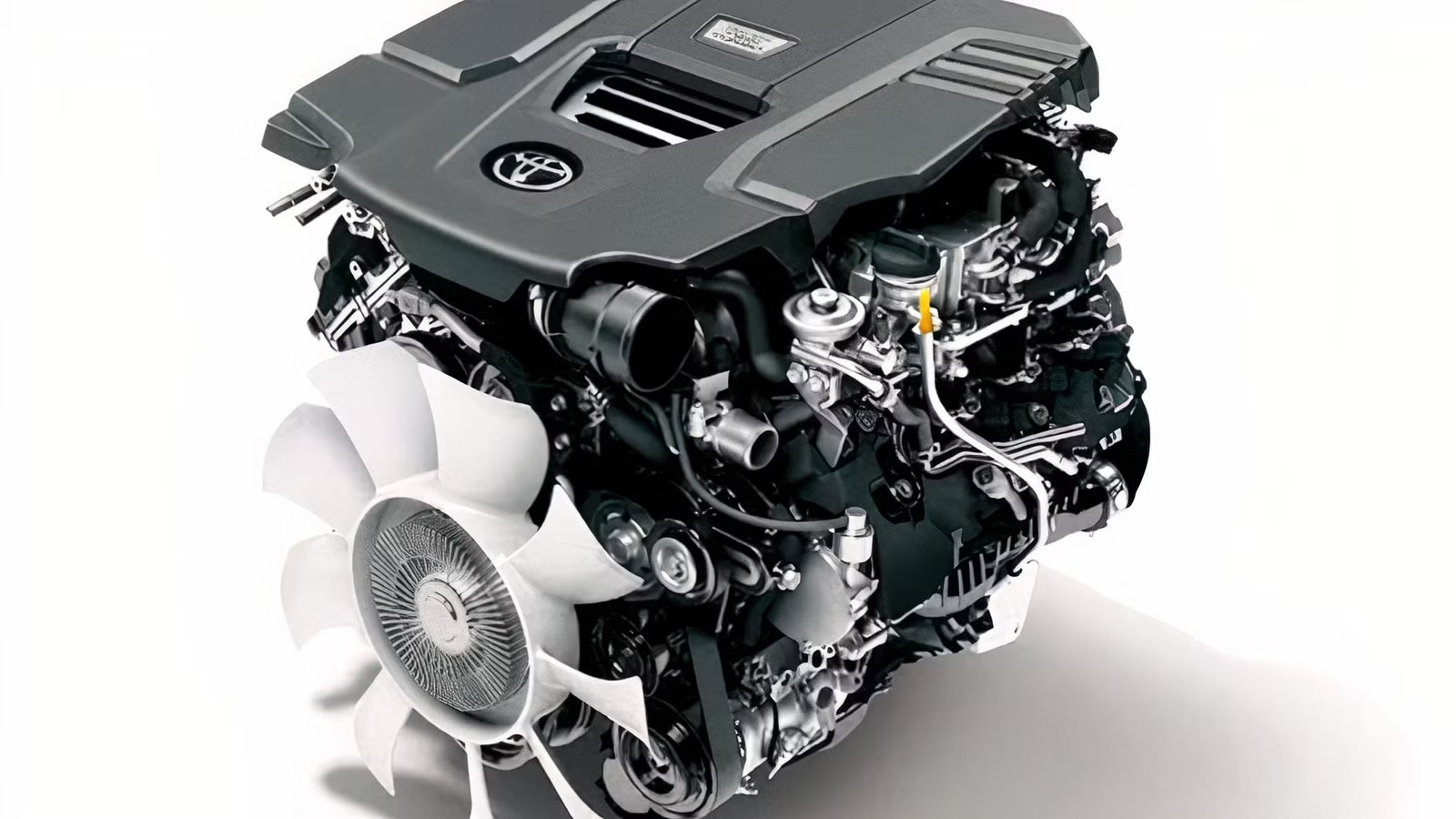
Toyota’s official diagnostic procedure for its massive V6 recall sounds like something a frustrated mechanic would do in a parking lot: strike the engine with a hammer. But before you write it off as a joke, know that the hammer in question is a purpose-built plastic tool, and the person swinging it is listening to the engine’s soul — measured in resonant frequencies by an accelerometer and analyzed by Toyota’s own inspection software.

The procedure applies to the ongoing recall campaign covering more than 250,000 Toyota and Lexus trucks and SUVs equipped with the twin-turbocharged V35A V6. The affected lineup includes certain 2022–2024 Toyota Tundra trucks — with Sequoia and Lexus LX models also caught up in the broader recall campaign. The root cause is machining debris left inside the crankcase during manufacturing, which degrades the number-one main bearing and, if left unchecked, can lead to catastrophic engine failure.
How a Plastic Hammer Reads an Engine’s Health
The procedure works on the same physics principle as a tuning fork. Every component machined to a consistent specification — same material, same geometry, same mass — vibrates at a predictable frequency when struck. A bearing in good condition resonates differently than one that’s been worn down by abrasive debris. That difference is measurable, and Toyota’s engineers spent considerable time testing engines with known-good and known-bad bearings to map exactly what those frequency signatures look like.

In practice, a technician first changes the engine’s fluids and brings it to the specified operating temperature, then removes the accessory belts to eliminate confounding vibrations. An accelerometer mounts directly to the crankshaft bolt. The tech then strikes the crankshaft pulley at the 3 o’clock position with the specialized plastic hammer — three acceptable hits required. The hammer itself gives feedback on swing strength; too light or too heavy and the software won’t accept the reading. Think of it as a calibrated instrument, not a blunt object.
The software then returns one of two verdicts: OK, meaning engine replacement is not required, or Replace, meaning it is. Toyota’s rep confirmed to The Drive that the analysis also incorporates the vehicle’s service history and available drive data to assess bearing condition with greater confidence.
Why This Beats Tearing the Engine Apart

The alternative to a non-invasive diagnostic is a teardown — pulling the engine, splitting the case, physically inspecting the bearing. That process is expensive, time-consuming, and introduces its own risks: gaskets disturbed, seals replaced, labor hours billed. For a recall covering a quarter-million vehicles, doing that to every single engine, regardless of actual condition, would be an enormous waste of resources and would strand trucks at dealerships for extended periods.
Toyota’s position has been that not every V35A engine in the recall pool actually needs replacement. Owners have understandably been skeptical of that claim, since it can feel like the manufacturer is looking for reasons to avoid paying for a new engine. The hammer test is Toyota’s answer to that skepticism — a repeatable, documented, software-backed procedure that gives both the technician and the owner a concrete data point rather than a judgment call. If the software says replace, the engine gets replaced. If it says OK, there’s an engineering rationale behind that decision.
What Owners With Symptoms Should Do Right Now

One critical point: the hammer diagnostic is a predictive tool, not a treatment for an engine that’s already struggling. Toyota was explicit on this. If your Tundra, Sequoia, or LX is already knocking, running rough, or won’t start, don’t wait for a scheduled inspection appointment. Contact your Toyota or Lexus dealer immediately — those symptoms indicate the bearing may have already progressed to a stage where the resonant-frequency test isn’t the right first step.
For owners whose trucks are running normally, the procedure offers a path to a clear answer without the truck sitting in a service bay for days. The recall is ongoing, and Toyota says it has updated its manufacturing process to prevent debris contamination in more recently produced engines. But for the 250,000-plus vehicles already on the road, the hammer test is how Toyota plans to sort the ones that need intervention from the ones that don’t. It’s a clever piece of engineering problem-solving — even if the headline makes it sound like something else entirely.

Related posts




Latest Post


No Comments