
2027 Aston Martin Valen Interior And Exterior Picture Gallery
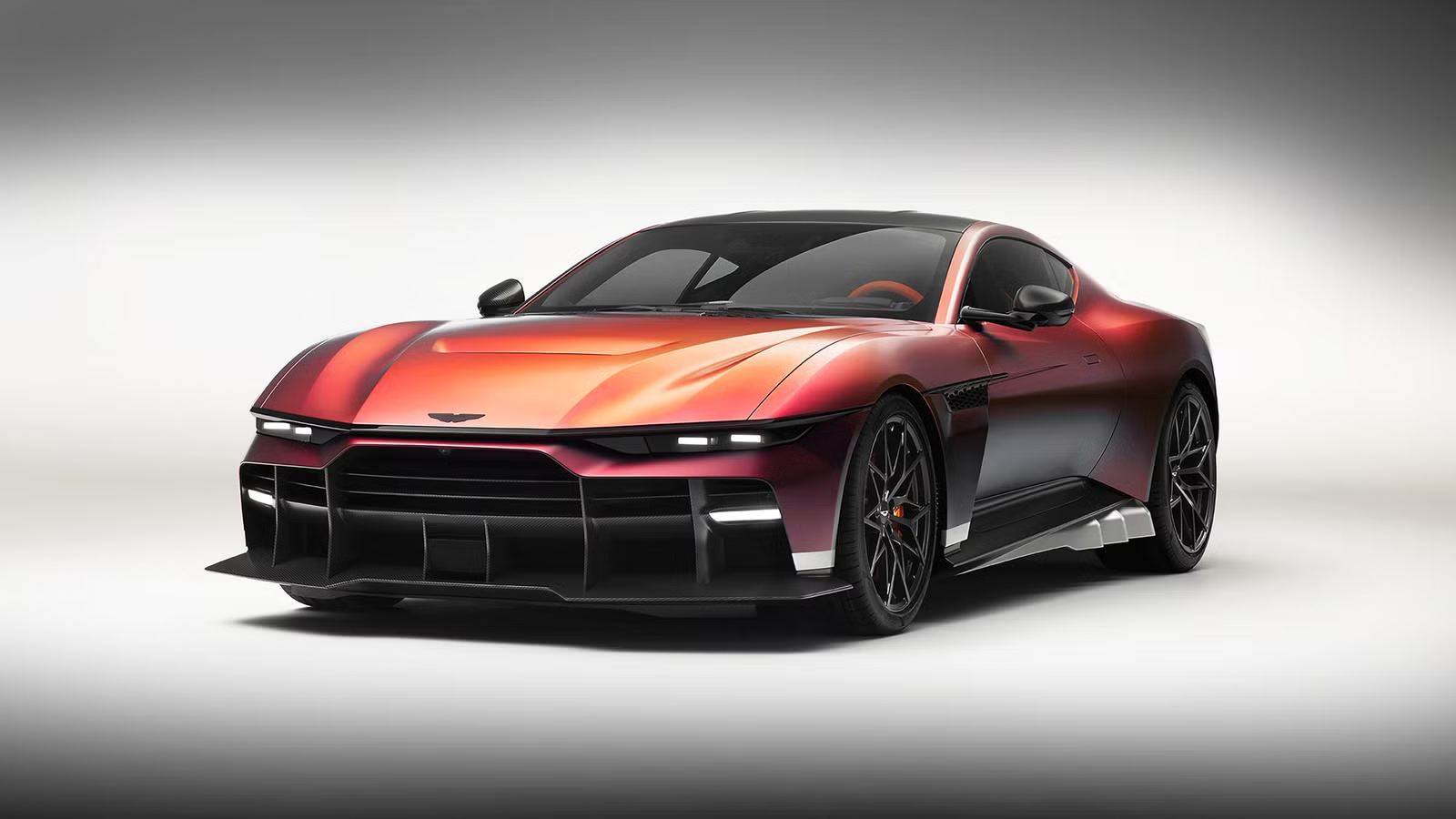
Aston Martin has spent 113 years perfecting the front-engined grand tourer, and the Valen might be the most uncompromising interpretation yet. Built by the brand’s newly formed Special Vehicle Operations department in partnership with Q by Aston Martin, it follows in the tire tracks of the Valour, Valiant, and DBR22 as a limited-run V12 special with a personality all its own.

The name comes from the Latin “valens,” meaning strong or powerful, and Aston Martin isn’t being subtle about the claim. This is the most potent front-engined car the company has ever built, wrapped in a coach-built carbon fiber body that trades the usual GT restraint for something considerably more theatrical.
Only 150 examples will be built, with first deliveries scheduled for the second quarter of 2027.

Aston Martin
- Founded
-
15 January 1913
- Founder
-
Lionel Martin, Robert Bamford
- Headquarters
-
Gaydon, United Kingdom
- Owned By
-
Publicly Traded
- Current CEO
-
Adrian Hallmark
- Production Status
-
Available
22

The Valen’s cabin was developed around a single principle: visual lightness that mirrors the significant mass reduction engineered into the rest of the car. Nothing here is decorative for its own sake.
21

Central to that philosophy is a narrow center console made possible by advanced 3D-printed components. It’s angled toward the driver, creating a more focused cockpit that reinforces the connection between driver and machine.
20

The console incorporates the performance-focused switchpack first introduced on the Valhalla, along with other elements borrowed from Aston Martin’s hypercar. The central touchscreen sits at a more reclined angle to better integrate with the pared-back geometry surrounding it.
19

Buyers choose between newly developed Sports Plus seats that balance support with long-distance comfort, or lightweight carbon fiber performance seats for a sharper driving experience. The cabin adapts to how the car will actually be used.
18

Aston Martin has restructured the selection process without narrowing the choices. Customers first pick between Semi-Aniline Leather with Alcantara or full Semi-Aniline Leather, then select from five material splits: Monotone, Duotone, Light Duotone, Tritone, and Driver Focused.
17
A new quilting treatment developed specifically for the Valen spreads incrementally as you climb the trim ladder, starting with door panels before extending to doors and seats, and finally reaching the headliner in top-tier specification.
16
Perforated 3D-printed elements appear across the cabin, echoing the approach taken with the Valkyrie and DBS Zagato. These sections reference the exterior cooling vents while adding to the sense of lightness. Air vents have been redesigned to cut visual clutter, and a new palette of anodizing colors expands what Q by Aston Martin can offer.
15

The Valen isn’t a reskinned V12 GT. Aston Martin describes it as a significant departure from what came before, with sharply sculpted lines and an attacking stance that emphasizes the front-engine, rear-drive layout.
14

Deeply recessed slimline headlamps sit hooded beneath the sharp leading edge of a plunging hood line. The radiator aperture takes on a more angular treatment, paired with a bold geometric mesh grille and an acutely angled front splitter.
13

The hood carries a single top vent with perforations along its trailing edge. It’s functional detailing that sets the tone for everything happening down the sides.

Related posts





Latest Post


No Comments