
The Most Reliable Turbocharged Sedan You Can Still Buy

Turbocharging four-cylinder (and other) engines was supposed to help cut compromise out of the equation. Within the last decade, automakers decided buyers shouldn’t have to choose between efficiency and a boring driving experience. Ironically, bolting a snail to a four-cylinder actually gives it more *oomph*, whether it be for towing on an SUV or fun driving capability on a sedan. It also gave the engine more power without making it too much more expensive.

Stressing engines out to that capacity doesn’t always bode well for reliability’s sake, however. Automakers forgot to tell the consumer that and eventually stuck the customer with the repair bill three years after wearing a good bit of the parts out. So, can you buy an exciting turbocharged engine in 2026? Absolutely — just look at the Honda Civic Type R. The real test is, can you find one that has the reliability you’d come to expect of a naturally aspirated engine? We dug through RepairPal and J.D. Power, among other outlets, to find out, so you don’t have to.
Turbocharged Sedans Promised Excitement
Almost everything in life comes with an opportunity cost. The seduction of a turbocharged engine was real for not only the automakers but also the consumer. Not to mention, government regulations kept getting tighter and tighter around emissions, so manufacturers had to find a way to save for efficiency’s sake without cutting out all the fun. Unfortunately, the real cost came down to manufacturers not installing the necessary components to cool the engine or the oil, or pairing the engine with a proper transmission that could handle such a shift in power delivery, ultimately causing engine failure after only a few years.
The Four-Cylinder Turbo Era Changed The Family Car


For decades, and especially in the early ’90s and early 2000s, the family sedan was considered more of an appliance allergic to fun. Take the Volkswagen Jetta, for example. That car wasn’t fun until you got into a GLi. The Cobalt was so boring. Chevy offered a turbocharged SS package that added capability where there was none. The turbocharged variants of the engines that often came in these humdrum vehicles suddenly breathed life into these staggeringly slow family cars.
Not Every Automaker Delivered

Turbocharging four-cylinder engines hit a snag in 2018 when Consumer Reports published findings that criticized almost every automaker that featured turbocharged four-cylinder engines. Consumer Reports even noted that the long-time reliability king of the industry, Honda, even had issues with its turbocharged Accord engine engineering. Getting these engines to last up to 150,000 miles or more seems to be a challenge. Kia even went to court over the Theta II engine, which ended up in a class-action lawsuit.

The Japanese V-6 Engine So Reliable, The Automaker Still Hasn’t Replaced It
This longstanding six-cylinder powerhouse remains a foundation of the American automotive landscape.
The Sedan Segment Has Trust Issues

These turbocharged nightmares left buyers worried that the next turbocharged sedan they bought was going to leave them on the side of the road. Instead, consumers found solace in larger vehicles that had naturally aspirated engines. Even though a sedan has something an SUV doesn’t — a sportier ride overall — the draw of a maintenance-nightmare-free vehicle was alluring. Ironically, though, in the end, these vehicles also ended up getting turbocharged more often than not. From a general standpoint, and not to get ahead of ourselves, technology has by and large improved.
Repair Costs And Ownership Headaches Pushing Buyers To SUVs

Consumers have spoken, however, and by 2025 the sales of new sedans have fallen to 18.4 percent compared to the SUVs’ 59.3 percent share of the market. This effectively meant that SUVs and trucks made up four out of five new vehicle sales in the US. SUVs first overtook sedans as some of the best-selling vehicles in the market in 2014 and, by this measure, consumers have never looked back. There’s more cargo space, you feel bigger on the road, but again, there’s always an opportunity cost.
A Few Nameplates Letting Enthusiasts Down

Most people driving turbocharged sedans are not going to be pushing them to their limits. Therefore, the engines won’t be as stressed, but still deserve some caution. The turbo sedans that enthusiasts actually want are often the most risky. The Volkswagen Jetta, according to RepairPal, gets a 4.0 out of 5.0 and has an annual repair cost of $609. The turbocharger replacement unfortunately costs around $2,400. The Hyundai Sonata N-Line has a spirited 2.5-liter turbocharged engine but has a history of service issues, from transmission problems to overheating. Hyundai’s powertrains often bite off more than they can chew.
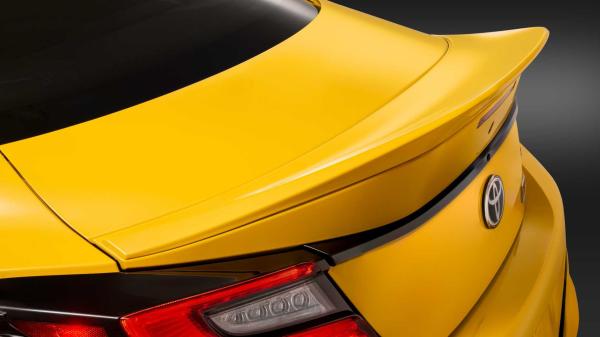
The Sports Car That Proves 228 Horsepower Is All You Actually Need
One Japanese sports car is defying the horsepower war in favor of balance, throttle response, and lightweight construction.
One Turbocharged Sedan Has Been Quietly Getting It Right

By this point, you can already guess that the segment has shrunk. What hasn’t shrunk, however, is the durability of the 2026 Mazda 3 Turbo. It just works, and it works well. It might not have the tenure of a German-made vehicle or the bravado of a Korean competitor, but the Mazda 3’s turbocharged engine is undoubtedly the most reliable. At this point, the Mazda 3 deserves a refresh or a full redesign. The turbo four-cylinder engine, on the other hand, is continually stress-tested by everything else in the Mazda lineup, save the CX-90 and CX-70.
A Turbo Engine That’s Already Proven

This engine can essentially be found in every iteration of Mazda’s lineup. The SkyActiv-G 2.5T first proved its worth in the now-discontinued CX-9 and the Mazda 6 sedan (also discontinued). What makes it so versatile is that it works in either turbo or non-turbo configurations, and shares the same block, crankshaft, and balanced shafts, ultimately giving it the same baseline in every model. Even more interestingly, Mazda seems to be one of the only automakers that advertises different power outputs based on the fuel grade used. With regular fuel, it produces about 227 horsepower and 310 pound-feet of torque.
|
Powertrain |
Turbocharged 2.5-liter inline 4-cylinder |
|---|---|
|
Horsepower |
250 horsepower (premium fuel) |
|
Torque |
320 lb-ft (premium fuel) |
|
Transmission |
6-speed automatic |
Reliability Scores That Should Make Competitors Nervous

Here’s where the payoff really starts to look great on paper. Unfortunately, outlets don’t necessarily score the turbocharger itself, but the foundation that it’s built on. RepairPal, for example, gives the Mazda 3 a 4.0 out of 5.0, making it the ninth car out of 36 for reliability annually. It has an annual repair cost of only $433, which is well below the average repair cost across the entire brand.

7 Sub-$25K Sedans That Drive Like Sports Cars
Sharp handling, thrusty power, and space for the whole family for under $25,000. What more could you want?
The Numbers Make The Case Before You Drive It

Even though the Mazda 3 is made for some of the most fun driving at an economical price, the fact that it’s as reliable as it is fun should close the deal. Between the repair frequency, maintenance predictability, near-luxury interiors, and standard safety equipment that BMW owners would dream of, there’s really not much to complain about with ownership.
What The Facts Say

If you don’t want to waste time pulling all the data together for the Mazda 3 in order to get the best picture possible, don’t worry, we’ve done that for you already. Here’s what all the trusted outlets have to say about the Mazda 3:
- J.D. Power Reliability Score: 77 out of 100
- U.S. News: 9.3 out of 10 and ranks it #2 in the compact segment
- Recalls: zero recalls and one owner complaint
- Safety: IIHS Top Safety Pick+ for the 2026 model
- NHTSA: 5-star overall
Cost Of Ownership
The annual repair figure alone undercuts the Jetta’s $609 annual repair cost. Not to mention the power and performance you’ll get from the Mazda 3 Turbo. However, Kelley Blue Book’s cost of ownership in the first five years does tell a more expensive story. According to the outlet, the five-year cost to own is around $60,000. That doesn’t necessarily mean it’s unreliable; it paints a picture of the entire ownership story, including depreciation. You won’t face a major repair bill like some of the others in the segment, and you get an all-wheel-drive performance car that can swiftly get you from point A to point B.
Sources: Mazda, KBB, Volkswagen, J.D. Power, U.S. News, NHTSA, IIHS, RepairPal

Related posts


Latest Post


No Comments