
1970 Plymouth Sport Fury GT 6-BBL Barn Find Takes First Drive in 45 Years
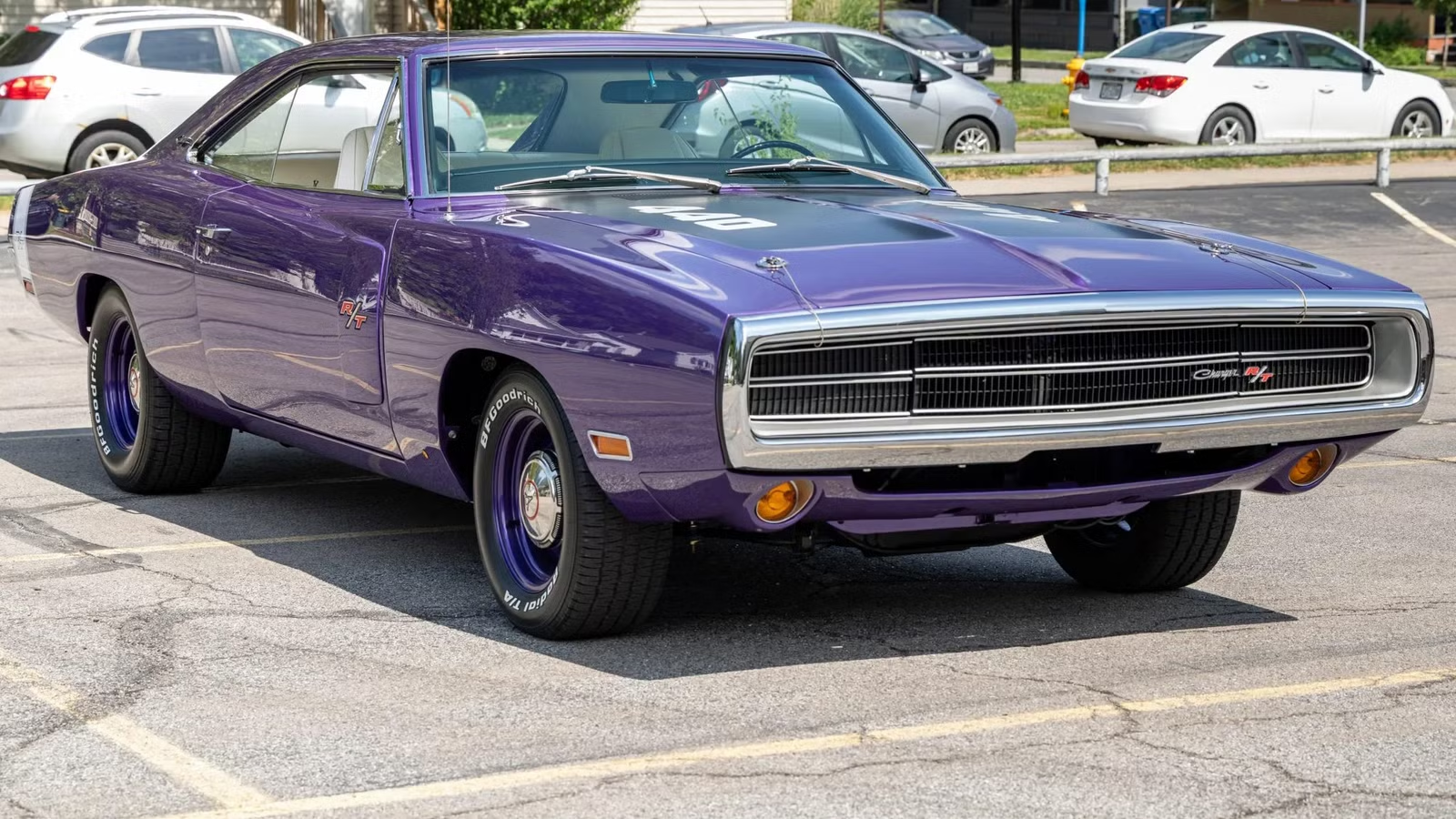
Somewhere in the muscle-car hierarchy of 1970, the Plymouth Sport Fury GT got lost. Road Runner got the posters. GTX got the magazine covers. The Sport Fury GT got overlooked — and for a car equipped with the rare 440 Six Pack triple-carburetor setup, that obscurity only deepened over the decades. This past weekend, one of those forgotten machines broke a 45-year silence: the engine turned over, caught, and the car moved under its own power for the first time since the early 1980s.

The significance here isn’t just sentimental. A 1970 Sport Fury GT with the 6-BBL option is a genuinely rare combination — a full-size Mopar muscle car wearing a low-production factory engine option that most collectors associate with the B-body Road Runner and GTX. Finding one intact after four-and-a-half decades in storage is one thing. Finding one that still runs is something else entirely.
The Sport Fury GT: Mopar’s Forgotten Full-Size Muscle Car
Plymouth‘s 1970 lineup was stacked. The Road Runner carried the budget muscle banner. The GTX handled the premium end. Somewhere above both of them in the price sheet sat the Sport Fury GT — a full-size muscle car built on the C-body platform, aimed at buyers who wanted serious performance without the B-body’s stripped-down character.

The Sport Fury GT came standard with bucket seats, a performance hood, and a 440 cubic-inch V8 breathing through a single four-barrel carburetor. It was a legitimate muscle car by any measure of the era. But it competed in a segment that didn’t quite exist in the public imagination — too large to be a pony car, too performance-focused to be a luxury cruiser, and too expensive to be an everyman muscle machine. Plymouth sold the Sport Fury GT in modest numbers, and it never developed the cult following that the Road Runner and GTX earned. That low production is exactly what makes survivors — especially optioned-out survivors — so significant today.
Why the 6-BBL Option Changes Everything

The standard 440 four-barrel in a 1970 Sport Fury GT was already a serious piece of hardware, rated at 375 horsepower. The 440 Six Pack — Mopar’s term for the triple two-barrel carburetor setup — pushed that number to 390 horsepower in factory trim, with the real-world output generally understood to be higher than the conservative factory rating suggested.
The Six Pack setup used three Holley two-barrel carburetors on an Edelbrock aluminum intake manifold. At light throttle, only the center carb fed the engine; the outboard pair opened under hard acceleration, flooding the 440 with enough fuel and air to make the car genuinely fast in a straight line. It was the same basic architecture that powered the ‘Cuda 440+6 and the Road Runner 440+6 — but on a full-size Sport Fury GT, it’s a combination that almost nobody was looking for in 1970, which is why so few were ordered. Exact production figures for the 6-BBL Sport Fury GT specifically are not confirmed in available sources, but the option’s rarity on the C-body platform is well established among Mopar historians. What’s certain is that this carburetor setup, on this model, in this model year, puts the car in a category that serious collectors treat as a legitimate unicorn.
Forty-Five Years in Storage — and the Engine Still Runs

Long-term storage is usually an engine’s worst enemy. Fuel varnishes. Seals dry out. Cylinders rust. Carburetors gum up. The fact that this Sport Fury GT’s 440 Six Pack turned over and ran after sitting since the early 1980s says something meaningful about how the car was stored — and about the durability of Mopar’s big-block architecture.
The 440 was built for longevity. It’s a large-displacement, low-revving engine with substantial bearing surfaces and a robust bottom end. Properly stored — drained of old fuel, kept out of standing water, away from extreme temperature swings — a 440 can sit for decades and come back to life with the right preparation. Whether this car received careful preservation or simply got lucky with its storage conditions isn’t confirmed from available reporting, but the outcome speaks for itself: the engine runs. That’s the headline, and it’s a significant one for anyone who’s watched a promising barn find get torn down only to find a seized block underneath.
What This Car Is Worth to Collectors

Collector value for a 1970 Sport Fury GT with the 440 Six Pack comes down to a handful of compounding factors, each one adding to the last. The Sport Fury GT is a low-production nameplate. The 6-BBL option is rare on the C-body platform. The car has survived 45 years intact. And — critically — it runs.
Running, numbers-matching muscle cars with rare factory options command serious premiums over non-running examples, even when the non-runner is cosmetically superior. A car that moves under its own power has already cleared the most anxiety-inducing hurdle in the barn-find acquisition process. For a Mopar collector hunting a legitimate 6-BBL car, the combination of model rarity and confirmed mechanical survival narrows the field considerably. Specific auction valuations for this car aren’t available from current reporting, but comparable rare-option Mopar survivors in running condition have consistently brought strong results at collector auctions — and a Sport Fury GT with factory Six Pack equipment occupies a tier that most Road Runner and GTX buyers will never encounter.
The Sport Fury GT never got its due in 1970, and it’s been waiting ever since. A 45-year nap with a Six Pack under the hood, and it still wakes up. Mopar gearheads know what that means — let’s hope this one gets the recognition it earned half a century ago.

Related posts



Latest Post



No Comments