The Performance Coupe That Makes Expensive Sports Cars Hard To Justify
7 minutes reading
Wednesday, 12 Aug 2026 18:00 0 73 autotech
Over the past decade, the automotive industry has undergone a quiet financial shift. Performance cars that were once the accessible dream of weekend racers and passionate backroad drivers have steadily drifted into six-figure territory. What was once considered the price of admission for a genuine supercar now routinely buys you an “entry-level” exotic or a heavily optioned high-tier sports car. Yet, as price tags soar past the $100,000 mark, a fundamental question emerges: does paying double the premium actually yield double the driving thrill?
In the modern sports car landscape, performance metrics have reached absurd heights. Zero-to-sixty times under three seconds and top speeds exceeding 190 mph look incredible on spec sheets, but they come at an astronomical cost. For the vast majority of enthusiasts, those extra tenths of a second are almost entirely unusable outside of a strictly regulated drag strip.
When you step up to elite exotics, you aren’t just paying for speed; you are paying for carbon-fiber monocoques, complex active aerodynamics, and badge prestige. On public roads and even during open track days, the functional gap between a six-figure exotic and a properly tuned compact coupe shrinks to near zero. You quickly hit a wall where every additional $10,000 spent buys marginal gains in real-world enjoyment.
The Search For The Pure Enthusiast Recipe
Front 3/4 shot of 2026 Aston Martin Vantage Coupe parkedAston Martin
What truly makes a car fun to drive isn’t raw horsepower alone; it’s connection. The classic enthusiast formula relies on three fundamental ingredients: rear-wheel-drive balance, tactile engagement, and a manageable footprint. A traditional front-engine, rear-wheel-drive layout provides communicative chassis dynamics.
Pair that balanced chassis with weighted steering and a crisp gearshift, then package it in dimensions compact enough to slice down narrow, winding roads without feeling like you’re maneuvering a wide-body land yacht. In a market where the goalposts keep moving, the car that checks all three boxes at under $70,000 shouldn’t exist — and yet it does.
Unveiling The Giant-Killer: The BMW M2
S58 Heartbeat And The Sacred Manual Transmission
2027 BMW M2 xDrive front 3/4 shotBMW
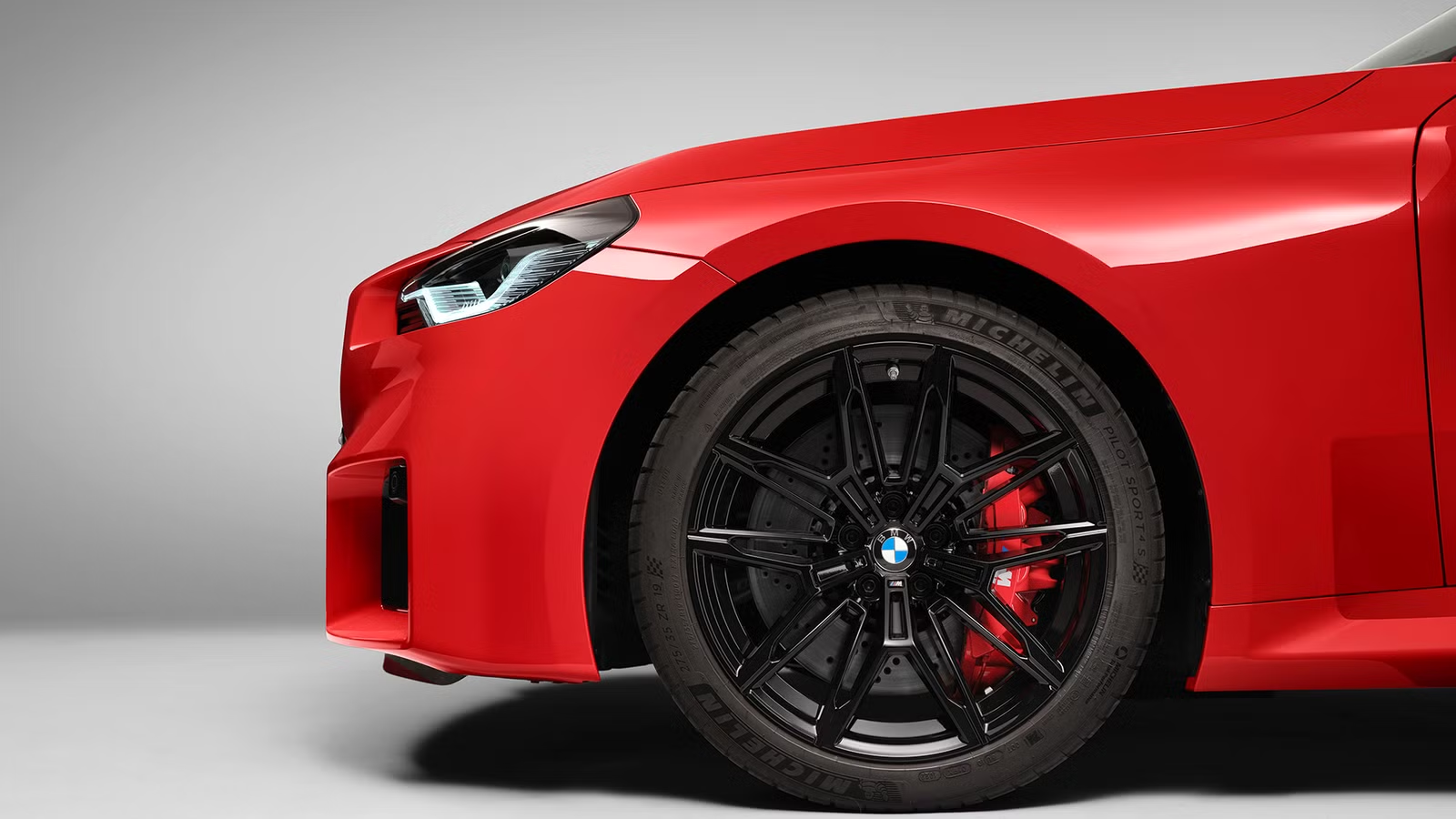
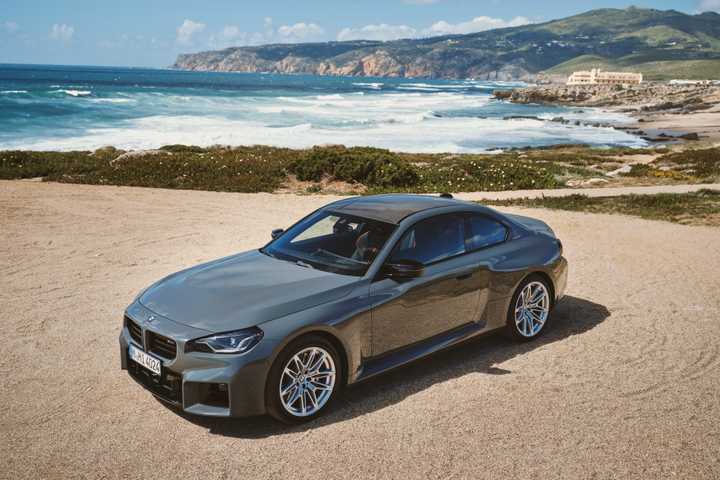
The secret weapon that makes modern expensive sports cars so hard to justify is the BMW M2. Nestled beneath its aggressively sculpted hood is the full-bore S58 twin-turbocharged 3.0-liter inline-six engine.
Although this high-revving power unit is fundamentally the same as the S58O found in the M3 and M4, the S58T is a software-detuned version of the 3.0-liter six-pot built for the M2 to prevent it from outperforming its larger, more expensive stablemates. However, for the latest model updates, BMW raised the standard S58 output in the G87 M2 to 473 horsepower, putting it on a near-identical footing with the M3 and M4 base models.
2027 BMW M2 xDriveBMW
What truly sets the M2 apart in an increasingly automated market is its commitment to driver engagement. While most competitors have completely abandoned clutch pedals in favor of dual-clutch transmissions, BMW continues to offer the M2 with a six-speed manual transmission alongside its lightning-fast eight-speed M Steptronic automatic gearbox. The manual option gives drivers full agency over the engine’s powerband, preserving a tactile connection that money simply cannot buy in higher price brackets.
2024 G87 M2 Track Day ShotBMW
Unlike converted commuter cars fitted with stiffer springs, the M2 utilizes genuine track-focused hardware from the ground up. At its core is an electronically controlled Active M Differential that dynamically manages lockup from zero to 100 percent for surgical corner exits or controlled drifts, paired with standard Adaptive M Suspension that transitions from compliant street cruising to razor-sharp track stiffness at the touch of a button. Anchoring it all is extensive underbody and engine bay structural bracing, ensuring direct turn-in and minimal body roll even under heavy cornering loads.
Despite all this motorsport DNA, the M2 retains a usable trunk, functional rear seats for short trips, and a high-tech cabin equipped with modern driver-assistance features. The M2 makes a compelling case on paper — but a $71,000 mid-engine Corvette V8 says otherwise. Here’s where the argument gets interesting.
How The BMW M2 Stacks Up Against Mid-Engine Rivals
The Mid-Engine Threat: Chevrolet Corvette Stingray
2026 Chevrolet Corvette Stingray top down viewChevrolet
A front 3/4 action shot of a sliding Orange 2023 BMW M2 Coupe.BMW
When evaluating top-tier performance value, the 2026 Chevrolet Corvette Stingray is the inescapable American benchmark. With its mid-engine layout and naturally aspirated 6.2-liter LT2 V8 pushing 495 horsepower, the Stingray delivers supercar aesthetics and sprint times. It trades the classic German front-engine, rear-wheel-drive precision of the M2 for a broad-shouldered, mid-engine exotic footprint.
However, where the Corvette focuses heavily on absolute lap times and mid-engine traction, the M2 strikes back with a more intimate, tossable chassis and the option of a true manual transmission — something the dual-clutch-only Corvette completely lacks.
Value Vs. Status: Outperforming Exotics At Half The Cost
2025 BMW M2 front, left exterior photoBMW Group
When evaluating real-world cost, starting MSRPs place both cars in a distinct tier: the 2026 BMW M2 starts at around $69,000, while a base Chevrolet Corvette Stingray comes in at roughly $71,000. When compared to true European mid-engine exotics or upper-tier sports cars, such as the Porsche 911 Carrera or Aston Martin Vantage, which easily command $110,000 to $160,000+, both the M2 and Stingray prove that you can achieve 90 percent of the thrill and track capability at half the price. The M2, in particular, proves that paying six figures often buys brand prestige and minor status points rather than tangible driving joy.
Not Ready For The M2? The M240i xDrive Delivers 90 Percent Of The Fun For $13,000 Less
The All-Weather Step Down: BMW M240i xDrive
2025 BMW M240i xDrive rear 3/4 exterior shotBMW
For drivers who want the aggressive silhouette and high performance of a 2 Series coupe but need year-round, all-weather practicality, the BMW M240i xDrive isn’t a compromise; it’s a premier daily driver in its own right that offers the duality of a sports car and comfortable commuter.
Swapping out the full-fat S58 with the robust B58 3.0-liter inline-six pushing 386 horsepower, the M240i xDrive launches with ruthless rear-biased traction. Starting at $55,600, it delivers a slightly softer suspension tuning, exceptional fuel economy, and all-wheel-drive confidence, making it arguably the more effortless real-world daily commuter.
M2 Vs. M240i xDrive: A Side-By-Side Guide To Choosing Your BMW
A static rear shot of a gray BMW M2 parked in the desert.BMW
While both the M2 and M240i bear the spinning propeller roundel on the hood and trunk, each of these sports coupes offers a vastly different driving experience. Choose the BMW M2 if you demand maximum chassis feedback, plan to attend frequent track days, insist on three pedals, or want a true “M” engine with 473 horsepower. Choose the BMW M240i xDrive if you live in a harsh winter climate, prefer point-and-shoot all-wheel-drive launch capability, and want maximum performance comfort for daily commuting without the firm edge of a track-honed chassis.
Why The BMW M2 Is The Most Important Performance Car Of Its Generation
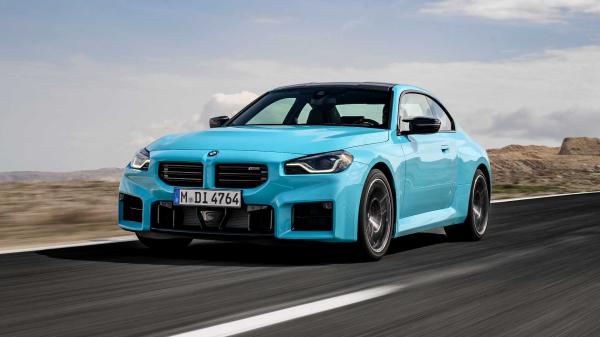
2027 BMW M2 xDrive front 3/4 shotBMW
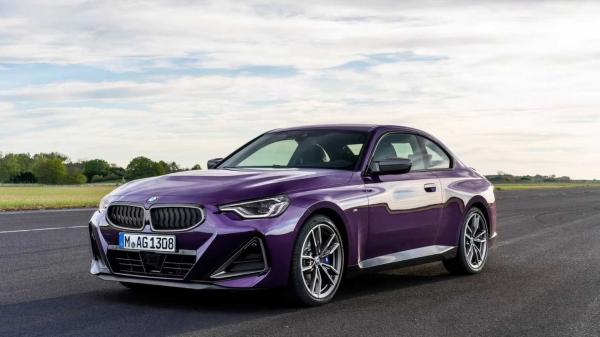
2026 BMW 240i front shotBMW
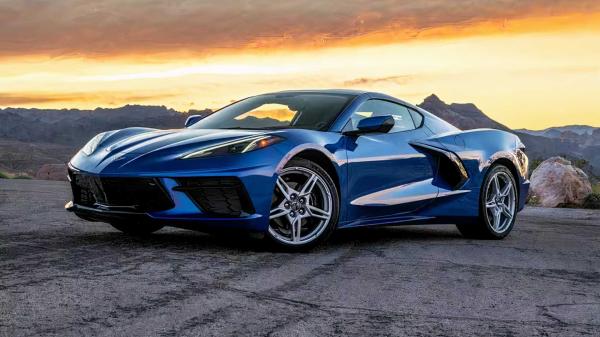
Low angle 3/4 front shot of 2024 Chevrolet Corvette Stingray in blue Posing in desertChevrolet
The modern sports car market may be pushing prices toward the stratosphere, but vehicles like the BMW M2 serve as a crucial reality check that true driver’s cars don’t need to cost upwards of $100,000. By housing a legit 473-horsepower S58 powertrain, standard rear-wheel-drive dynamics, and an available manual transmission inside an everyday-usable frame, it captures the raw spirit of motorsport without requiring a six-figure investment.
You don’t need to spend $120,000 or compromise on real-world usability to own a genuine legend. Whether you opt for the raw, track-focused precision of the M2, the mid-engine V8 thunder of a Corvette Stingray, or the all-weather punch of the M240i xDrive, modern automotive engineering proves that the pure driving thrill is still alive and surprisingly affordable.









No Comments