
The 300-HP Acura That Delivered Ferrari-Style Engineering For Family-Car Money
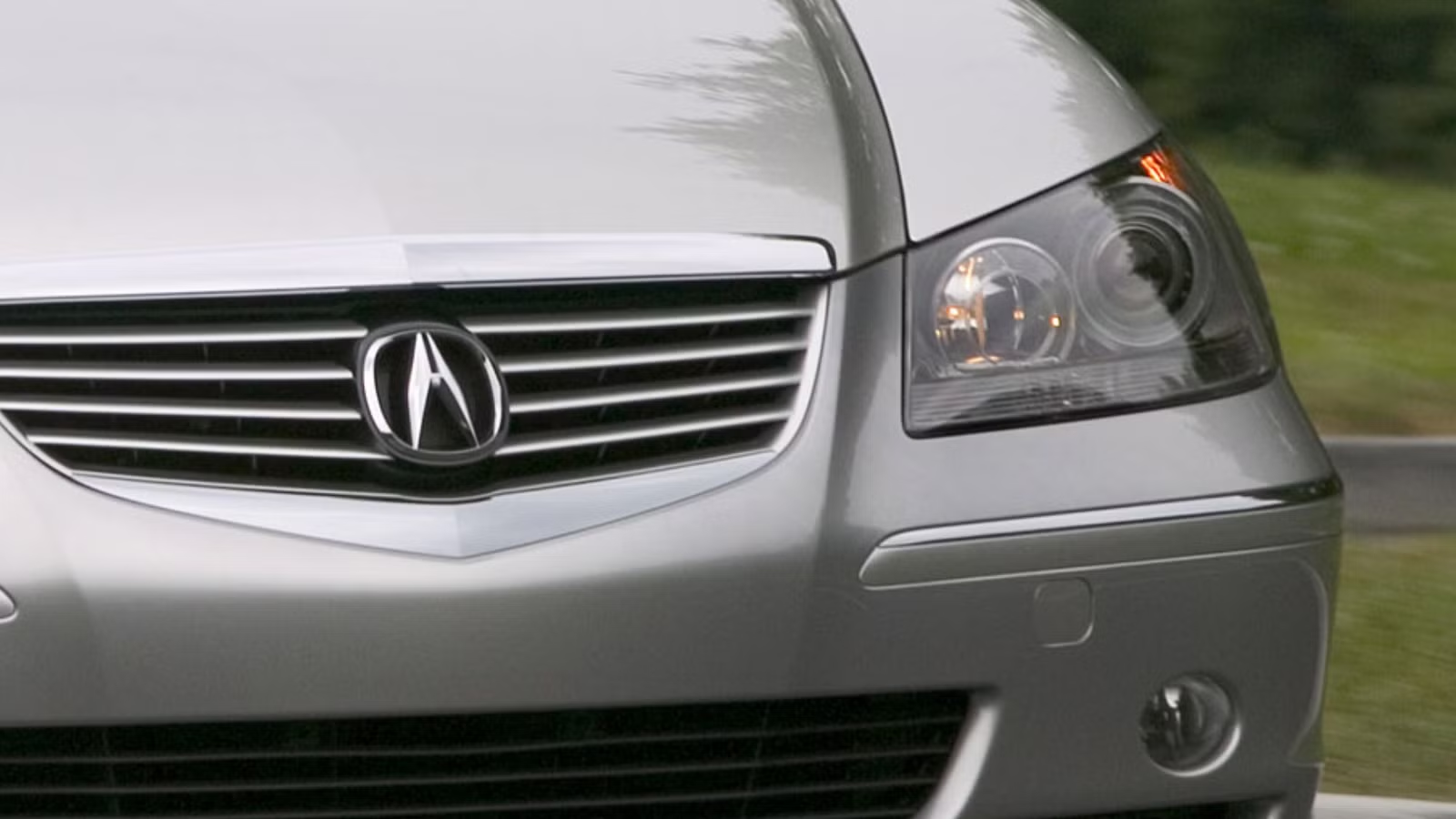
By the mid-2000s, full-sized luxury sedans were beginning to lose their audience to increasingly popular SUVs. While automakers continued to roll out new iterations of their flagship sedans, packing them with cutting-edge technology and state-of-the-art performance as usual, they ultimately found themselves presenting their executive sedans to an empty room.

Luxury automakers eventually adjusted to the rapidly changing market, with several brands choosing to discontinue their large luxury sedan offerings entirely. But in the midst of this sudden SUV-centric transition, an entire generation of flagship sedans flew under the radar with pioneering technology that deserved far more attention than they received.
Honda’s Sporty Take on the Luxury Game
Upon its introduction in the late 1980s, Acura immediately established itself with a markedly different philosophy than its domestic rivals. In order to steal a proper slice of the luxury pie chart from Lexus, Honda’s new luxury marque had to set out to carve a distinct niche for itself. Rather than building cushy land yachts designed to soak up the road’s imperfections, Acura’s mission right out of the gate was solely to engage the driver.

As a result, Acura was pitted directly against foreign competitors from Germany, which were already well versed in delivering a top-notch performance luxury experience. However, Honda knew better than to merely copy the front-engine, rear-biased layout that was already credited with delivering class-leading handling from the lineups of BMW and Mercedes-Benz.
Instead, each vehicle that wore the Acura badge was tasked with outclassing the Europeans, rather than simply mimicking them. To achieve the driver-centric experience in a completely distinct way, Acura engineers carefully blended the rev-happy, rock-solid engineering from Honda with more refined cabins and state-of-the-art technology. One full-sized sedan in particular managed to master this blueprint, all while hiding its remarkable handling prowess and shocking power output within the body of a modest full-sized sedan.
The Acura RL: A V6-Powered Wolf In Sheep’s Clothing

In late 2004, a soft and svelte executive sedan broke cover at the New York Auto Show. Originating from the bloodline of the Legend, one of Acura’s highly acclaimed debut models that entered the scene in the late 1980s, the second-generation RL continued the flagship sedan lineage for another generation in spite of rising SUV demand. While it ultimately did not dominate sales charts during its eight-year tenure, this iteration of the RL still managed to make its mark in Acura’s lineup.
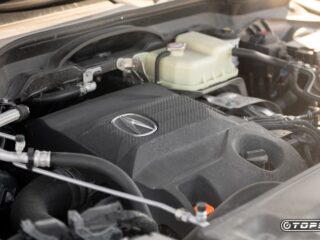
Arguably, the RL’s greatest skill was hiding secrets beneath its soft, unassuming sheet metal. The most precious secret of them all was a 3.7-liter, transverse-mounted V6 engine that took residence under the hood. With a potent 300 hp and 271 lb-ft of torque being delivered to the wheels through a five-speed automatic transmission, this powertrain was truly no slouch. The RL also brought the long-overdue addition of VTEC to the engine bay, a first for a full-sized Acura sedan. The technology was added to both the intake and exhaust systems, allowing for a much smoother idle and significantly more high-rpm pulling power than the first-generation RL.
The RL also implemented an array of cutting-edge technology features that few are aware of. The sedan featured early iterations of voice recognition and keyless entry, adaptive cruise control with a preset following distance, and headlights that automatically pivoted around corners. The sedan also introduced an impressive active noise cancellation system, which used microphones in the headliner to measure road and engine frequencies, countering them with sound waves played through the audio system.
The Glorious Debut of Super Handling All-Wheel Drive

Acura’s state-of-the-art Super Handling All-Wheel Drive (SH-AWD) system has become a staple of the brand’s lineup today, but few are aware that the technology made its world debut on the second-generation RL. Before this system arrived, most all-wheel drive systems were designed to prevent slippage on ice or wet pavement by distributing power from the front to the rear wheels when traction was lost. Acura flipped this concept on its head by engineering a system designed for more precise cornering and high-speed agility in all conditions, distributing front-to-rear power separately on the left and right sets of wheels.
The magic of SH-AWD lies in its groundbreaking torque vectoring capabilities. The system continuously tracks the vehicle’s individual wheel speeds, steering angle, throttle position, and lateral G-force to deliver the ideal torque distribution at all times. When accelerating through a sharp corner, the system can direct up to one hundred percent of available rear torque to the outside rear wheel, while also spinning that wheel slightly faster than the others to avoid understeer. The tail of the car is physically rotated around the turn as a result, which allows for shockingly precise cornering, even in a large executive sedan.

All examples of the Acura RL came equipped with the cutting-edge SH-AWD system as standard, representing a massive leap forward from the sedan’s predecessor, which was strictly limited to a front-wheel drive setup. This was largely owing to the fact that the second-generation RL was initially offered in a single, fully-loaded trim level. Even though the model line was eventually split into multiple trim levels for the 2007 and 2008 model years, SH-AWD remained fully standard across the board, unlike many later Acura models that would reserve the technology for pricier trim levels.
A Sleeper Sedan That Prioritizes Safety and Reliability

Beyond its outstanding powertrain and cornering prowess, the strengths of the second-generation RL extended to its frame. Acura integrated its revolutionary “Advanced Compatibility Engineering” frame into the sedan’s chassis, which aimed to redirect crash force away from the passenger area through an array of load-bearing channels surrounding the cabin. This design not only protected occupants in the event of a collision, but Acura also claimed that it would reduce structural damage to smaller vehicles.
The RL also inherited robust build quality from its Honda relatives. Its 3.7-liter V6 falls under the company’s J-series lineup of engines, which has developed a reputation for reaching mileages well beyond the six-figure mark with routine maintenance. In addition, its SH-AWD system is known to be heavily overbuilt in early models, and the sedan’s five-speed automatic transmission has proven to be highly dependable over time.
Why The RL Is an Outstanding Bargain Today

The second-generation Acura RL entered showroom floors at a very unfortunate time. With increasingly popular SUVs leaving very little room in the spotlight for their sedan counterparts, full-sized executive sedans like the RL failed to claim market share, no matter how technologically advanced they were.
As a result of its largely forgotten status, the RL has faced an exceedingly steep depreciation curve in the used market. While a brand-new RL would have set buyers back nearly $50,000 when new (equivalent to roughly $85,000 today), pricing has now settled at around or below $20,000. Values appear to remain on the low side regardless of mileage, as evidenced by one particular example from the 2005 model year that sold for $15,750, even with a relatively modest 56,000 miles on the odometer.
The second-generation RL is one of the more overlooked bargains in the used luxury sedan market. Those who find themselves behind the wheel get a potent and dependable V6, outstanding SH-AWD cornering performance, and classic Honda overengineering bundled into an understated package that still flies under the radar today.
Sources: Acura, Bring a Trailer

Related posts
Latest Post


No Comments