
The Ford Mustang And Chevy Camaro That Turned 302 V8s Into An SCCA War
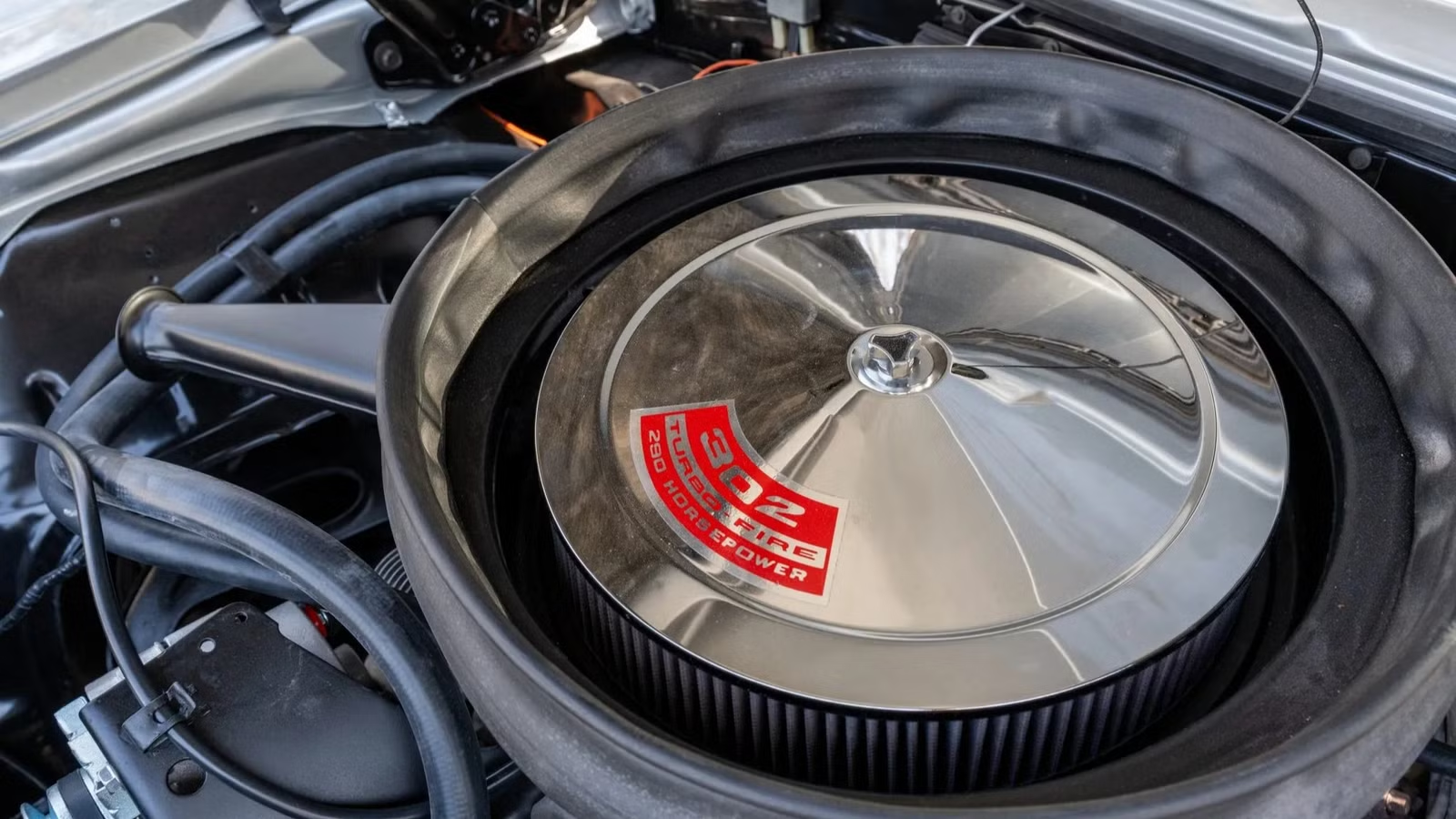
There is a classic battle between Ford and Chevrolet that is more intense than today’s modern F-150 vs. Silverado 1500 rivalry. Both automakers were pushing the limits of small-block V8s for racing supremacy with 302 engines. They wanted to take the Trans-Am Series by storm with asphalt-shaking power, smoking tires, and the fastest lap times. Both engines helped iconic cars claim incredible racing victories during the peak muscle car era. However, decades have passed, and the debate over which engine is better continues.
The Ford 302 Was Built To Compete

In the 1960s, automakers wanted to take advantage of the win-on-Sunday, sell-on-Monday formula, which meant taking first place in competitive series like Trans-Am racing. The Ford 302 small-block V8 arrived in 1968 to meet SCCA and Le Mans displacement caps. Engine sizes were limited to 302 cubic inches (5.0 liters).
As a result, Ford stroked its existing 289 engine to max out its limits with a longer 3.00-inch stroke, and the standard 302 Windsor was born. It provides 220 to 230 horsepower and 310 lb-ft of torque with the two-barrel and four-barrel configurations. Also, it was a mass-produced engine used in a variety of cars and trucks like the F-150 and Mustang.

But to tackle the Chevy Camaro Z28, it needed more juice. So a high-revving variant was created and placed in the famous 1969 Ford Mustang Boss 302. It gained four-bolt main caps, a forged steel crankshaft, solid lifters, a high-rise aluminum intake, and a 780-CFM Holley four-barrel carburetor to boost its power to 290 hp and 290 lb-ft of torque.

This setup helps the Boss 302 fly from 0 to 60 mph in about 6.0 seconds and complete a quarter mile in roughly 14.3 seconds at 101.5 mph. It also features a top speed of around 133 miles per hour. The pony car was prepared to give the Camaro Z28 a serious run for its racing crown.
The Chevy 302 Was Born To Race

Chevrolet had a bit of a head start on developing its 302 cubic inch small-block V8 engine for SCCA Trans-Am racing as it arrived in 1967. It was specifically designed to carry the Chevy Camaro to victory and was developed by combining the 4.00-inch bore from the 327 small-block with a 3.00-inch stroke crankshaft from its existing 283 small-block.
In 1968, the engine gained a stronger long-journal block with 2.45-inch mains and four-bolt main caps. Then, in 1969, it received the official DZ 302 stamp and enhanced dual valve springs with dampers to optimize high-RPM valve control. This legendary engine remained exclusive to the first-generation Camaro Z/28.

It churns out 290 hp and 290 lb-ft of torque. However, both of these 302 engines are believed to have much higher outputs. The Chevy 302 may actually deliver 350 to over 375 hp, while testing and dyno runs put the Ford Mustang Boss 302 closer to about 350 to 400 hp. They are believed to be purposely underrated to please insurance companies and avoid higher premiums.
The DZ 302 allows the Camaro to accelerate from 0 to 60 mph in roughly 6.7 seconds and cover a quarter mile in about 14.3 seconds at 101.35 mph. This racecar has a top speed of around 135 mph. It was so competitive and close to the Boss 302 that both cars were considered to be the “sons of Trans-Am.”
Ford 302 VS Chevy 302

Keep in mind that the Ford 302 engine arrived later than the Chevy 302 V8. So, Chevy had more time to win races, and the automaker did walk away with more individual wins during the prime head-to-head matchups. The Camaro Z/28 won back-to-back manufacturer’s championships in 1968 and 1969.
It won 10 out of 13 races in the 1968 season and six during 1969. Then the Ford Mustang Boss 302 struck back by taking the manufacturer’s title in 1970. Driver Parnelli Jones helped Ford secure five races in 1970, and Donohue got three victories for Chevrolet. But Ford pulled out in 1971 as interest in sedans started fading and costs increased.
Some say the Ford 302 Windsor is the better engine because it is lighter, weighing in at 450 pounds compared to 525 to 550 pounds. Also, the Windsor has more low-end tractability for its street performance, hydraulic lifters, and tons of aftermarket support from decades of production. But the DZ302 has a strong midrange power band, and the Ford 302 has massive intake ports that impact low-end air velocity.

The Chevy 302 is durable, with heavy-duty forged internals and solid-lifter performance architecture, but can be considered unforgiving on the street due to its sensitive need for high-octane or racing fuel. Also, the Ford V8 is prone to overheating in stop-and-go traffic. Both are designed to scream past 6,000 to 8,000 RPM and complete their goal of achieving racing dominance.
Which 302 Engine Do Collectors Want More?

Both of these rare 302 small-block V8 engines have a historic racing legacy, making them highly collectible. About 8,900 first-generation Ford Boss 302 V8 engines were produced between 1969 and 1970. On their own, surviving engines are worth about $2,200 to over $25,000 based on condition and whether they have been fully restored.
There were about 20,302 Chevy DZ 302 engines made in 1969. But 28,201 302 V8 engines were produced between 1967 and 1969. On its own, the engine is valued at between $8,000 and $35,000 depending on condition and whether it has been fully restored. It’s unclear how many engines from both automakers survive today.
If the engines are found in their iconic racecars, then the value skyrockets. For example, the 1969 Chevy Camaro Z/28 DZ 302 models are worth between $70,000 and over $160,000. Models with the Muncie four-speed manual transmission or the available Rally Sport (RS) packages are typically worth more.

Then the 1969 Ford Mustang Boss 302 can be found for between $10,000 and over $178,000. Models with the available Shaker hood scoop and Traction-Lok rear axle command higher premiums. So the Boss 302 is more valuable than the Camaro DZ302, but the DZ302 engine is worth more on its own. Both engines have significant victories under their belts, making them both exceptional options.
Source: How Stuff Works, Chevrolet, Ford, MotorTrend, YouTube – Richard Holdener, Classic

Related posts




Latest Post


No Comments