
The Honda Touring Bike That Feels Surprisingly Manageable
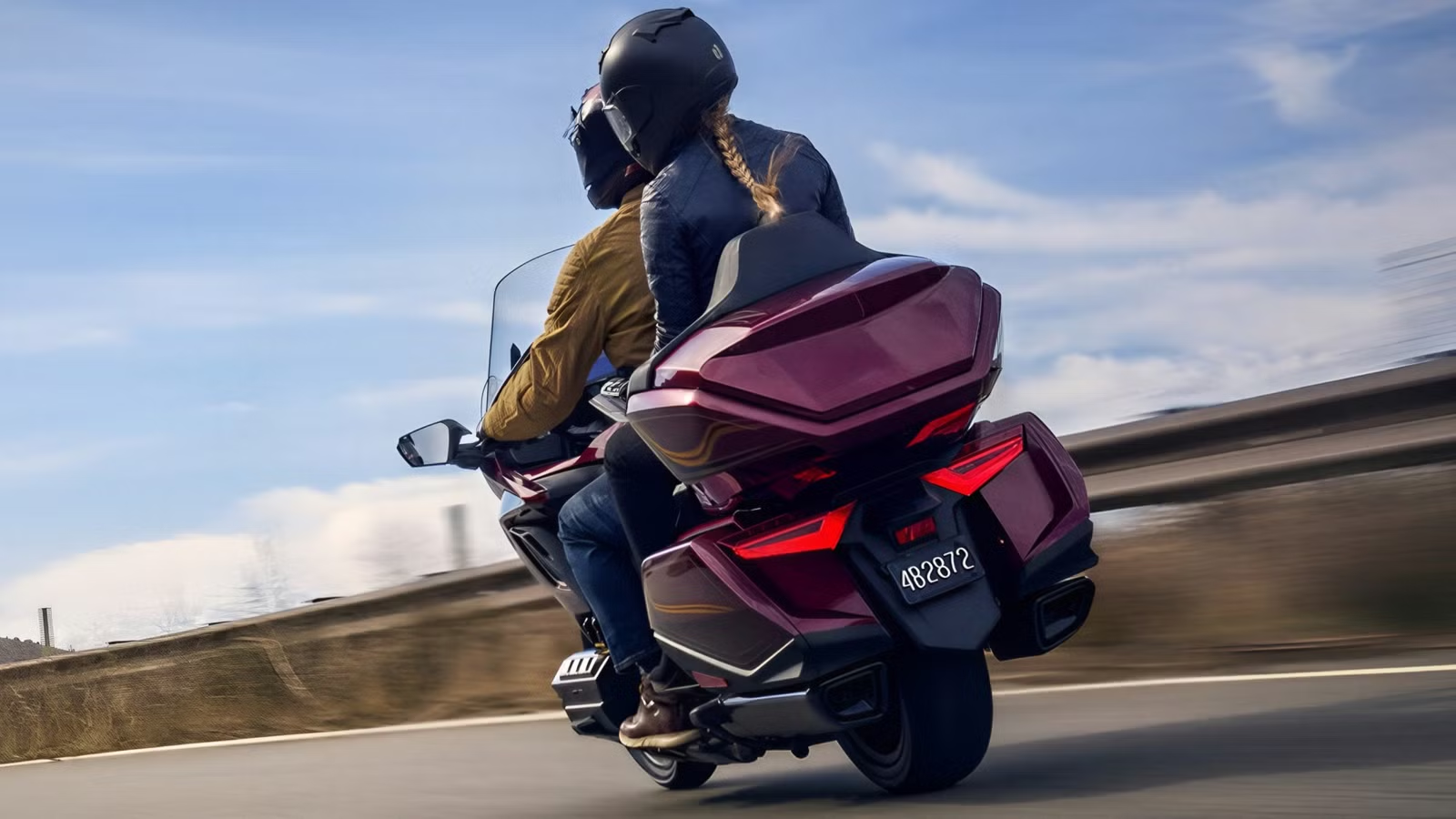
Touring motorcycles have always carried this reputation of unmatched comfort, effortless long-distance capability, and enough luggage capacity to make packing for a week feel like light work. The tradeoff, though, has always been size. These machines are massive, intimidating, and heavy enough to make low-speed maneuvers feel like an event that needs to be prepared for.

This perception of touring and grand touring motorcycles keeps many riders away from the touring segment, even if they dream of crossing state lines on a sofa. But modern engineering, slowly but surely, seems to have shifted. Touring motorcycles these days are a lot more manageable when compared to their older counterparts.
A Touring Philosophy Built Around Confidence
Honda’s Obsession With Refinement Over Specs Is Why Touring Riders Trust It
Honda’s reputation wasn’t built overnight. It comes from decades of producing motorcycles that earned the trust of commuters, weekend warriors, adventurers, and even long-distance travelers. The company has developed a sort of habit of prioritizing engineering refinement over flashy specifications, and this holds across every category. Their best bikes are also some of their most reliable, if word-of-mouth (which is often more reliable than company brochures) is to be believed.

But touring bikes demand slightly higher standards than that. You expect your bike to ferry you hundreds of miles from home without drama, operate in changing environments in the course of a single day, and provide you with the best luxury you can get on a motorcycle. Take away two wheels and a roof, and touring motorcycles need to operate almost like cars, with the best technology, the best seats, and the best wind protection you can get.
Why 800 Pounds Doesn’t Have To Feel Like 800 Pounds

Now, large touring motorcycles often cross the 800-pound mark, almost a third the weight of a small car. If you think it sounds intimidating, that’s because it is. Walking one backward out of a parking spot or making tight U-turns feels like you need help from at least one other person. But weight is only part of the story.
Some lighter motorcycles feel awkward at slow speeds, while heavier bikes can blend into the road once they get moving. Manufacturers have realized that the weight needs to be managed at any kind of speed, whether it’s a reverse gear in the parking lot, balance on the highway, or even a walking mode for heavy traffic.
The Honda Gold Wing Proves Size Isn’t Everything
Honda’s Weight Distribution Strategy Makes The Gold Wing Feel Smaller Than Its Specs Suggest

The Honda Gold Wing has spent nearly half a century evolving alongside touring riders. Honda has consistently refined the motorcycle around one goal: making long-distance riding feel easier. Looking at it from a distance, it appears every bit the heavyweight luxury machine its reputation suggests, but Honda’s engineering focuses heavily on weight distribution rather than simply reducing pounds.
Mass is kept low thanks to the flat-six engine layout and double-wishbone suspension, which separates steering forces from suspension movement. The ergonomics are carefully designed to allow you to hold the bike in its optimal position without fatiguing you, regardless of whether you’re riding or walking the bike. It also comes remarkably complete straight from the factory. Go for the Tour variant, and you even get a large trunk in the back.
The Gold Wing’s Flat-Six Engine Is Unlike Anything Else

At the heart of the Gold Wing sits one of motorcycling’s most distinctive engines: a 1,833 cc liquid-cooled flat-six engine that produces 124 horsepower and 125 pound-feet of torque. That seems somewhat tame for a six-cylinder engine, but the result is smooth, effortless performance rather than explosive acceleration or outright speed. The opposed-cylinder layout also naturally produces balanced vibrations, which makes the engine feel exceptionally refined, and that low center of gravity means the bike feels considerably more manageable to maneuver.
Now, Honda also pairs this engine with a seven-speed DCT transmission as an option. It shifts gears automatically, moves into and out of neutral automatically, and the paddles on the handlebar give you the option to select your own gear as well. This means you can have both feet planted on the ground no matter whether you’re taking off or just crawling through traffic.
The Aluminum Chassis Is Designed Around Stability

The bike’s handling begins with a purpose-built aluminum twin-spar frame that prioritizes rigidity through a lightweight material, but its defining feature is the double-wishbone front suspension. Unlike conventional forks, this design separates steering inputs from the suspension movement.
Front-end dive is reduced drastically, allowing for better steering precision. It also allows Honda to move the engine farther forward for better mass centralization without compromising the wheelbase. Speaking of which, the 66.9 inches between the two axles allows for remarkable straight-line stability.

At the rear, a Pro-Link monoshock provides spring with electronic preload adjustability, tailoring it to yourself, your pillion, and your luggage. Braking comes from dual 320 mm discs up front and a 316 mm disc at the rear. These spin on an 18/16-inch front-rear combo of rims.
The wide handlebars also serve a purpose, giving you excellent leverage in low-speed situations. On this touring bike, comfort is not the only thing Honda considered. Honda put considerable work into manageability, so that the rider expends less effort while operating the bike.
Everything Long-Distance Riders Need Comes Standard — No Accessories Tab Required
A 29.3-Inch Seat, Integrated Luggage, And Wind Protection That Ship Before Customizing

Over the last five decades, the Gold Wing’s design has evolved dramatically. Older bikes seemed like big, burly cruisers, while the newer generation looks sleeker and more athletic. But this design choice was made to contribute to aerodynamics. Nothing’s a bigger turnoff than windblast at 80 miles an hour.
The Gold Wing’s panels have been designed to not only redirect this wind around the rider, but towards cooling, ventilation, and weather protection. A low 29.3-inch seat height means even shorter riders can put both their feet down, and there are ample amounts of seating space for both you and your pillion. Storage is taken care of with integrated saddlebags and a trunk in the Tour variant. And remember, all of this comes stock from the factory, and you don’t have to run to the accessories tab just to see what you need for a long ride (unlike some other brands).
The Gold Wing’s Walking Mode And Reverse System Solve The Most Stressful Part Of Riding A Heavy Bike

Technology is always a priority when you want car-levels of luxury. Honda gives the Gold Wing a large TFT instrument cluster that provides everything from vehicle information to navigation to audio control. Apple CarPlay and Android Auto have been integrated into the bike for smartphone functionality.
Electronic cruise control reduces wrist fatigue, and riding modes allow you to tailor your bike’s performance to the situation. One of the best bits of tech on a Gold Wing is the reverse system and walking mode function. You know what reverse means, but the walking mode allows you to crawl with your bike in a crowded parking lot or in traffic without accidentally ham-fisting the throttle and rocketing into the object or person in front of you.
The Honda Gold Wing Is A Touring Motorcycle That Shrinks Around The Rider
At $25,500, The Gold Wing Delivers An Engineering Achievement That Earns Every Dollar

The Honda Gold Wing remains one of the finest examples of what modern touring engineering can accomplish. It combines legendary Honda reliability with a remarkably refined engine, advanced chassis, and premium comfort. It is a motorcycle that gradually disappears beneath the rider.
The intimidating dimensions give way to smooth controls, balanced steering, and predictable responses. The hallmark of thoughtful engineering is that instead of constantly reminding riders that they’re riding a big, burly machine, it fades away entirely, letting the rider enjoy the moment as it passes by.
Source: Honda Powersports

Related posts
Latest Post


No Comments