
The Motorcycle Riders Wish They’d Bought Before Summer Started
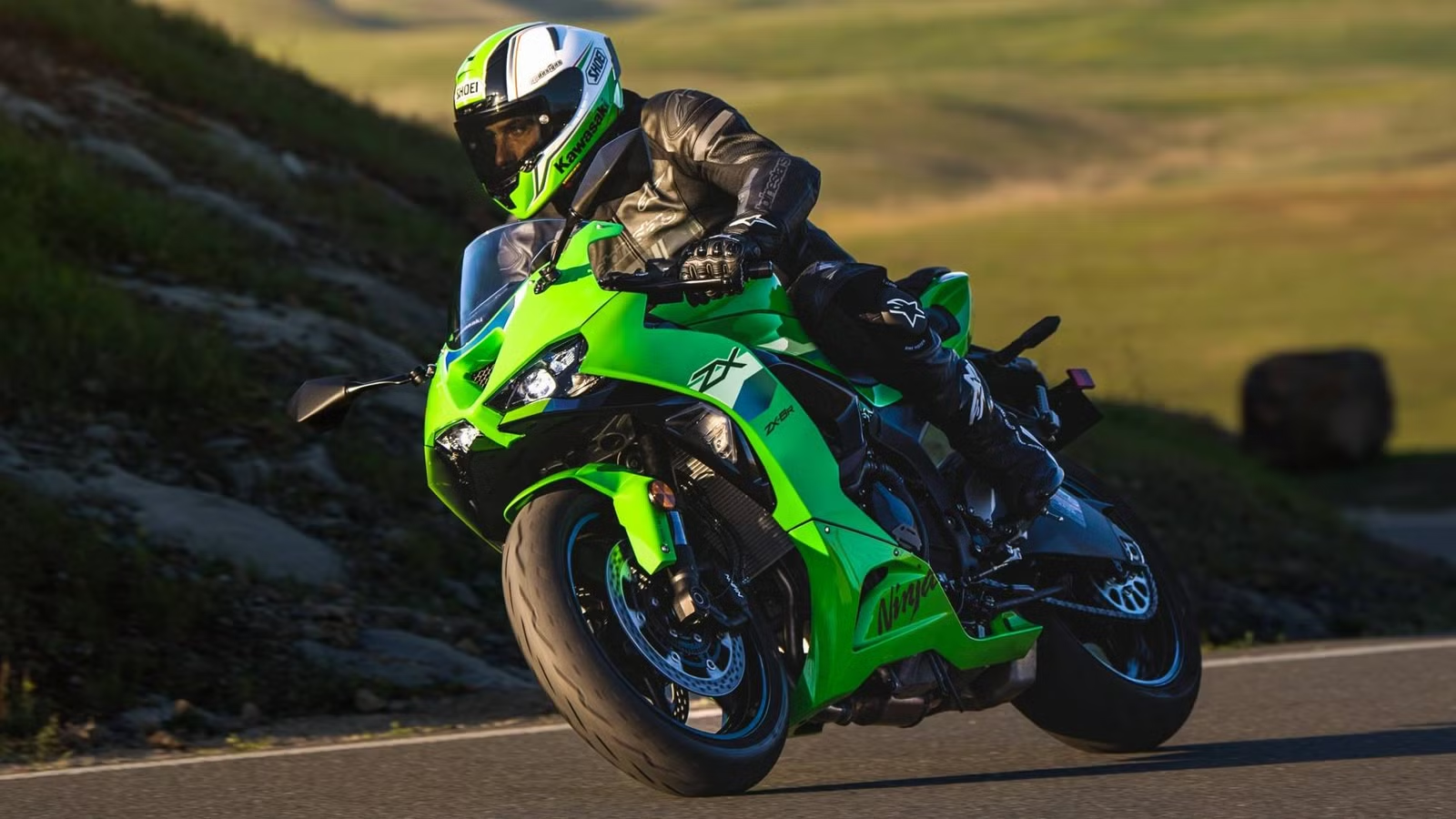
Summer is when owning a motorcycle stops being an exercise in patience and starts becoming the reason you bought one in the first place. Dry roads, warmer tires, longer daylight hours, and a calendar full of track days create the perfect excuse to stop commuting in a straight line and start looking for every decent corner within riding distance. Even familiar roads become more inviting when the weather finally cooperates.
Summer Has A Way Of Making Sensible Motorcycles Seem Boring

Practical motorcycles make an excellent case for themselves during the rest of the year. Upright ergonomics, soft suspension, luggage options, and manageable power are difficult to argue against when you’re navigating traffic or carrying groceries. Then summer arrives, your friends start planning weekend rides, and suddenly the motorcycle chosen for its sensible qualities looks like the least exciting object in the garage.
A warm Saturday morning can turn a harmless coffee run into a mountain-road expedition, while a casual look at the local track calendar can lead to an expensive conversation about tire warmers. Riders who normally use their motorcycles as transportation begin wanting stronger brakes, more cornering clearance, sharper steering, and an engine that rewards a deliberate visit to the upper half of the tachometer.
Why Middleweight Sports Bikes Make More Sense On Real Roads

That doesn’t automatically mean buying a liter-class superbike. Modern flagships produce close to or more than 200 horsepower, and their acceleration can make even a wide, empty road seem surprisingly short. Their performance is spectacular, but accessing much of it outside a racetrack requires either enormous restraint or a deeply questionable relationship with posted speed limits.

A middleweight supersport gives the rider more room to participate. You can open the throttle farther, work through additional gears, and explore the chassis without immediately entering a speed range that belongs on a runway. These motorcycles are still extremely quick, but their performance asks more from the rider and rewards good technique rather than simply overwhelming the road with horsepower.
The Supersport Class Isn’t As Crowded As It Used To Be

The old supersport formula was uncompromising. It meant clip-on handlebars, rear-set foot controls, aluminum frames, firm suspension, powerful brakes, and engines that saved their best work for the upper reaches of the rev counter. Today, only a handful of motorcycles still follow that recipe, and even fewer combine it with enough low- and midrange response to remain enjoyable when a ride doesn’t involve lap timing.
That scarcity makes every surviving option more important. The ideal summer sports bike must still sound and respond like a proper supersport, yet it can’t be so narrowly focused that riding through town becomes punishment. It needs serious hardware, useful electronics, and enough performance to make a track day worthwhile, but it should also tolerate the ride home after the checkered flag drops.
The Kawasaki Ninja ZX-6R Is The Perfect Sporty Summer Steed

The Kawasaki Ninja ZX-6R is one of the few remaining motorcycles that still delivers that balance. Its 636cc liquid-cooled, 16-valve inline-four produces a claimed 127 horsepower at 13,000 rpm and 52.1 pound-feet of torque at 10,800 rpm. It sits inside a pressed-aluminum perimeter frame and sends power through a six-speed transmission, sealed chain drive, and assist and slipper clutch.
The non-ABS model starts at $11,599, while the KIBS-equipped ABS version costs $12,599 before destination charges. That’s considerably more than a twin-cylinder sports bike, but the extra money buys an actual supersport rather than a road bike wearing fairings. It also remains below the price of most liter-class machines while offering enough performance to challenge experienced riders for years.
A 636cc Engine Gives It More Than Just A Top-End Rush

The number 636 matters because the extra 37cc separates this engine fromthe traditional 599cc supersport formula. The additional displacement gives the Kawasaki stronger response in the lower and middle parts of the rev range, so riders don’t need to keep the engine permanently screaming to make progress. That makes passing traffic, exiting slower corners, and riding through normal roads noticeably less demanding.
It still behaves like a proper inline-four when the road opens up. Peak horsepower arrives at 13,000 rpm, and the engine continues building speed with the increasingly urgent soundtrack riders expect from the class. The difference is that there’s useful thrust before that final rush arrives. You can enjoy it on a canyon road without treating every corner exit like the beginning of a qualifying lap.

The assist and slipper clutch reduces rear-wheel disturbance during aggressive downshifts, while the Kawasaki Quick Shifter allows clutchless upshifts by briefly cutting ignition. It’s an upshift-only system rather than a modern two-way setup, but it still lets the rider keep the throttle open while clicking through the gearbox under hard acceleration.
Modern Electronics Make The Performance Easier To Use
The ZX-6R’s electronics are useful without trying to turn it into a rolling computer lab. Four integrated riding modes include Sport, Road, Rain, and a customizable Manual setting. These combine Full or Low Power delivery with three levels of Kawasaki Traction Control, allowing riders to adjust the bike for dry pavement, changing weather, or the controlled environment of a racetrack.
A 4.3-inch full-color TFT display provides the usual speed, gear, fuel, and riding information, while smartphone connectivity works through Kawasaki’s Rideology app. All-LED lighting is standard, including the compact projector and reflector headlight arrangement. None of these features changes the basic character of the bike, but they make it easier to live with during the long rides that often surround a short session of serious cornering.
Serious Enough For The Track Without Being Completely Miserable Elsewhere

The chassis hardware leaves no doubt about the ZX-6R’s intentions. A fully adjustable 41mm Showa Separate Function Fork Big Piston offers 4.7 inches of travel, while the bottom-link Uni-Trak rear suspension provides 5.9 inches and adjustments for preload, rebound, and compression damping. This gives experienced riders enough control to tailor the bike for their weight, pace, tires, and preferred riding environment.
Braking comes from dual 310-millimeter semi-floating front discs and radial-mounted, opposed four-piston monobloc calipers operated through a radial-pump master cylinder. A single 220-millimeter rear disc handles braking at the back. The bike rolls on Pirelli Diablo Rosso IV tires in 120/70 ZR17 front and 180/55 ZR17 rear sizes, giving it road-friendly grip with enough sporting intent for occasional circuit use.

That’s what makes it the motorcycle riders may wish they’d bought before summer started. It isn’t the most practical choice, the cheapest middleweight, or the fastest Kawasaki in the showroom. It’s simply one of the few motorcycles left that can turn a clear weekend into an event, challenge a rider at the track, and make the long route home seem like the only logical option.
Source: Kawasaki

Related posts

Latest Post


No Comments