
The British Wagon Nobody Bought That’s Now The Coolest Used Luxury Buy Of 2026
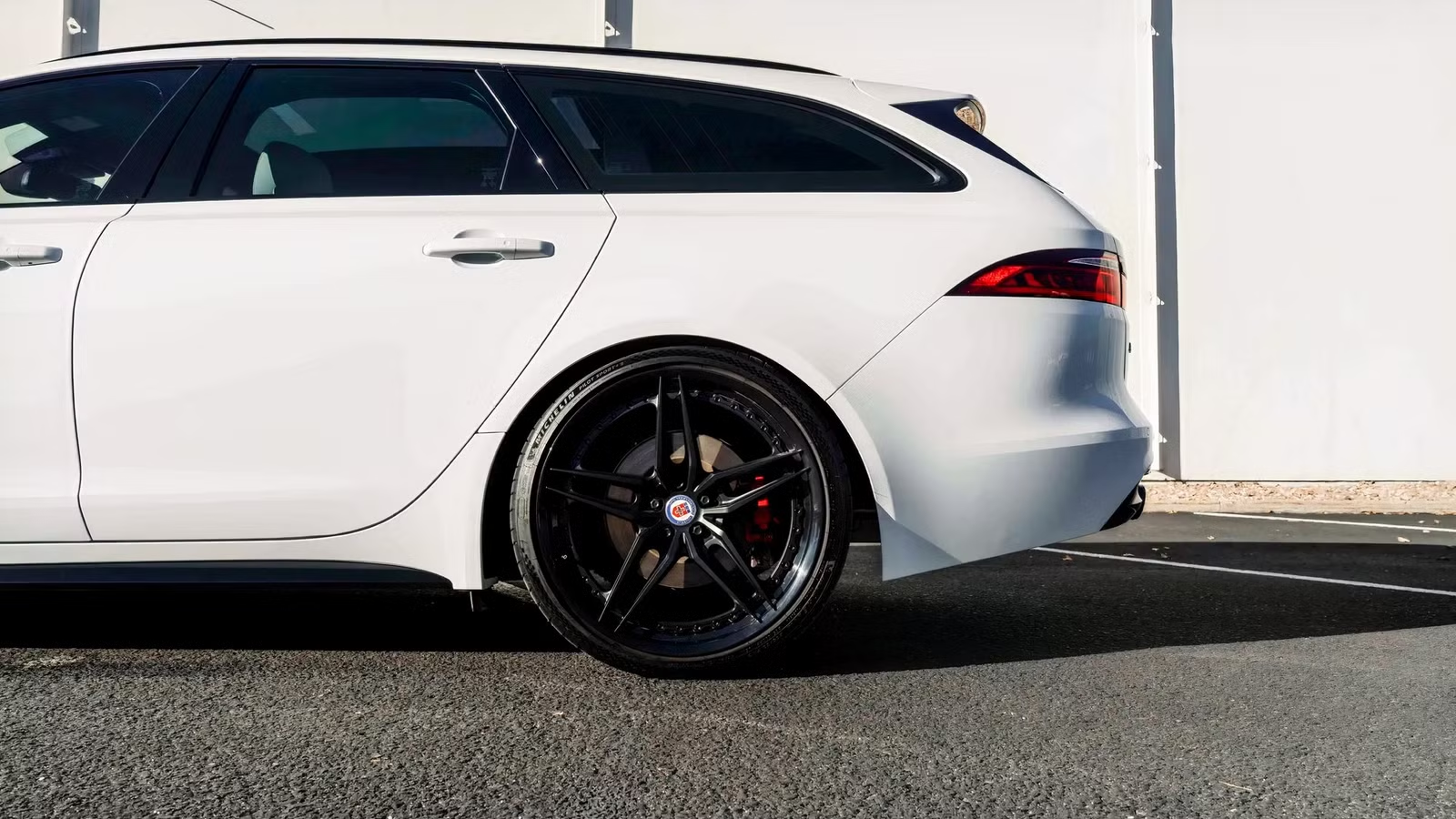
Luxury car buyers spent the last decade rushing toward SUVs, leaving one of the automotive world’s most practical and stylish body styles largely forgotten. As a result, some of the most interesting premium vehicles of the late 2010s quietly disappeared from showrooms without ever finding a large audience. Today, that lack of popularity has created an unexpected opportunity for used-car shoppers. With distinctive styling, genuine utility, impressive driving dynamics, and depreciation that has dramatically lowered entry prices, one overlooked British luxury wagon now offers a combination of exclusivity and value that’s increasingly difficult to find anywhere else.

If images of the “Griswold Family Truckster” from National Lampoon pop into your head, that is not the type of wagon that has luxury buyers clamoring for. Many European brands learned to change the wagon market narrative, building sporty, powerful, exciting cars with extra luggage space in the back. Some of these cars have earned the title “Sportbrake” to avoid the negative association with the wagon descriptor. The Sportbrake name comes from “shooting brake,” an English term for a horse-drawn carriage that carried a hunting party and its gear, which seems like the perfect descriptor of a sporty, stylish, and powerful wagon.
Most Luxury Buyers Ignored Wagons—And That’s Exactly Why This One Matters Today
American Buyers Chased SUVs While European-Style Luxury Wagons Quietly Disappeared
As Americans turned toward SUVs, wagons quickly lost favor and became a forgotten automotive class. Much like the full-size sedan, SUVs took over the market during the 2010s and have remained the go-to vehicles for Americans. This meant most automakers abandoned wagons entirely, especially for the American market, leaving only a few European models from luxury brands.

Most European wagons that remained on the market were equipped with high-performance engines, dynamic steering, and stylish designs to make them appealing. An Audi wagon doesn’t look at all like the traditional 1980s wagon shown in movies, with fake wood paneling and putrid colors. Instead, European automakers made wagons exciting again by adding titles like Allroad, Shooting Brake, and Sportbrake.
It Now Feels More Distinctive Than Modern Luxury SUVs

The modern market is littered with SUVs, and many look much the same, save for the badging. That makes SUV styling boring, while allowing stylish, unique wagons to feel much more distinctive and interesting than any modern luxury SUV. Additionally, sporty luxury wagons offer the benefits of a low stance and wide track, providing a more stable driving experience when you want to open the throttle and push the car hard and fast. Luxury wagons like the Audi A6 Allroad and Mercedes-Benz E-Class Wagon offer the versatility of an SUV without the high stance, letting your aggressive side shine with power, performance, and precision.
Want A Reliable Jaguar? These 10 Models Have Proven Themselves
Jaguars don’t have the best reputation for being reliable, but these 10 models buck the trend and have proven themselves as dependable companions.
The XF Sportbrake Delivered Real Luxury Performance Without Sacrificing Practicality
Jaguar Gave The Sportbrake Serious Performance Credentials

The Jaguar XF Sportbrake is one of the most overlooked performance cars ever created. During its transition from cars and SUVs to an all-SUV lineup, at least in America, the Jaguar brand struggled with low sales. The XF Sportbrake was offered for three generations, from 2012 to 2020, with discontinuation in America after the 2020 model year, which is a bit of a shame.
Across the Jaguar XF lineup, two engines were used, and both were available in the Sportbrake. A driver looking for a good wagon with reasonable fuel mileage and some power might opt for the 2.0-liter turbocharged four-cylinder engine, which produces 296 horsepower and 295 lb-ft of torque. On the other hand, the Sportbrake S model has a 3.0-liter supercharged V6 engine producing 380 horsepower and 332 lb-ft of torque. Both engines use an eight-speed automatic transmission, and AWD is standard for the XF Sportbrake.
The four-cylinder engine is good for a sprint to 60 mph in 5.7 seconds, which is reasonable for highway acceleration and passing, but the Sportbrake S model can make the same run in 5.0 seconds, which is absolutely worthy of your attention.
It Combined Sports-Sedan Handling With Genuine Cargo Versatility

The Jaguar XF Sportbrake gives drivers the ideal combination of performance and practicality. Unlike sedans, the cargo space isn’t limited by a trunk lid, and that cargo area is larger than some SUVs at 31.7 cubic feet. With the rear seats down, it expands to 69.7 cubic feet, which is massive compared to compact and some midsize SUVs. Add the benefits of a low stance and lower weight compared to SUVs, and the XF Sportbrake makes a lot of sense.
Jaguar marketed this sporty wagon to drivers who enjoy “active lifestyles” by showcasing its versatility and performance-oriented driving dynamics. The XF Sportbrake isn’t simply a sports car with a cargo area; it’s also comfortable and loaded with luxury features. Front passengers have 41.5 inches of legroom, while rear passengers enjoy 37.2 inches, making it easy to relax and stretch out on any highway.
The Best Station Wagons You Can Still Buy New In 2025
Before the popularity boom of the SUV, classic station wagons used to define the American road trip. With these modern versions, wagons could again.
Massive Depreciation Has Turned The XF Sportbrake Into An Incredible Used-Car Value
A $70,000 British Luxury Wagon Can Now Cost Less Than A New Toyota Camry

The four-cylinder model carried a $66,145 MSRP in 2020, and the Sportbrake S was priced at $72,795 when new. Today, the Jaguar XF Sportbrake is a virtual steal. The four-cylinder model averages $23,800, while the more powerful version averages $32,000. The base MSRP of a Toyota Camry is $30,495, which gives you an idea of just how much depreciation has taken a toll on this Jaguar wagon.
The Rarity Helps The XF Sportbrake Feel Special Despite Its Lower Resale Values

The factors that hurt the XF Sportbrake during its 2010s production allowed it to flourish today. Despite depreciation, which could eventually level off and, over time, reverse, this Jaguar wagon is exactly what some enthusiasts are searching for. It’s unique, rare, and interesting. Although Jaguar might have preferred the car to have sold better when new, the shrinking sedan market and the legacy luxury name make the XF Sportbrake an exciting car for drivers who appreciate what it offers.
The Japanese Luxury Wagon So Overbuilt It’s Still Running Strong At 200,000 Miles
Luxury meets legendary reliability in the Acura TSX Sport Wagon, the overbuilt Japanese wagon still going strong past 200,000 miles.
The XF Sportbrake Feels More Interesting Than Many Modern Luxury Cars

The Jaguar XF Sportbrake was a unique model in a niche segment. The sleek profile and elegant design make it attractive. Jaguar exercised restraint in designing this car, ensuring it remained practical, comfortable, and timeless compared to some longer, lower-profile luxury wagons.
If you want to drive a car that symbolizes Jaguar without going over the top, this could be a good option. The cabin is richly designed and well-equipped, ensuring you have a modern tech package to complement its old-world charm. The flowing body lines and grand-touring character add to the presence that never goes out of style.
It Offers A Driving Experience Which Modern EV-Heavy Luxury Cars Often Lack

Older, premium cars with personality and uniqueness have become much more popular with enthusiasts than what you’ll find in most EVs. Tesla created the sterile, single-screen interface and bland styling of EVs that other brands followed simply because Tesla was selling more EVs than any other brand. That styling quickly becomes unappealing.
The Jaguar XF Sportbrake delivers conventional sport-luxury dynamics through its supercharged V6 engine that rockets off the line. Toss in the analog feeling of tactile controls with knobs and buttons where you need them, and you’ve got the classic driving experience many owners appreciate much more than the tech-heavy layout offered in EVs.
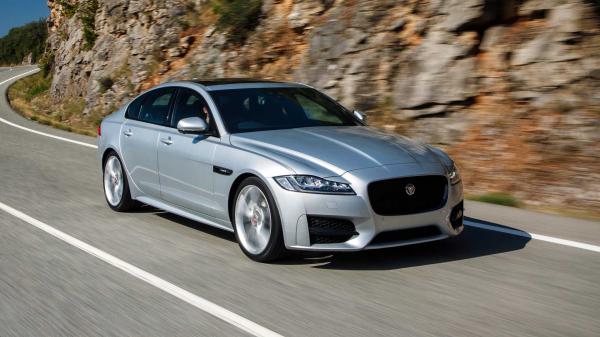
10 Luxury Cars That Lose Their Value Shockingly Fast
While well-equipped, these exclusive models struggle to hold value in today’s value-packed industry.
Maintenance History Matters Far More Than Mileage

Checking for well-documented maintenance and service records is important when considering any used car, but a luxury car like the Jaguar XF Sportbrake makes it even more important. Jaguar vehicles don’t have as strong a support structure in America as in Europe, and finding parts and service can be difficult at times. When inspecting a used XF Sportbrake, look for documented service records that include cooling-system maintenance, suspension maintenance, and electronic-system checks.
It’s also a good idea to find out where the previous owner had the car serviced; that could be where you’ll have it serviced as well. A pre-purchase inspection makes a lot of sense, as does a complete test drive that lets you hear the brakes, suspension, and steering systems and listen for any unusual noises. If everything checks out, a well-maintained XF Sportbrake can offer you a rewarding ownership experience for several years.
The XF Sportbrake May Become One Of The Defining “Future Classic” Wagons Of Its Era
If you happen to find a Jaguar XF Sportbrake that meets your criteria, it could be a good car to own long-term. The ultra-low production numbers are likely to enhance long-term enthusiast appeal, making it possible that you’ll get more out of the car than you paid for it down the road. Many formerly overlooked European wagons have become collectible, as they were never fully appreciated during their production years.
The Jaguar XF Sportbrake occupies a unique place in today’s used luxury market. It delivers the exclusivity of owning something few people have ever seen, while still providing the luxury, comfort, and refinement expected from a premium European vehicle. Add impressive performance, genuine everyday practicality, and used prices that make it surprisingly attainable, and the result is a package that’s difficult to match. For buyers willing to look beyond the usual luxury SUV choices, the XF Sportbrake may be one of the smartest and coolest used luxury cars to buy.
Sources: Jaguar, Kelley Blue Book, CarGurus, Edmunds

Related posts


Latest Post



No Comments