
Flagship seven-seat Audi Q9 SUV unveiled
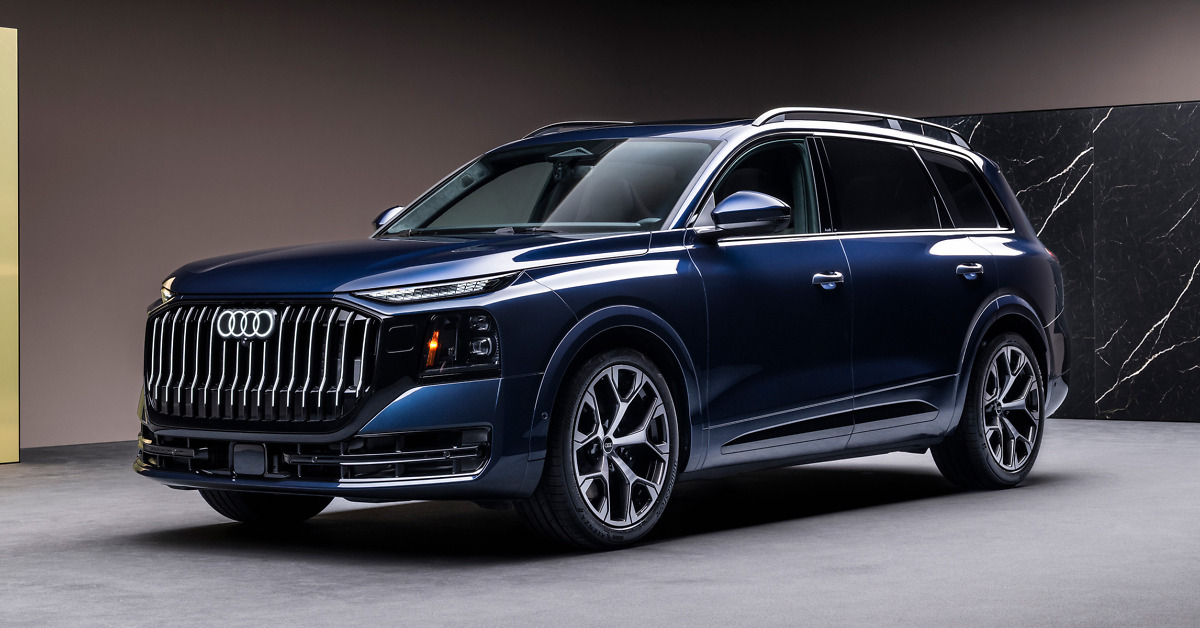
Audi has revealed the new Q9, the largest SUV it has ever built and a new flagship for the brand’s UK range.
Sitting above the long-standing Q7 and Q8, the Q9 is aimed squarely at family buyers with a large budget, taking on rivals including the BMW X7, Mercedes-Benz GLS, Range Rover, and Volvo EX90.
Audi’s biggest SUV yet

Measuring in at over five metres long and over two metres wide, the Q9 is the largest production Audi to date.
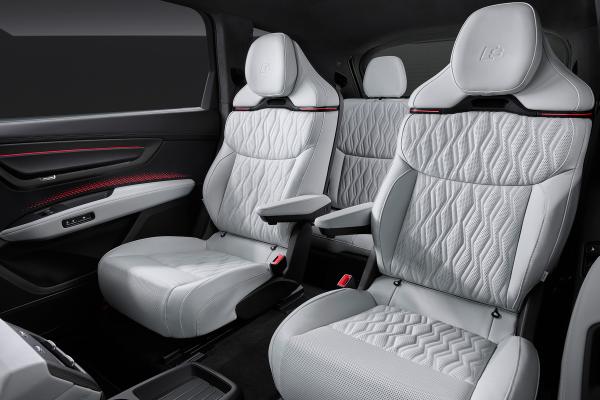
Seven seats are fitted as standard, with every seat electrically adjustable. Buyers can also opt for a six-seat layout that replaces the second-row bench with two individual captain’s chairs, creating a more luxurious cabin aimed at long-distance comfort.
Audi says all three seats in the second row feature Isofix child seat mounting points, while the long wheelbase means the third row is designed to accommodate adults rather than just children. Seat folding throughout the rear of the cabin is electrically operated and can be controlled from the boot as well as the infotainment system.
A few Audi firsts inside

The Q9’s cabin introduces a number of features making their debut on an Audi.
Among them are power-operated doors which can open and close automatically using sensors to detect obstacles, while a soft-close function is fitted as standard. Audi says they can also be operated remotely through the myAudi smartphone app.
Another highlight is the largest panoramic sunroof ever fitted to an Audi, measuring more than one-and-a-half square metres. An optional version features switchable transparency and integrated lighting that can illuminate the glass in one of 30 colours to match the cabin’s ambient lighting (this feature will be introduced after launch).
The interior is finished with a choice of leather, Dinamica microfibre and natural wood trims, while front occupants benefit from heated, ventilated and massage seats as standard.
New lighting and infotainment technology
Audi has equipped the Q9 with the latest version of its digital lighting tech suite.
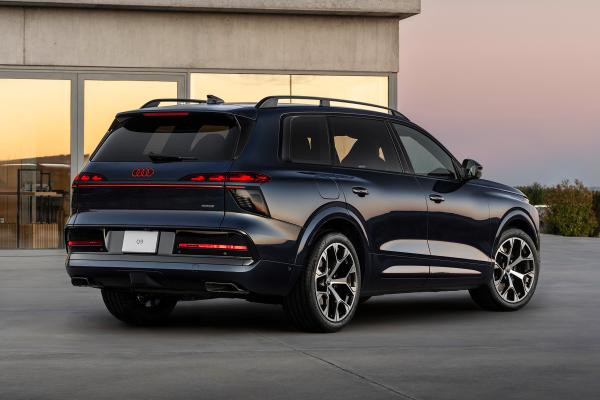
The rear features curved OLED rear lights, designed to improve visibility from wider angles while also allowing more elaborate lighting signatures. Advanced turn signals can also project directional arrows onto the road surface at night to improve visibility for other road users.
At the front, Matrix LED headlights use micro-LED technology to provide more precise illumination. The system can highlight pedestrians, adjust lighting through roadworks and even project an ice warning symbol onto the road when temperatures are low enough for icy conditions.
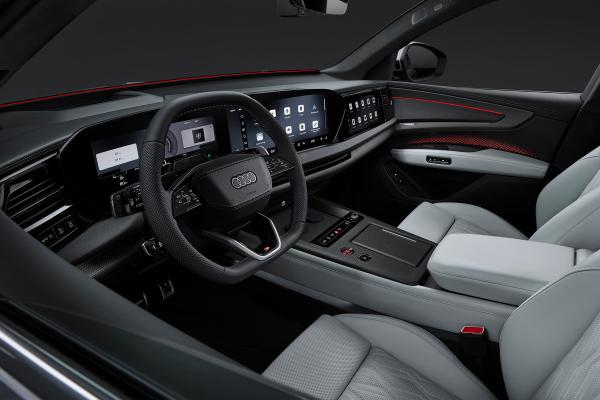
Inside, the dashboard features an 12-inch digital instrument cluster, 15-inch central touchscreen and 12-inch passenger display as standard. Audi’s voice assistant tech is also powered through ChatGPT too.
Driving assistance tech features include automated parking, trailer reversing assistance, blind-spot monitoring, a surround-view parking camera and a new emergency assist function that can steer the vehicle onto the hard shoulder and bring it safely to a stop if the driver becomes unresponsive.
There are numerous storage cubbies throughout the cabin, a configurable luggage compartment with integrated cargo rails, and wireless smartphone charging for two devices. Rear passengers can also use USB-C ports capable of delivering up to 100W for charging laptops and other larger devices.
Mild hybrid diesel at launch
At launch, the UK will receive a 3.0-litre V6 diesel producing 299hp and 630Nm of torque.
The engine is paired with 48 volts of mild-hybrid assistance, which can contribute an additional 24hp during acceleration while also improving efficiency. An electric compressor helps build boost pressure at low engine speeds to improve throttle response.
Every Q9 comes with an eight-speed automatic gearbox, ‘quattro’ four-wheel drive, adaptive air suspension and all-wheel steering. The suspension offers up to nine centimetres of ride-height adjustment.
When is it arriving?
The Audi Q9 will be available to order in the UK from the end of August, with full UK specifications and pricing confirmed closer to launch. First customer deliveries are expected before the end of 2026.

Related posts

Latest Post


No Comments