
Driving in France: what UK motorists need to know
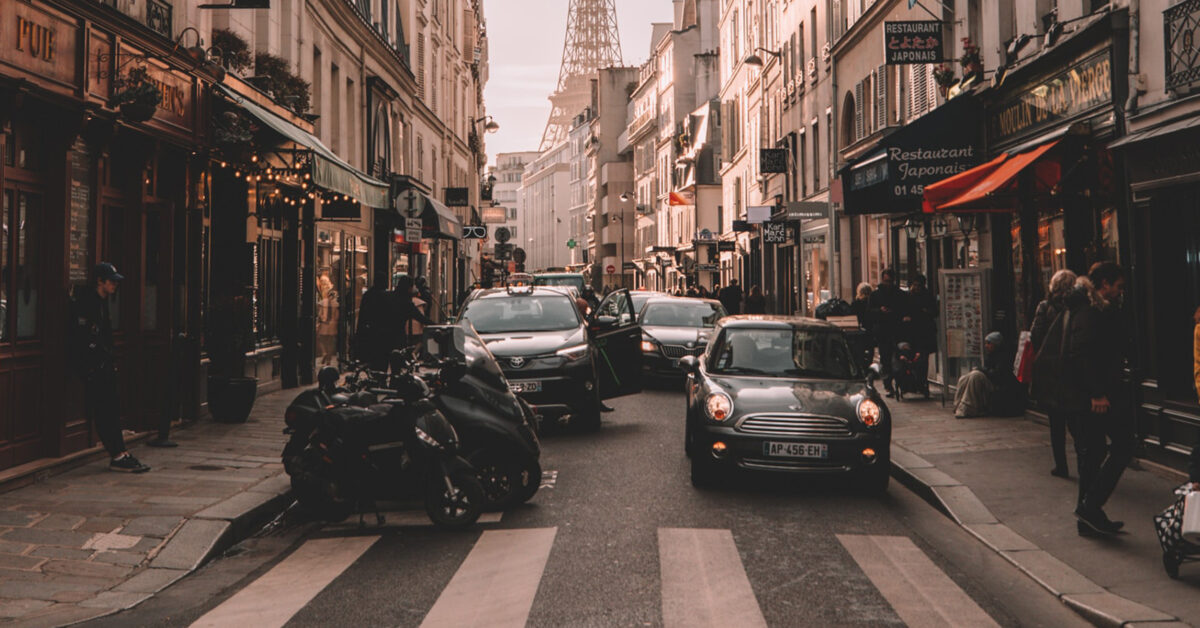
France is one of the easiest European countries for UK drivers to reach, whether you are taking the ferry, using the Channel Tunnel or passing through on the way to somewhere else.
But driving in France is not the same as driving in the UK. You’ll be on the right-hand side of the road, distances and speed limits are shown in kilometres, many motorways use tolls and there are several documents and items of equipment you should have with you.

The good news is that driving in France is usually straightforward once you know what to expect. The important thing is to check the rules before you travel, rather than trying to work them out at a toll booth, service area or roadside police stop.
Quick checklist before driving in France
Before you travel, make sure you have:
- Full UK driving licence
- Passport
- V5C vehicle registration document
- Proof of insurance
- MOT certificate, if your car is more than three years old
- UK identifier on the car, either on the number plate or as a separate sticker
- Warning triangle
- High-visibility jacket, kept inside the car
- Headlamp beam adjustment or beam deflectors
- Crit’Air clean air sticker, if driving in or near affected cities
- European breakdown cover, strongly recommended
- Permission letter or VE103 certificate, if the car is leased, financed, hired or not registered in your name
It is also sensible to carry a first-aid kit, spare bulbs if they are suitable for your car, a torch, water, screenwash, a phone charging cable and a paper map or offline navigation backup.
Documents you need to drive in France

You must carry your full UK driving licence when driving in France. For most UK drivers with a photocard licence, you do not need an International Driving Permit to drive in France. However, you may need one in some cases if you still have a paper licence, or if your licence was issued in Gibraltar, Guernsey, Jersey or the Isle of Man. Check the latest UK government guidance before travelling if you are unsure.
You should also carry your passport, proof of insurance and the car’s V5C registration document. If your car is more than three years old, take the MOT certificate as well.
If the car is not registered in your name – for example, if it is leased, on finance, hired or borrowed – you should take written permission from the registered keeper. For leased or hired cars, this usually means a VE103 certificate.
You no longer need a European insurance “green card” for most trips to France, but you should still check with your insurer that you are covered for driving abroad. Some policies only provide basic third-party cover overseas unless you arrange extra cover.
UK stickers and number plates
Your car must clearly show that it is from the UK. A number plate with a UK identifier is acceptable in France. If your number plate still has a GB badge, an EU flag or a national flag such as England, Scotland or Wales, you will need to display a separate UK sticker.
The old GB sticker is no longer valid for UK cars driving abroad.
Rules of the road
The biggest difference for UK drivers is the obvious one: traffic drives on the right in France.
That means roundabouts run anticlockwise, overtaking is on the left and you should keep to the right-hand lane unless you are passing another vehicle. It usually feels odd for the first few miles, particularly after leaving a ferry port or the Channel Tunnel terminal, so take your time and avoid rushing straight into a busy city centre if you can help it.
French drivers generally take lane discipline seriously. On motorways and dual carriageways, move back to the right once you have overtaken.
Seatbelt rules are broadly similar to the UK. If seatbelts are fitted, they must be worn. The driver is responsible for making sure children are properly restrained.
Children under ten should normally travel in the rear seats and must use an appropriate child restraint. There are exceptions, but if you are travelling with children it is safest to check the current French rules and bring suitable child seats with you.
It is illegal to drive while wearing headphones or earphones. That includes using a single earpiece for phone calls. Built-in hands-free systems are treated differently, but holding a phone while driving is not allowed.
Speed limits in France
France uses kilometres per hour, not miles per hour. This catches out plenty of UK drivers, especially on rural roads where the numbers can look familiar but mean something different.
Unless signs say otherwise, the usual limits for cars are:
| Road type | Normal conditions | Wet weather |
|---|---|---|
| Motorways/autoroutes | 130km/h (80mph) | 110km/h (68mph) |
| Dual carriageways | 110km/h (68mph) | 100km/h (62mph) |
| Main roads outside built-up areas | 80km/h (50mph) | 70km/h on some roads (43mph) |
| Built-up areas | 50km/h (31mph) | 50km/h (31mph) |
Some local roads may have different limits, including 30km/h (19mph) urban zones and 90km/h (56mph) sections outside built-up areas. Always follow the signs.
New drivers may face lower limits in France, and these can apply even if you passed your test outside France. If your licence is less than three years old, check the current rules before travelling.
In heavy fog or very poor visibility, lower limits can apply regardless of the type of road.
Speed camera warning devices are illegal in France. This includes dedicated camera detectors and satnav or phone-app features that warn you about camera locations. If your satnav has speed camera alerts, disable them before driving.
Alcohol limits
The drink-drive limit in France is lower than in England, Wales and Northern Ireland, but the same as it is in Scotland.
For most drivers, the French blood alcohol limit is 0.5g/l. For new drivers, it is lower at 0.2g/l. By comparison, the limit in England, Wales and Northern Ireland is 0.8g/l, while Scotland is already aligned with the lower 0.5g/l limit.
The safest advice is simple: if you are driving, don’t drink. Even a small amount of alcohol can put you close to or over the limit, especially if you are tired, driving on unfamiliar roads or travelling early the next morning.
Motorways, tolls and breakdowns
French motorways are known as autoroutes, and many of the major routes between cities are toll roads. You can usually pay tolls by card, and some toll booths still accept cash. The awkward bit for UK drivers is that toll booths are set up for left-hand-drive cars. If you are travelling alone in a right-hand-drive car, you may have to stretch across the cabin or get out to pay.
If you are doing a long trip, a toll tag can make life easier. Services such as Emovis or Liber-t allow you to use dedicated toll lanes and pay automatically, rather than stopping at each booth.
Breakdowns on French autoroutes work differently from the UK. You cannot simply call your own breakdown provider to recover you from the motorway. The motorway operator uses approved recovery vehicles to take you to a safe area, where you can then arrange onward assistance.
European breakdown cover is not a legal requirement, but it is strongly recommended. Recovery, storage and onward travel can become expensive very quickly if you are not covered.
Low-emission zones and Crit’Air stickers
France has low-emission zones in several cities and urban areas. These are known as ZFE zones, and they use the Crit’Air clean air sticker system.
A Crit’Air sticker shows your car’s emissions category. Depending on the city, vehicle type, emissions rating and local air-quality rules, some cars may be restricted or banned from entering certain zones.
Paris, Lyon and Marseille are among the better-known examples, but the list of affected areas can change. If you are driving into or near a major French city, check whether you need a Crit’Air sticker before you travel.
The sticker is inexpensive, but you should order it from the official French government website rather than from unofficial websites charging inflated fees. Allow enough time for delivery before your trip.
Even if you do not plan to drive into a low-emission zone, it may still be worth getting a Crit’Air sticker if you travel to France regularly or your plans might change.
What you must carry in the car
France requires drivers to carry certain safety equipment, including a warning triangle and a high-visibility jacket. The jacket should be accessible from inside the car, not buried in the boot, because you may need to put it on before getting out after a breakdown.
In practice, it is wise to carry one high-visibility jacket for every occupant, especially if you are travelling as a family.
Your headlights must not dazzle oncoming traffic. Some modern cars allow you to adjust the headlight beam through the car’s settings. Others may need stick-on beam deflectors.
A breathalyser kit used to be part of the standard advice for driving in France, but it is no longer a legal requirement. Some driving kits still include one, and there is no harm in carrying one, but it should not be listed as a must-have item.
A first-aid kit is useful and sensible, but not normally a legal requirement for cars in France. The same applies to spare bulbs. They can be handy, but many modern cars use lights that drivers cannot easily change at the roadside.
If you are driving in certain mountain areas during winter, you may need winter tyres, snow chains or snow socks. These rules usually apply from 1 November to 31 March in affected areas, so check your route carefully if you are travelling to the Alps, Pyrenees or other mountain regions.
Common mistakes UK drivers make in France
Most of the problems UK drivers encounter in France come from small assumptions – using mph instincts on km/h roads, forgetting the UK identifier, or treating autoroutes exactly like British motorways.
One is forgetting that speeds are shown in kilometres per hour, especially since the signs look largely the same without any units to remind you. A rural 80km/h limit is about 50mph, not 80mph.
Another is assuming that motorway driving works exactly like the UK. French autoroutes are often quieter and faster-flowing, but tolls, wet-weather speed limits and breakdown procedures are different.
Low-emission zones can also catch drivers out. You may not need a Crit’Air sticker for a simple motorway journey through France, but you may need one if you enter or pass through certain cities.
Many UK drivers also forget about the UK identifier. A GB badge is no longer accepted, and national flags on number plates do not replace the need for a UK marking.
Finally, make sure your high-visibility jacket is inside the cabin. If it is in the boot, you may have to get out of the car before putting it on, which defeats the point.
Final checklist for driving in France
Before you leave, check that you have the essentials.
Documents
- Full UK driving licence
- Passport
- V5C registration document
- Proof of insurance
- MOT certificate, if applicable
- VE103 certificate or written permission, if the car is leased, hired, financed or borrowed
Car requirements
- UK number plate marking or UK sticker
- Warning triangle
- High-visibility jacket, ideally one for each person
- Headlamp beam adjustment or deflectors
- Crit’Air sticker, if needed for your route
- Winter tyres, snow chains or snow socks, if travelling through affected mountain areas in winter
Recommended items for any long-distance road trip
- European breakdown cover
- First-aid kit
- Spare bulbs, if suitable for your car
- Torch
- Phone charging cable or power bank
- Screenwash
- Bottled water
- Paper map or offline navigation
- Toll tag, if you will be using autoroutes regularly
The bottom line
Driving in France is not difficult, but it does reward preparation. Make sure your documents are in order, your car has the right UK identifier, your high-visibility jacket and warning triangle are easy to reach, and you have checked whether your route takes you through a Crit’Air low-emission zone.
Most problems are avoidable if you prepare before you leave the UK. Once that is done, France is usually a straightforward and enjoyable place to drive.
Read more:
Originally published in July 2023, last updated June 2026.
The Car Expert has commercial partnerships with both the RAC and AA. If you click on any of their links for breakdown cover, we may get a small commission. This does not affect the price you pay.

Related posts


Latest Post


No Comments