
The Motorcycle We’d Ride Across America This Summer
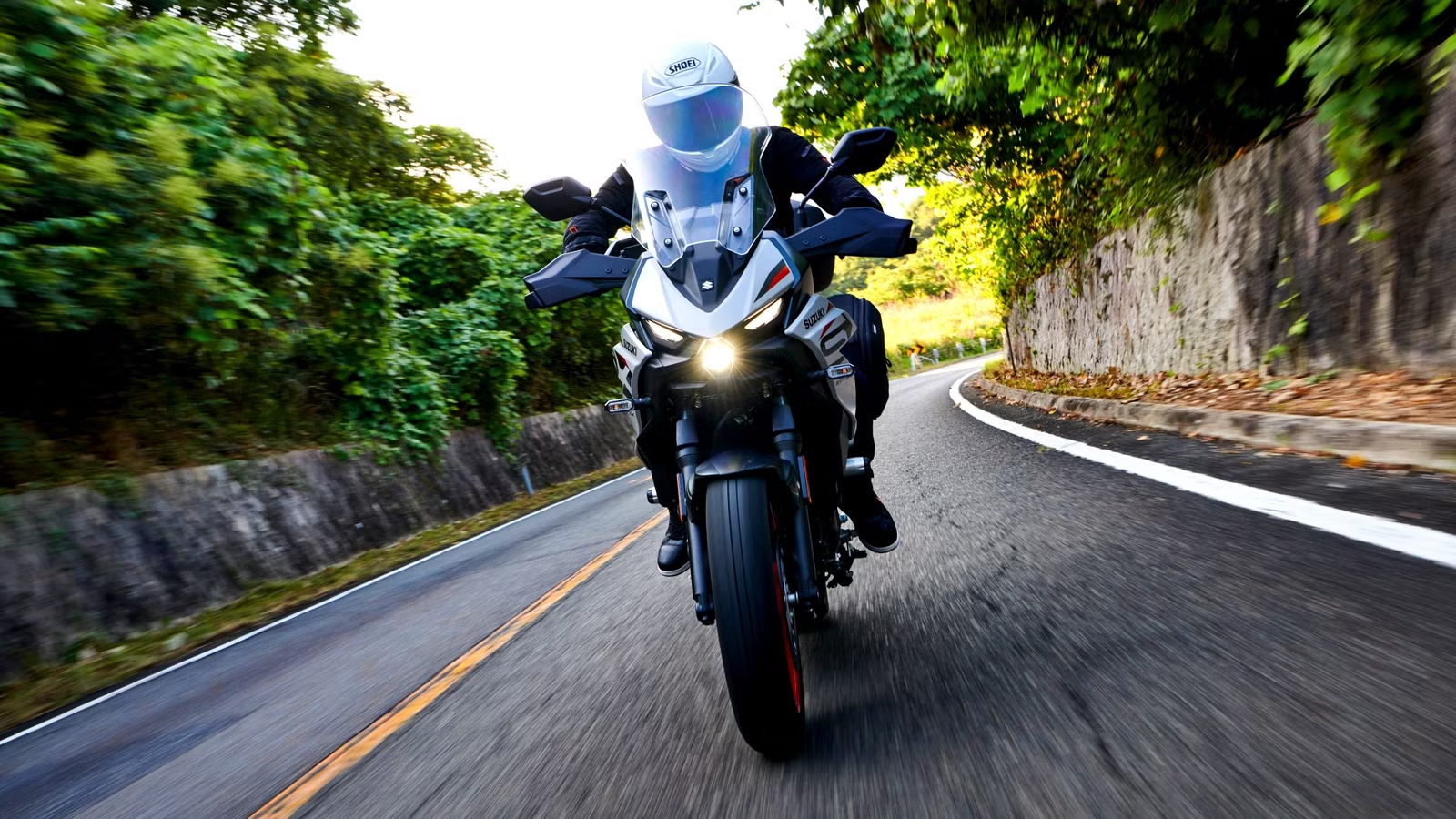
Motorcycle travel has always been a source of both inspiration and mental peace. Riding a motorcycle demands all of your attention, forcing you to focus on the task at hand. It frees your mind from the mental clutter that usually occupies your thoughts, and certainly has mental health benefits. Unfortunately, some touring bikes cost a small fortune, and the stress levels that go along with the debt that you will incur if you were to buy one of those bikes will erase any of those mental health benefits in one fell swoop.
There Is A More Affordable Way To Travel On Two-Wheels

Depending on how much discomfort you are willing to put up with, it is true that you can tour on any motorcycle. But, it is understandable that the vast majority of us would prefer to use a bike that is actually designed for the job. Comfort is only one piece of the puzzle, really. You also need to factor in running costs, boring things like fuel consumption and maintenance costs, as well as something as fundamental as reliability. While most modern bikes are perfectly reliable, there are exceptions that prove the rule.

Finding a touring bike that really checks all these boxes for less than $10k is pretty difficult. For the longest time, the Kawasaki Versys 650 has been the solution to this problem, but even that costs more than $10k these days. The Triumph Tiger Sport 660 then came along and presented itself as a cheaper, more interesting alternative, but the bike in question is even cheaper than the Triumph, and arguably even more interesting.
The Suzuki SV-7GX Is The Touring Bargain Of The Year
MSRP: $8,599


Back when the bike was first announced, we had an inkling that it might be under the magic $10k mark, but we didn’t expect it to be this far under that mark. At this price point, there are very few travel-related options. Suzuki is rather effectively undercutting all the established players in this class, offering a legitimate middleweight crossover for the same price as a middleweight naked bike. In our opinion, it is the bargain of the year, and the bike we would choose to ride across the US given the opportunity.
Suzuki’s Legendary V-Twin Offers Reliable Performance
Power: 72 Horsepower

This engine first came out way back in 1999, which means it has been in production longer than most of us have been riding. Over the years, it has proven to be exceptionally reliable, and up until now has only really seen incremental updates. The fact that it has now made it into the Euro5+ era is, to say the least, rather surprising. We thought its days were numbered back when the 800cc parallel-twin was announced, but Suzuki clearly believes the two powertrains can co-exist.
More Fun Than You Might Think

We don’t necessarily agree with that sentiment, and feel that there will be some level of cannibalization. All three of the other Japanese brands offer more than one middleweight option, but with the other brands, the more expensive bikes all offer a different, arguably more desirable riding experience. For Suzuki, it is the other way around. The V-twin offers an altogether more desirable riding experience, makes only 10 horsepower less, and is significantly cheaper.
The SV-7GX Has (Almost) All The Necessary Modern Tech Features

The SV650 is a relatively bare-bones offering that will certainly appeal to some, but there is no denying that modern riders want more tech. With the SV-7GX, you get ride modes, a quickshifter, ABS, switchable traction control, and a TFT dash with smartphone connectivity. One rather surprising omission is cruise control, something most of the bikes in this class have, and something that certainly could have easily been added now that the bike has a ride-by-wire throttle. In such a competitive class, this could actually be a dealbreaker for some buyers.
While the electronic features certainly add value, it is the physical features that make the most difference. Adding fenders and wind protection (the windshield also offers three levels of adjustment) has completely transformed the bike. It aligns with the same design language as the GSX-S1000GX, but we would argue that this design looks even better here on the smaller bike. Practical inclusions like hand guards and the rear rack are standard fitment, but like most of the bikes in this class, luggage is optional.
Undercutting The Competition

The main reason why Suzuki is able to make this bike so affordable is that both the engine and chassis are lifted straight from the SV650. This is only a good thing, because its sporty steel trellis chassis is brilliant. Quite frankly, it is the key point of difference in a class that relies heavily on rudimentary steel chassis. It more than makes up for the budget-friendly suspension, which features a non-adjustable conventional front fork, something that visibly looks out of place on an otherwise modern package.

With a wet weight of 465 pounds, it is, and always was going to be, significantly heavier than the naked bike. It is still nimble enough to handle the daily commute, and we certainly believe the added touring features are well worth the weight penalty. Suzuki is a past master at extracting more value out of a platform. This is rather obviously not the first time this has been done. The Japanese brand has several models like this in the lineup. It is easy to get cynical about something like this, because this approach doesn’t always encourage innovation.
But what it does give us is unbelievable value. The SV-7GX is an objectively great motorcycle, for what we feel is an unbeatable price. Although there are several bikes entering this lightweight crossover class, this is the one bike that will force answers out of the other brands thanks to how much cheaper it is. Given the opportunity, this is the bike we would take across the US. Not because it is the most comfortable or the most powerful, but because it will be a blast to ride on back roads, it is economical, reliable, and above all else, affordable to own and run.
Source: Suzuki Cycles

Related posts




Latest Post




No Comments