
Toyota, Honda, And One Other Automaker Now Control The Hybrid Market — Here’s Why Everyone Else Is Losing
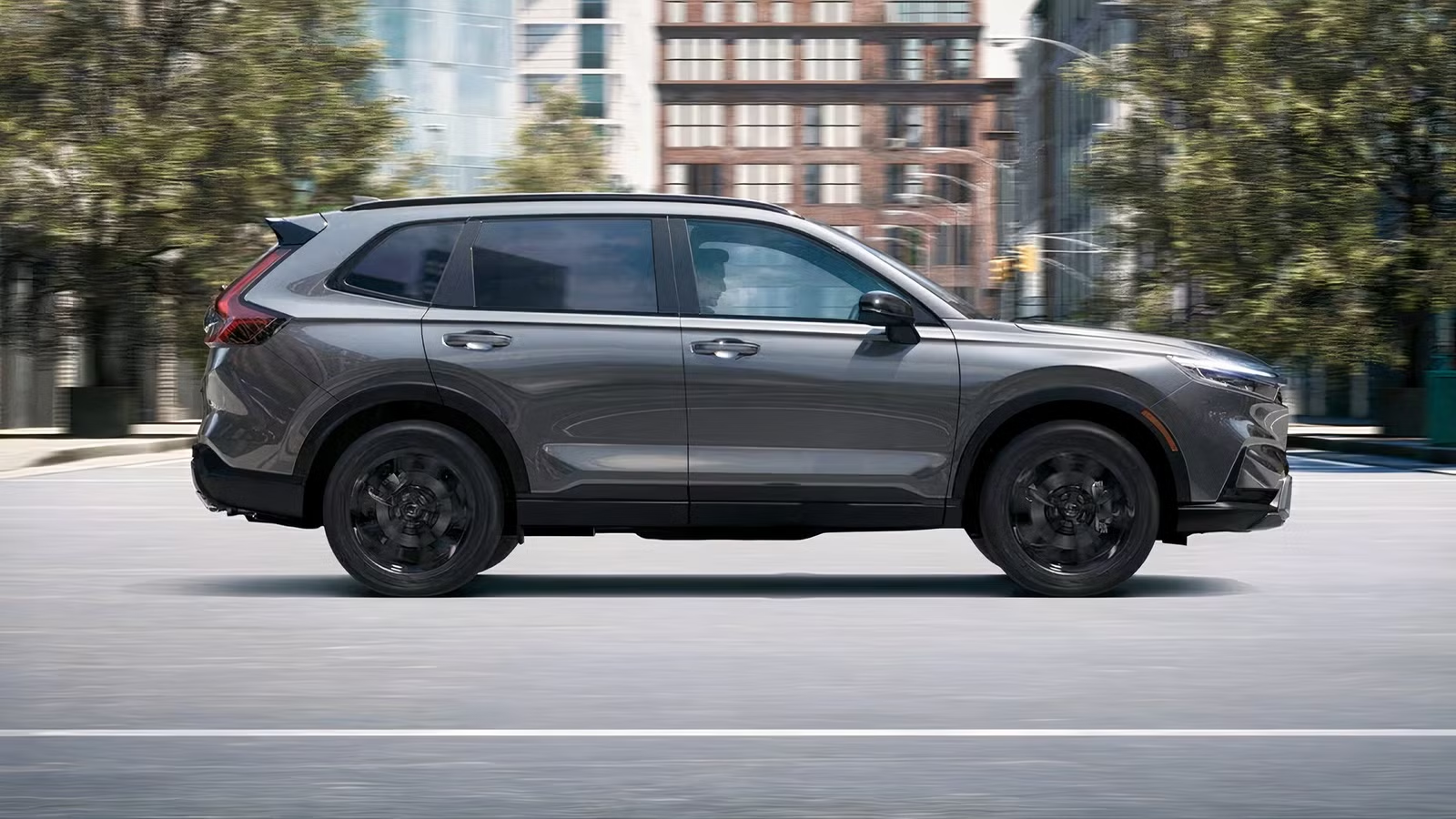
A new analysis published today by CNBC puts a sharp number on something hybrid shoppers have been feeling at dealerships: three automakers — Toyota, Honda, and Ford — now control the dominant share of the U.S. hybrid market, leaving every other brand competing for the scraps. The concentration is striking in a segment that’s supposed to be the safe middle ground between gas and electric.

For buyers, that reality has a direct consequence. Walk into any showroom and the hybrid badge count looks impressive. But when you filter for proven reliability, fuel efficiency that actually matches the sticker, and models that are in stock at reasonable prices, the field narrows fast. Understanding why these three pulled ahead — and what it means for your next purchase — is worth a few minutes before you sign anything.
How Toyota, Honda, and Ford Built a Lead Nobody Else Can Close Quickly
Toyota’s head start is the most significant. The Prius launched in Japan in 1997 and arrived in the U.S. in 2000, giving Toyota more than two decades to refine its hybrid system — the powersplit device, the Atkinson-cycle engine tuning, the battery thermal management. That’s not just engineering time; it’s warranty data, real-world failure patterns, and supplier relationships that took years to optimize. The RAV4 Hybrid, Camry Hybrid, and Highlander Hybrid all benefit from that accumulated knowledge, which is why their reliability scores consistently rank at the top of owner surveys.

Honda took a different path early on but eventually converged on a two-motor system — used in the CR-V Hybrid, Accord Hybrid, and Odyssey — that prioritizes efficiency and smoothness. The company’s hybrid architecture is now mature enough that it powers one of the best-selling hybrid sedans in the country. Ford’s position is more recent but real: the Escape Hybrid, Explorer Hybrid, and especially the F-150 PowerBoost have given the brand meaningful volume and dealer familiarity with hybrid servicing. Ford licensed early hybrid technology from Toyota, which accelerated its learning curve considerably.

The practical effect of this concentration is twofold: pricing power and inventory pressure. Toyota and Honda hybrids routinely sell at or above MSRP in high-demand markets, with popular configurations like the RAV4 Hybrid and CR-V Hybrid carrying wait times that can stretch weeks in some regions. Dealers have little incentive to negotiate when demand consistently outpaces supply.
For buyers looking outside the big three, the alternatives exist but come with trade-offs. Hyundai’s Tucson Hybrid and Kia’s Sportage Hybrid have improved substantially and offer competitive efficiency figures, but their long-term reliability track records are shorter — simply because the technology is newer in their lineups. Stellantis has largely ceded the hybrid SUV space. German brands offer plug-in hybrids at premium price points that don’t compete on value. The honest reality for a buyer on a budget who wants a proven hybrid SUV is that the Toyota and Honda options keep rising to the top of the shortlist for defensible reasons, not just brand loyalty.
The Technological Moat Is Real — and It Takes Years to Cross

A decade-plus of hybrid development creates advantages that aren’t easy to replicate on a product timeline. Battery longevity, regenerative braking calibration, and the software that manages energy flow between the combustion engine and electric motor all improve through iteration — and iteration requires selling cars, collecting data, and fixing problems across millions of real-world miles. Toyota has done that longer than anyone.
For newer entrants, catching up means either licensing existing technology, developing proprietary systems from scratch, or leaning on EV platforms adapted for hybrid use. None of those paths is fast. Buyers who are EV-hesitant but want proven electrification technology are effectively being funneled toward a small group of brands that earned their position the slow way. That’s not a bad outcome for reliability, but it does mean less competitive pressure on pricing — and for shoppers, less room to negotiate.
If you’re in the market for a hybrid in the next six to twelve months, the smart move is to go in with clear eyes. The Toyota and Honda options at the top of most recommendation lists are there because they’ve earned it, but that reputation also means you’re unlikely to find a deal. Expanding your search to include Hyundai and Kia hybrids — and getting an independent reliability read on the specific model year you’re considering — is worth the extra homework. The hybrid market isn’t going to diversify overnight.

Related posts





Latest Post



No Comments