
This Rare V12 BMW Prices Rise As Patient Buyers Quietly Make Moves
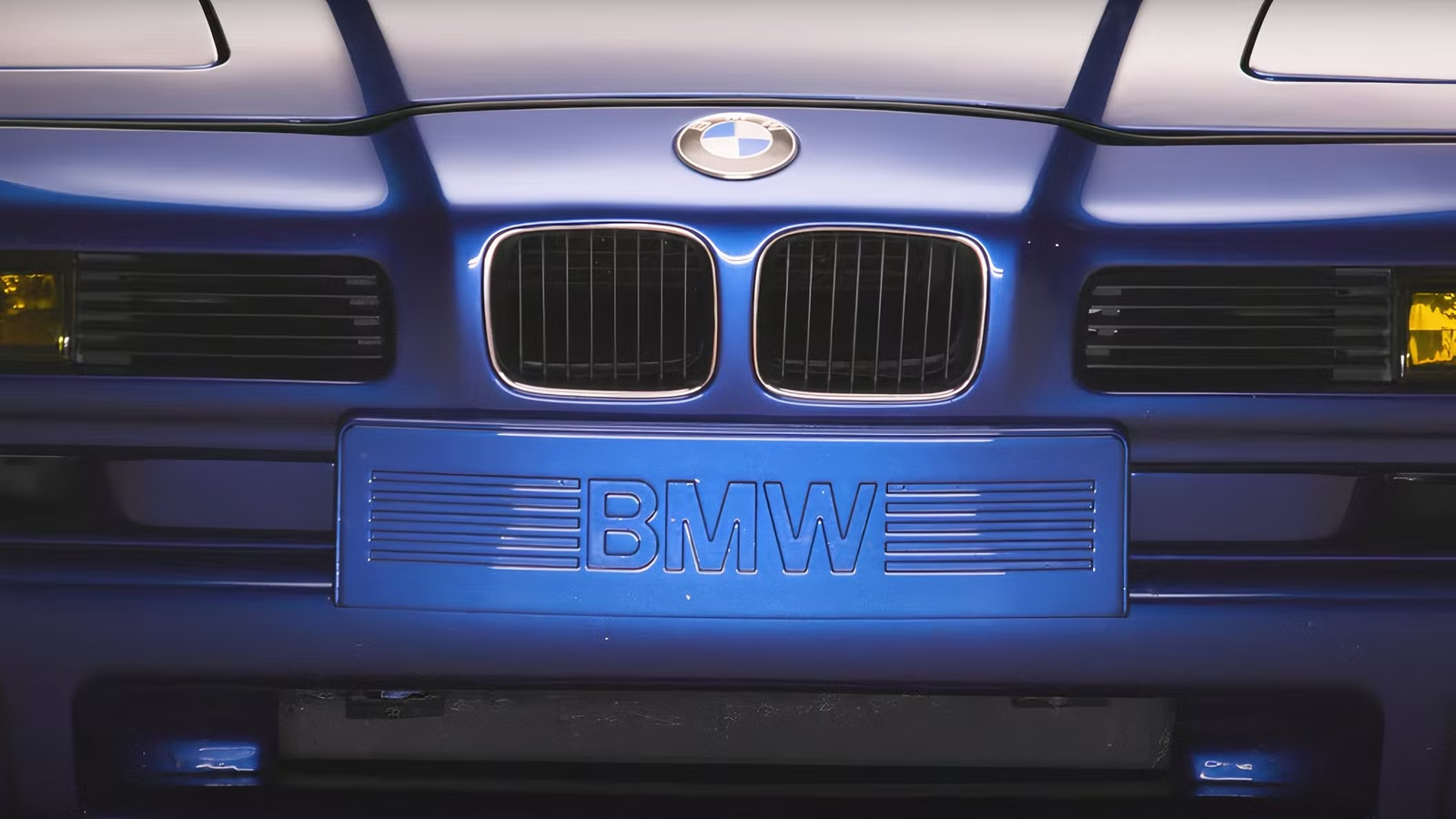
Pull up to any high-end car and coffee in a loud mid-engine Italian supercar painted in a flashy shade of Rosso Corsa. It will immediately catch the attention of teenagers with their cameras pointed at it. Conversely, if you pull up in a long, low, pillarless silhouette into the corner with a subtly squared stance, dual-tip exhaust, and pop-up headlights sitting flush against the narrow hood line, a completely different dynamic unfolds.

A different type of enthusiast is attracted to such beauty: the kind who likes menacing sports car performance wrapped in subtlety and class, the kind that doesn’t like to shout about their arrival but moves in silence. For nearly three decades, a massive slice of Bavarian engineering occupied a strange and silent purgatory, too complex for the daily home mechanic DIY enthusiast and too heavy for the track-day purist.
A car completely misunderstood by the market that preferred cars that screamed to the moon over a long-legged autobahn cruiser. It stayed in the shadows while its contemporaries rose in popularity and price over the years. The wait is now over for the 90s grand tourer, and collectors are beginning to move on to the ultimate grand tourer that has been hiding in plain sight.

The 1990s Super Coupe Wars Blurred The Market’s Vision

In the early ’90s, the world was going through an economic recession and a global slowdown, and the luxury tax laws were eating into flagship sales in North America. The “Big Coupe” wars were turning into an expensive affair to keep up with, as the taxes penalized the purchase of high-end, high-displacement vehicles.
At the same time, the German manufacturers were all locked in the “Big Super Coupe” war. Mercedes-Benz had the C140 S-Class Coupe, while Porsche was refining its front-engined V8-powered 928 GTS. Amid this fierce competition, the market struggled to categorize BMW’s wedge-shaped power cruiser, the 8 Series.
Many traditionalists openly preferred its direct predecessor, the legendary E24 6-Series. The 6 Series “Sharknose” was a traditional, driver-focused sports coupe with sharp, aggressive handling and a high-revving inline-six engine. It was lightweight, mechanically straightforward, and highly communicative. When the BMW 850i first arrived, the automotive world was cold and unimpressed by the 8 Series. It was fast, but weight was its primary enemy, tipping the scales at well over 4,000 lbs.
When they saw the E31, all they saw was a heavy grand tourer that prioritized high-speed highway cruising over visceral driver engagement. That resulted in the standard 850i becoming an immediate casualty of high expectations. So when the higher-spec 850CSi came to the US, the market rarely blinked. But the car had more to offer than meets the eye.
11 Classic Cars Collectors Are Quietly Buying
Classic cars from different eras are quietly attracting collector attention and rising in value.
The Unbadged M8 And How The M Division Rescued a Flagship

The mistake the mainstream market made was failing to look underneath the surface of the new flagship. The M850CSi was not just a trimmed-up luxury cruiser. It was a true M car in everything but its name. The BMW marketing department felt that the M moniker on a car so heavy would just not fit the bill and would create a backlash among the enthusiasts by creating unrealistic expectations. They left the prestigious M emblem off the trunk, but the factory build sheet tells a different story.
Each of the 1,510 units of the 850CSi rolled out of the factory with a vehicle identification number starting with the “WBS” prefix, which was reserved only for the M badge. This only solidifies the luxury cruiser’s status as a product of the M division. When the M division took over the project, they didn’t just add stiff bushings and body kits; they fundamentally reworked the car’s DNA beyond that of the standard 8 Series.
They swapped the standard steering box for a quicker, more responsive unit. They dropped the ride height, added a significantly stiffer suspension, and revised the dampers to control the pitch and roll of the heavy cruiser. In Europe, they even offered an advanced hydraulic active rear-steering system to tuck the heavyweight away in the corners, making the sleek, pillarless grand touring car into a silent missile on the straights and corners.
The 10 Fastest BMW Models Ever, Ranked
BMW has become a synonym for driver engagement and performance and these are its fastest cars ever.
The BMW 850 And The McLaren Connection

At the center of the super-cruiser is the S70B56 engine. This was not the easy-going 5.0 M70 found in the standard 850i. The M division took the basic architecture and completely transformed it. They increased the bore and stroke of the aluminum block to 5.6 liters, bumped the compression ratio, revised the cylinder heads, and fitted lighter pistons with a tuned intake manifold.
This resulted in a robust 375 hp and 406 lb-ft of torque, routed exclusively through a heavy-duty Getrag six-speed manual transmission. There was no automatic option available with this beast. You had to row your own gears to fly down the Autobahn at 150 mph. That said, the S70B56 was motorsport royalty and a legendary engine with a special connection to one of the greatest supercars ever built.
BMW 850CSi Specs
|
Engine |
Transmission |
Power |
Torque |
0 to 60 MPH |
|---|---|---|---|---|
|
5.6-Liter Naturally Aspirated V12 (S70) |
6-Speed Manual |
375 HP@5,300 rpm |
406 LB-FT @4,000 rpm |
5.8 seconds |
The engine development work, including experimental twin-turbo projects undertaken by BMW, was kept behind closed doors and served as the basis and stepping stone for the legendary 6.1-liter S70/2 V12 that powered the iconic McLaren F1 to hypercar-level dominance. The 6.1-liter engine is still considered one of the greatest naturally aspirated engines ever produced.
When you look under the hood, the massive dual intake plenums stamped with “BMW M Power” tell you everything you need to know. The large 6.1 engine pulls with a massive, linear wave of torque that feels never-ending, building speed like a high-speed freight train to its redline. This power, combined with the mechanical upgrades by M division, gives the 850CSi a unique characteristic and the feel of a literal tank.
BMW’s 8 Series Exhibit At Monterey Car Week Hid A Rare Gem In Plain Sight
One of only 160 ever made
Why Collectors Are Choosing An Old Beamer Over Modern Supercars

BMW built only 1,510 examples of the 850CSi globally during its entire production run, and the North American market received exactly 225 units between 1994 and 1995. This makes the car incredibly rare. Finding an example that is in its original state is incredibly difficult. Public Auction data over the years shows a shift from casual enthusiasm to dedicated collectibility.
Recent Auction Results Of BMW 850CSi
Ranging from high-mileage examples with over 100,000 miles selling between $74,000 and $86,000, to collector-grade examples with less than 20,000 miles selling for $250,000 and above. Hagerty valuation data confirms a steady upward climb. The 850CSi has been completely broken free of the E31 family tree. It is no longer an old German luxury car but rather an investment-grade, motorsport-derived machine.
The sudden rise in the car’s valuation is not a temporary bubble. It is a correction that was long overdue in the market. Collectors in the market for an analog experience definitely have a European anchor. Now is a unique time in the market, with a narrow window to get in on the 850CSi before prices go sky-high on what is the only V12 M BMW ever produced.
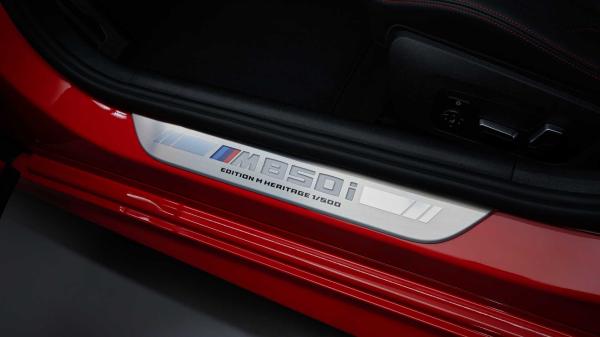
BMW Bids Farewell To This High-End Model With Heritage Edition
M850i Edition M Heritage draws line under 8 Series range.
The Real Cost Of Maintaining An Analog Luxury Cruiser

If you intend to buy this timeless masterpiece, there are a few things to consider. And maintenance would be at the top of the list. The M850CSi is a highly complex and technologically advanced machine of its time, masquerading as a simple coupe. The main focus when purchasing the car should not be on how the paint has held up over the years, but rather on the car’s mechanics and electronics.
The S70 V12 uses two separate control units (ECUs), essentially operating as two interconnected inline-six engines sharing a common crankshaft; prospective buyers should also verify that all wires and sensors are intact and in place. Also, owners have to address the S70’s engine seepage. That said, many of the components are now NLA (No Longer Available). The hydraulic system that powers the rear steering is also delicate and requires precise maintenance.
So is it worth the effort? Absolutely. The BMW 850CSi represents the end of an era: a completely analog big-coupe feel, with a cabin experience that remains isolated and refined, delivering precise feedback on every input, whether at the wheel or in the gears. The masses may have missed its first arrival, but now they are waking up to this incredibly rare and once-in-a-generation V12 BMW.
Source: Classic.com, Bring a Trailer, BMW

Related posts




Latest Post


No Comments