The Overlooked Japanese Coupe That’s Faster Than A Porsche And Costs Way Less Used
10 minutes reading
Friday, 19 Jun 2026 17:01 0 100 autotech
For decades, the high-performance luxury coupe market has been dominated by European badges. Buyers looking for speed, prestige, and long-distance comfort almost automatically gravitated toward Porsche, BMW, Mercedes-Benz, or Aston Martin. Japanese automakers, meanwhile, earned their reputations through reliability and value rather than emotional grand touring machines. That’s exactly why one of the most impressive performance coupes of the modern era slipped under the radar almost unnoticed.
Today, used examples of this Japanese coupe deliver astonishing value. For the price of a used Porsche 911 Carrera or even certain Cayman GTS models, buyers can get a far more exotic-looking machine with a thunderous V8 soundtrack, luxury-car refinement, and real-world highway performance capable of embarrassing supposedly superior European rivals.
Why Enthusiasts Keep Ignoring One Of Japan’s Greatest Modern GTs
Front 3/4 shot of 2026 Aston Martin Vantage Coupe parkedAston Martin
A true grand touring coupe is about far more than outright performance figures. The best examples blend long-distance comfort, engaging dynamics, emotional engine character, striking design, and everyday usability into a single package. Achieving that balance is incredibly difficult, which is why genuinely great GT cars are relatively rare. Modern enthusiasts also tend to prioritize track-focused performance, placing enormous value on Nürburgring lap times and acceleration statistics. Yet grand touring cars were never intended to be stripped-down track weapons. Their purpose is to cover vast distances at high speed while providing comfort, refinement, and a sense of occasion that makes every journey memorable.
Front 3/4 shot of 2026 Mercedes-AMG GT CoupeMercedes-AMG
As the automotive industry shifts toward turbocharging, electrification, and increasingly digital driving experiences, appreciation for traditional grand tourers is growing. Cars that combine naturally aspirated power, timeless styling, and handcrafted luxury are becoming increasingly uncommon, causing many enthusiasts to revisit overlooked models that failed to receive the recognition they deserved when new. In hindsight, some of these forgotten grand tourers delivered a more complete and emotionally satisfying experience than many of their celebrated European rivals, proving that automotive excellence is not exclusively reserved for the continent that traditionally dominated the segment.
The Best Lexus Sports Cars Of All Time
A blend of precision engineering, luxury craft, and performance make for Lexus’ greatest sports cars.
How A Used Lexus LC500 Delivers Exotic-Car Drama Without The Supercar Price Tag
2021 Lexus LC500 front 3/4 shotBring a Trailer
One of the biggest reasons the Lexus LC500 has become such an incredible used-car bargain is depreciation. When new, the coupe carried an MSRP that pushed well beyond $100,000 in higher trims. That placed it directly against established German rivals with stronger brand prestige. Buyers spending that kind of money often defaulted to Porsche simply because of its reputation. Today, however, used LC500 models can be found for dramatically less money than equivalent European performance coupes. Clean early examples regularly trade hands in the $55,000 to $70,000 range, depending on mileage and specification. That creates an enormous value proposition considering the level of engineering and craftsmanship involved.
Compare that to the used Porsche market. A similarly priced Porsche 911 Carrera from the same era often comes with significantly higher mileage, fewer luxury features, and potentially expensive maintenance concerns. Meanwhile, the LC500 offers Lexus reliability combined with hand-assembled quality that rivals Bentley-level craftsmanship in certain areas.
Under the hood sits Lexus’ magnificent 5.0-liter naturally aspirated V8 producing 471 horsepower and 398 pound-feet of torque. Power is sent to the rear wheels through a 10-speed automatic transmission capable of lightning-fast shifts under aggressive driving conditions. The numbers remain seriously impressive even years later. The LC500 can sprint from 0-60 mph in roughly 4.4 seconds while continuing toward an electronically limited top speed of 168 mph. In rolling acceleration tests, the Lexus is shockingly quick thanks to its linear power delivery and strong high-speed pull.
Base Trim Engine
5.0L V8 Gas
Base Trim Transmission
10-Speed Automatic
Base Trim Drivetrain
Rear-Wheel Drive
Base Trim Horsepower
471 hp
Base Trim Torque
398 lb-ft @ 4800 rpm
Fuel Economy
16/25 MPG
Make
Lexus
Model
LC Coupe
Segment
Large Luxury Coupe
Infotainment & Features
8 /10
That’s where comparisons to Porsche become especially interesting. In real-world highway acceleration, the LC500 can outrun or match certain Porsche models that cost substantially more on the used market. A base 718 Cayman, for instance, simply cannot compete with the Lexus in outright straight-line speed or top-end acceleration. Even some older naturally aspirated 911 Carrera models struggle to keep pace once speeds climb. The Lexus also delivers something many modern sports cars cannot: presence. Exotic-car drama comes from more than acceleration figures alone. The LC500 looks expensive, sounds expensive, and feels special in a way that many clinically precise European rivals sometimes fail to achieve.
The Japanese Sedan That Feels More Luxurious Than A Mercedes E-Class
This Lexus has left a lasting mark on the luxury world that continues to set the standard, even against elite German rivals.
A Naturally Aspirated V8 That Still Feels More Special Than Turbo Rivals
2025 Lexus LC500 engineTopSpeed | Garret Donahue
The heart of the LC500 is unquestionably its engine. At a time when nearly every luxury performance coupe moved toward smaller turbocharged powerplants, Lexus chose to install one of the last great naturally aspirated V8s on the market. The 2UR-GSE 5.0-liter V8 is closely related to the engine used in the Lexus RC F and GS F performance sedans, but in the LC500, it feels even more dramatic. Unlike turbocharged engines that deliver power in massive low-end surges before running out of breath, the Lexus V8 builds power progressively all the way to its 7,300-rpm redline.
That characteristic transforms the driving experience. The engine encourages drivers to chase revs rather than short-shift for torque. Every pull toward redline is accompanied by one of the greatest exhaust notes in the modern automotive industry — a mechanical symphony partially tuned by Yamaha’s acoustic engineers. Modern turbocharged rivals may produce more torque on paper, but many lack the emotional engagement of the Lexus. Even Porsche’s smaller turbocharged flat-four engines used in certain Cayman and Boxster models simply cannot replicate the sound or character of the LC500’s V8.
This Becomes Especially Noticeable During Spirited Highway Driving
Front 3/4 view of green Lexus LC500.Lexus
At higher speeds, naturally aspirated engines often deliver smoother and more predictable throttle response compared to turbocharged setups that rely heavily on boost. The LC500 feels alive and immediate every time the driver presses the accelerator. The 10-speed automatic transmission also deserves credit. Early critics questioned whether such a high gear count made sense in a luxury coupe, but the gearbox proved remarkably effective. It keeps the V8 squarely in its powerband while delivering crisp shifts that feel far more aggressive than most traditional luxury-car automatics.
Equally important is the emotional rarity of the entire package. Automakers are rapidly abandoning naturally aspirated V8s due to emissions regulations and electrification mandates. That means the LC500 already feels like a future classic. It represents a disappearing era of performance cars built around sound, throttle response, and mechanical character rather than software-enhanced driving experiences.
The Sports Car That Proves 228 Horsepower Is All You Actually Need
One Japanese sports car is defying the horsepower war in favor of balance, throttle response, and lightweight construction.
The Luxury Coupe That Can Embarrass European Performance Cars On The Highway
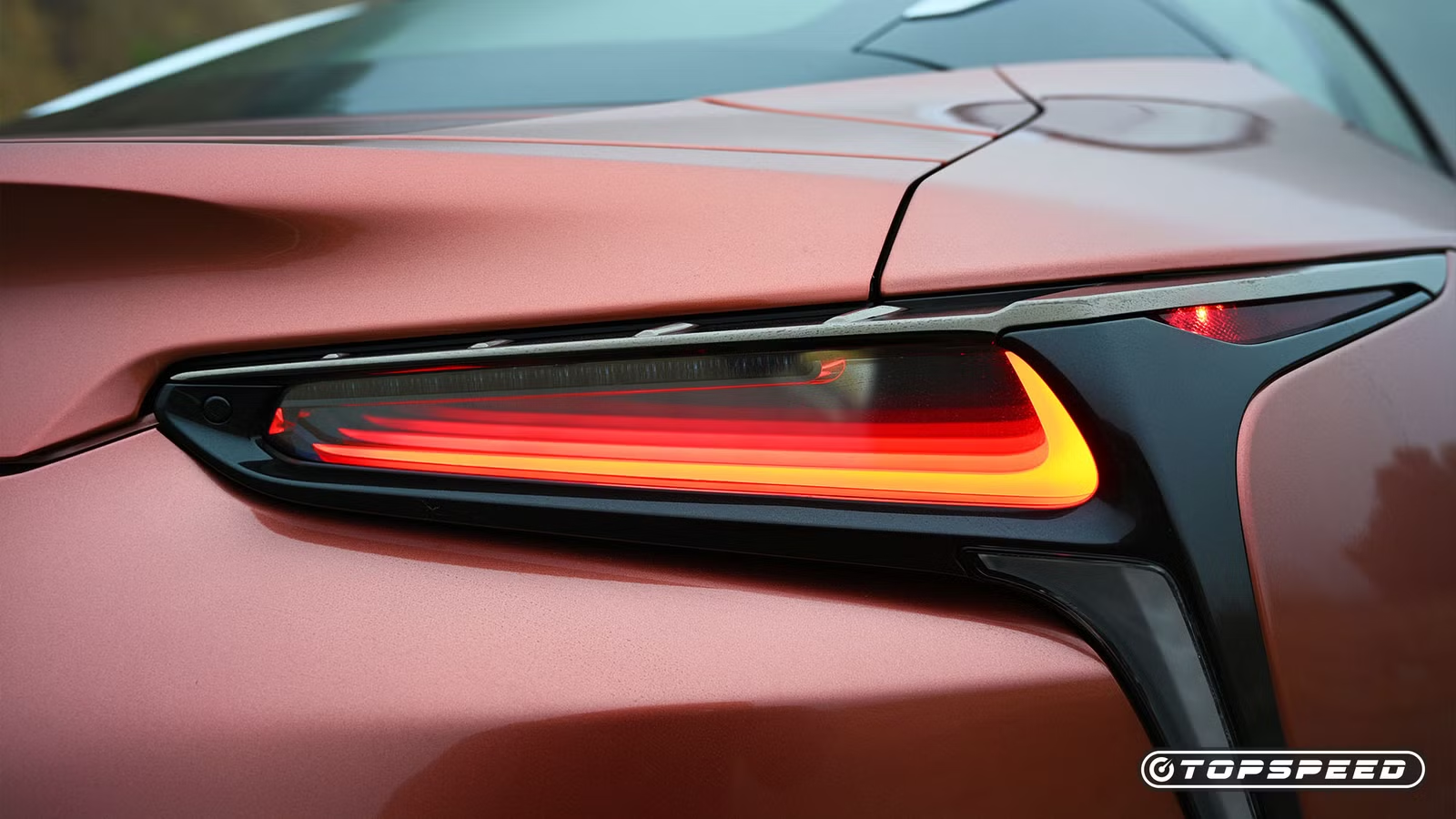
Front 3/4 shot of copper 2025 Lexus LC 500TopSpeed | Garret Donahue
While the LC500 may not dominate racetracks against ultra-focused sports cars, it excels in exactly the environment grand touring coupes were designed for: high-speed highway driving.
At speed, the Lexus feels incredibly planted and composed. The adaptive suspension absorbs imperfections while maintaining remarkable body control, and the long wheelbase contributes to exceptional stability during fast cruising. This is a car engineered for covering massive distances effortlessly. That’s where the LC500 becomes genuinely dangerous for European rivals. On highways and sweeping back roads, the Lexus combines brutal V8 acceleration with refinement levels many sports cars cannot match. Drivers can comfortably cruise for hours before instantly unleashing nearly 500 horsepower with a stab of the throttle.
In certain real-world scenarios, the LC500 is legitimately quicker than some Porsche models enthusiasts automatically assume are superior. A Porsche 718 Cayman S, for example, reaches 60 mph quickly thanks to turbocharged torque, but the Lexus often pulls harder at higher speeds due to its larger-displacement V8 and superior top-end power delivery.
Side shot of 2018 Lexus LC 500 interior showing front seatsLexus
Older Porsche 911 Carrera models equipped with naturally aspirated flat-six engines also face serious competition from the LC500 in highway acceleration runs. Once speeds climb beyond legal limits, the Lexus’ strong V8 surge becomes extremely difficult to ignore.
The LC500’s Aerodynamic Stability Further Reinforces Its GT Credentials
Unlike smaller sports cars that can feel twitchy or noisy during high-speed travel, the Lexus remains calm and confidence-inspiring. Cabin insulation is excellent, road noise is minimal, and ride quality remains compliant even with large wheels. Interior quality also surpasses that of many European competitors. Lexus craftsmanship is evident everywhere, from the hand-stitched leather upholstery to the Alcántara trim and magnesium paddle shifters. The cabin feels carefully assembled rather than mass-produced, giving the LC500 a sense of occasion every time occupants step inside.
Importantly, the Lexus achieves all of this while maintaining strong reliability. European high-performance coupes can become extremely expensive as mileage accumulates, especially once complex turbocharging systems and electronic components begin aging. The LC500’s naturally aspirated V8 and Lexus engineering reputation provide far greater long-term ownership confidence.
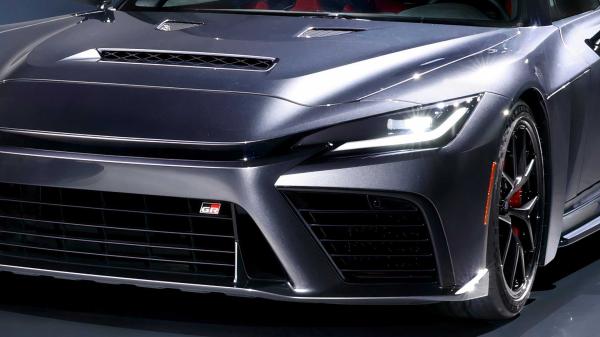
Why Toyota Chose A 641-HP Twin-Turbo V8 Over An Electric Supercar
The upcoming Toyota GR GT leans heavily into combustion power instead of following the market trend to build a high-performance EV, here’s why.
Why Used Buyers Are Finally Realizing This Japanese Coupe Was Undervalued
The used market is finally catching on to what the LC500 has always been: one of the most complete grand touring coupes of the modern era. Part of this growing appreciation comes from changing market conditions. Enthusiasts are increasingly realizing that naturally aspirated engines are disappearing rapidly. Cars like the LC500 now represent something irreplaceable. Buyers are also beginning to recognize how well the LC500 has aged. Its styling still looks futuristic years after launch, the interior remains among the best in the segment, and the driving experience feels refreshingly analog compared to newer performance cars overloaded with digital gimmicks.
Depreciation has additionally made the Lexus impossible to ignore. Used buyers can now access exotic-level styling, near-supercar road presence, and a hand-built V8 experience for the price of far less special European machinery. Few vehicles deliver this level of emotional appeal without six-figure ownership costs.
Reliability Is Another Major Factor Driving Interest
A shot of the Lexus LC500Bring a Trailer
Lexus consistently ranks near the top of long-term dependability studies, and the LC500 benefits from proven engineering rather than highly stressed turbocharged systems. That makes ownership significantly less intimidating compared to aging German alternatives. Most importantly, enthusiasts are finally understanding that performance is about more than lap times. The LC500 succeeds because it creates emotion. It turns ordinary drives into memorable experiences through sound, design, craftsmanship, and effortless speed.
In many ways, the LC500 feels like the spiritual successor to classic grand touring coupes from the golden age of automotive engineering. It combines beauty, comfort, and power into a package that prioritizes driving enjoyment beyond chasing Nürburgring records. That’s precisely why the Lexus LC500 may ultimately become one of the most collectible Japanese luxury performance cars of its generation. And for now, it remains one of the overlooked bargains in the used performance-car market.



















No Comments