
Yamaha Ténéré 700 World Raid Hits Welsh Gravel — Here’s How It Handles Its First Real Dirt
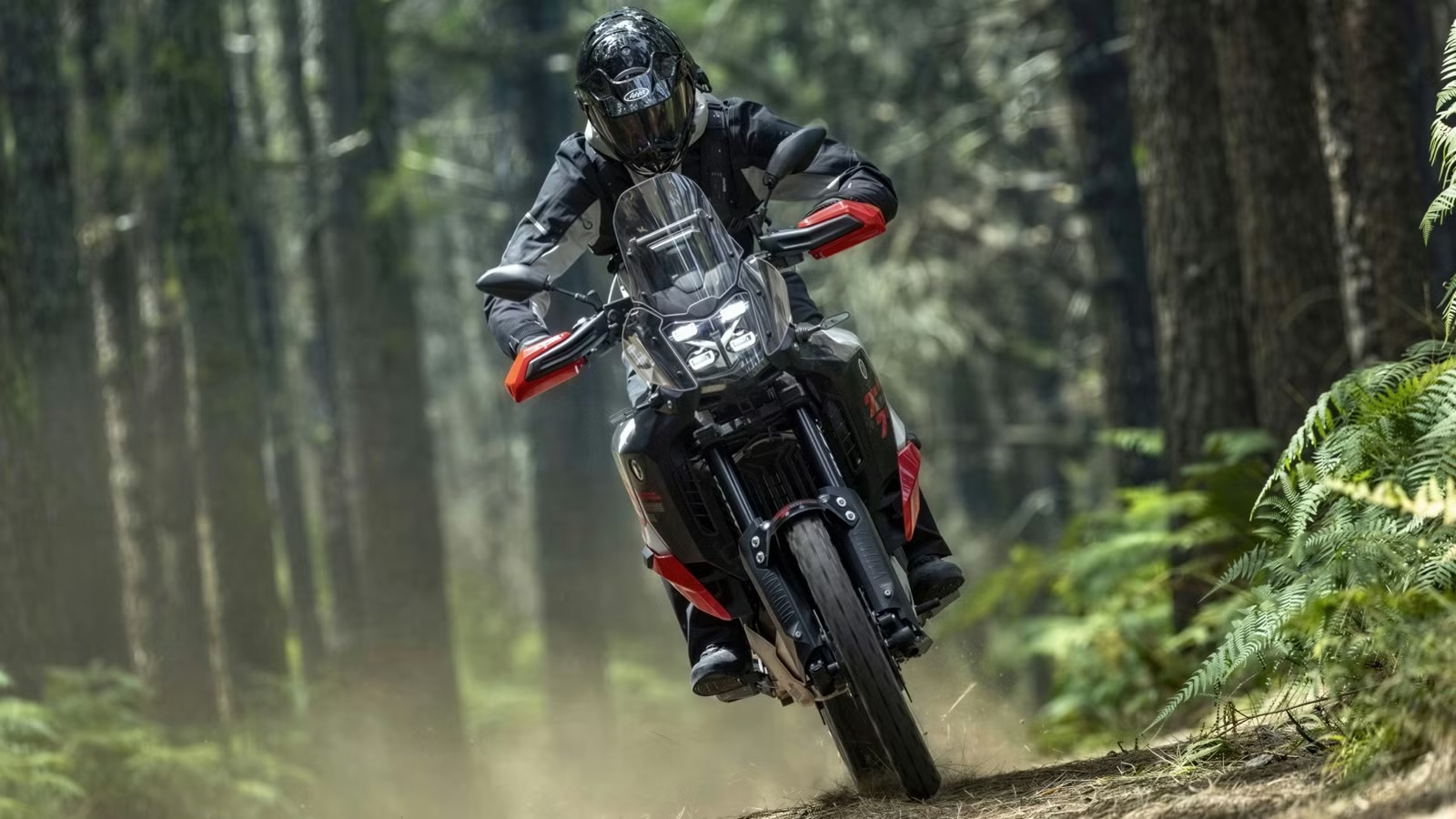
MCN’s long-term Yamaha Ténéré 700 World Raid just completed its maiden off-road outing, trading Welsh tarmac for gravel roads and putting the flagship adventure variant through its first real dirt test. The question every prospective buyer wants answered: does the $2,000 premium over the standard T7 actually buy you a better off-road motorcycle, or just a more expensive one?

The short answer from those gravel roads is encouraging. The World Raid’s suspension upgrades, electronics package, and ergonomic revisions translate into genuine capability gains when the pavement ends — though the picture is more nuanced than the spec sheet suggests.
What the World Raid Brings Over the Standard T7
The gap between the standard Ténéré 700 and the World Raid is wider than the $2,000 price difference implies. The base T7 runs 43mm KYB forks with non-adjustable damping, 8.3 inches of front travel and 7.9 inches rear, a single 4.2-gallon steel tank good for around 200 miles, and a 34.4-inch seat height. Wet weight sits at 452 lb.

The World Raid steps up to 46mm Kashima-coated fully adjustable KYB forks with 9.1 inches of front travel and 8.7 inches rear — 20mm more at each end. Dual aluminum side-mounted tanks push capacity to 6.1 gallons and range past 300 miles, while saving 1.5 kg over the previous steel setup. Seat height rises slightly to 35 inches, but the reshaped one-piece rally seat drops its front edge 20mm to ease standing-to-sitting transitions. Wet weight climbs to 485 lb. The electronics package adds a six-axis IMU with lean-sensitive traction control, slide control, cornering ABS, a 16-step adjustable steering damper, cruise control, and a 6.3-inch TFT with dedicated RAID display theme.
How the Upgrades Felt on Welsh Gravel

On loose gravel, the suspension difference over the standard T7 is immediately apparent. The 46mm forks soak up trail chop and surface irregularities with a suppleness that builds rider confidence quickly — the kind of composed feel that lets you focus on line choice rather than managing the chassis. The 21-inch front wheel tracks cleanly over loose stone, and the bike’s 204 kg wet weight sits in a manageable window: heavy enough to feel planted, light enough to muscle through tighter sections without a wrestling match.
The CP2 689cc parallel twin delivers crisp throttle response in the low-to-mid rpm range where gravel riding actually happens. Off-Road mode softens traction control intervention and smooths throttle delivery; Off-Road Pro dials electronics back further, offering near-full throttle freedom for riders who want to feel the rear step out on command. Cornering ABS disables for off-road use and remembers the setting on restart — a small detail that matters when you’re stopping and starting across a day of mixed terrain.
One caveat worth flagging: out of the crate, the KYB forks can feel firm at lower speeds, occasionally jolting over sharp-edged ruts rather than absorbing them. Dialing back a click or two of damping helps considerably. The steering damper, now Ténéré-branded with 16 stiffness steps, works as advertised at moderate settings, though the range between fully off and fully on is less dramatic than the spec sheet implies.

The honest answer sits somewhere between the two extremes. The World Raid is rally-influenced rather than rally-ready — it won’t replace a dedicated enduro machine on technical singletrack, and at 485 lb wet it asks for respect on steep, rocky descents. But for the gravel roads, forestry tracks, and green lanes that make up most real-world adventure riding, it performs convincingly. The suspension travel, tire spec (Pirelli Scorpion Rally STR on spoked wheels), and electronics suite are genuinely configured for dirt, not just styled to suggest it.
For riders who split time between motorway transfers, A-road blasts, and occasional off-road excursions, the World Raid’s dual-tank range and electronics package justify the premium on a long ride alone. For occasional gravel users who rarely venture beyond light forest tracks, the standard T7 at $10,999 remains a rational choice. The World Raid earns its price when the riding is remote, the terrain is mixed, and the days are long.
MCN’s Wales session is just the opening chapter of a long-term test, and harder terrain will tell a fuller story. But the early read is that the World Raid’s upgrades aren’t cosmetic — they’re functional, and they show up exactly where you’d want them to.
Sources: Yamaha, MCN

Related posts
Latest Post


No Comments